
Venezuela earthquakes leave at least 1,430 dead as rescue window closes
Venezuela earthquakes kill at least 1,430 and leave millions displaced, as rescue crews race to find survivors amid access restrictions and arriving foreign aid.
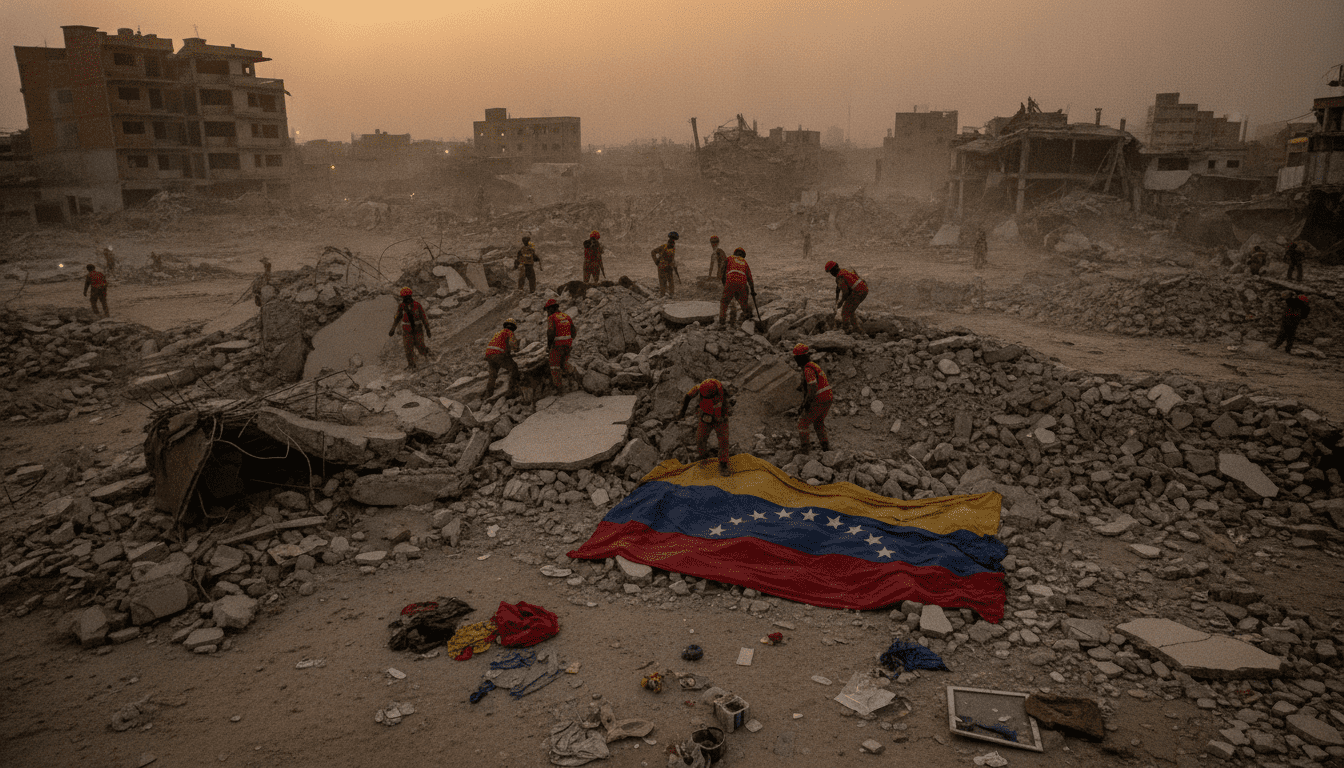
Rescue teams and volunteers are racing against time after twin earthquakes struck Venezuela, leaving at least 1,430 people dead and tens of thousands unaccounted for within 72 hours of the initial tremors, officials and responders say. The shocks, measured at magnitude 7.2 and 7.5 and centered near coastal La Guaira, reduced buildings to rubble and triggered frantic searches in the hardest hit areas. As the critical three-day survival window closes, authorities and international partners are intensifying efforts to find anyone still alive beneath collapsed structures.
Rescue teams racing as survival window narrows
Search crews and local volunteers have been digging through debris around the clock, often working with bare hands and improvised tools where heavy machinery cannot reach, according to eyewitness accounts from La Guaira. Emergency specialists emphasize that the first 72 hours following major earthquakes are the most likely period to recover survivors, putting pressure on teams to accelerate operations despite heat, dust and disorganization. An Australian firefighter who travelled to the scene described scenes of chaos and hope, saying rescuers remain committed to finding anyone who can still be pulled from the rubble.
Dramatic newborn rescue underscores urgency
One of the most striking moments since the quakes was the rescue of a newborn pulled alive from the ruins roughly 32 hours after the tremors struck, a scene widely shared on social media that highlighted both the risks and occasional triumphs of the search. Video footage showed a man cradling the infant amid dust and collapsed concrete, an image that galvanized volunteers and underscored why teams continue to probe unstable wreckage. Officials caution that such rescues are exceptional and that the likelihood of finding additional survivors declines rapidly as time passes.
Access restrictions hamper volunteer efforts
Local volunteers have expressed mounting frustration at rules that require permits to enter the most heavily damaged districts, with long queues forming at checkpoints as would-be rescuers wait for authorization to assist. One local resident described the situation as surreal, asking how many lives might be lost while people stand in line for access passes, a sentiment echoed by others who say the permit system has slowed grassroots search efforts. Authorities say the controls are intended to coordinate relief, protect rescue workers and prevent looting, but critics warn the restrictions are complicating an already desperate response.
Foreign teams and US military support arrive
International search and rescue teams have begun arriving with dogs, specialized equipment and technical rescue units, and the first U.S. military aid flights have landed in Caracas to deliver supplies and support, officials reported. A U.S. naval vessel positioned offshore is standing by to assist with logistics and potential evacuations, while teams from multiple countries are deploying to supplement Venezuelan responders who were quickly overwhelmed. Coordination between foreign teams and local authorities is underway, but language barriers, permit requirements and damaged infrastructure are complicating joint operations.
United Nations warns of extensive humanitarian needs
The United Nations has issued a stark assessment of needs, estimating that as many as 6.76 million people may require shelter, safe drinking water and medical care in the quake’s aftermath, and warning that the death toll and number of recovered bodies are likely to rise. UN agencies and humanitarian partners are mobilizing emergency shelter, water purification systems and medical supplies even as the immediate search phase transitions into a large-scale relief operation. Officials emphasize that managing disease risk, providing trauma care and restoring basic services will be critical in the coming weeks to prevent further loss of life.
Infrastructure damage and logistical obstacles
Collapsed buildings, blocked roads and damaged ports are complicating transport of heavy rescue equipment and humanitarian cargo, forcing responders to rely on smaller convoys and maritime deliveries where feasible. Power outages and damaged communications networks are hindering both coordination and the ability of families to report missing relatives, adding to the uncertainty over the true scale of destruction. Relief managers say clearing access routes and establishing stable supply lines are top priorities to enable systematic search, treatment of the injured and distribution of emergency shelter materials.
The next 48 hours will be pivotal as teams push to complete searches in the most affected neighborhoods and begin documenting loss and needs for a sustained recovery effort, with international aid continuing to arrive and local communities pressing to be allowed to help. Authorities expect the focus to shift from emergency rescues to recovery and body retrieval as search operations wind down, even as humanitarians prepare for a prolonged campaign to shelter millions and rebuild damaged infrastructure. The situation remains fluid and officials caution that casualty figures and humanitarian estimates are likely to change as response teams widen their reach.
