
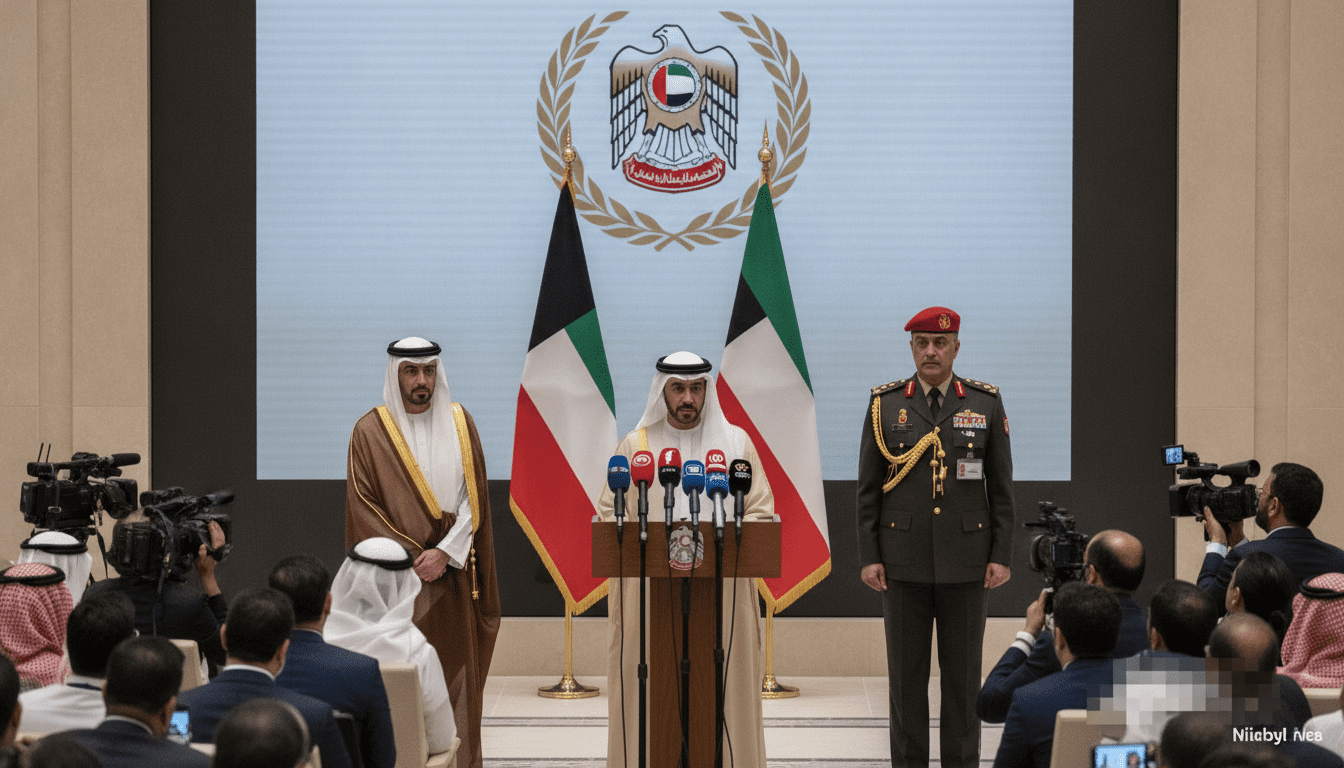
UAE Condemns Iranian Strikes on Bahrain and Kuwait, Calling Them a Violation of Sovereignty
UAE condemns Iranian strikes on Bahrain and Kuwait, calling them a blatant violation of sovereignty and warning they threaten regional security and stability.
The United Arab Emirates publicly condemned Iranian strikes on Bahrain and Kuwait that followed recent U.S. attacks on Iranian targets, calling the actions a blatant violation of the Gulf states’ sovereignty and an unacceptable threat to regional security. The UAE foreign affairs ministry framed the strikes as escalatory and destabilising, urging restraint from all parties to prevent further harm. The statement underscores growing concern in the Gulf that retaliatory exchanges risk entangling neighbouring states and undermining diplomatic channels.
UAE Foreign Affairs Ministry Statement
The UAE foreign affairs ministry said the strikes represented a “blatant violation of sovereignty” and described them as a direct threat to security and stability across the Gulf, language that signals strong diplomatic disapproval. Officials emphasized that attacks conducted from or through the territory of one state against another undermine international norms and complicate efforts to de-escalate tensions. The ministry called for immediate measures to protect civilian populations and for all actors to abide by established principles of state conduct to avoid further deterioration.
Details of the Strikes and Immediate Context
Iranian forces struck targets in Bahrain and Kuwait in apparent retaliation for U.S. attacks on Iranian targets over the previous two days, according to the UAE statement and regional reporting. The strikes, while described in general terms by Gulf officials, are part of a broader cycle of action and counteraction that has seen rapid exchanges across the region. Those exchanges have raised urgent questions about the capacity of regional institutions to prevent spillover and about the lines of responsibility that separate direct state-to-state confrontation from proxy or cross-border operations.
Regional Security and Sovereignty Concerns
The UAE framed the attacks as not only a violation of bilateral sovereignty but as a destabilising factor for the entire Gulf security architecture, reflecting a wider worry among Gulf Cooperation Council members. For smaller, trade-dependent states like Bahrain and Kuwait, any military activity on or near their territory carries outsized risks for civilian safety, maritime commerce, and energy infrastructure. Gulf capitals are likely to weigh responses that balance deterrence with diplomatic avenues, mindful of the economic consequences of prolonged instability in waters vital to global energy flows.
Diplomatic Channels and International Law Implications
By invoking sovereignty, the UAE’s statement implicitly referenced established international legal norms that prohibit the use of force against another state except in narrowly defined circumstances. Diplomats are now expected to pursue consultations at regional and multilateral levels, including with partners who played a role in the preceding U.S. strikes, to clarify responsibilities and seek immediate de-escalatory measures. Legal and political debates over proportionality, attribution, and the legitimacy of preemptive or retaliatory actions are likely to shape the next phase of responses, both in capitals and in international forums.
Potential Responses from Gulf States and External Parties
Gulf states have a spectrum of options available, from formal diplomatic protests and demands for reparations to requests for security assurances and external support. Some governments may seek emergency meetings of regional groupings or appeal to the United Nations for statements condemning cross-border strikes, while others could pursue bilateral arrangements to enhance air and coastal defenses. External powers with security ties in the region will face pressure to deter further strikes without amplifying the cycle of retaliation, a balance that diplomats say will be difficult to maintain unless clear channels of communication are reopened.
Security Risks to Commerce and Civilian Life
The immediate practical consequences of continued strikes include threats to commercial shipping, critical infrastructure and civilian movement, particularly in a region where maritime routes and energy facilities are closely intertwined with daily life and global markets. Insurance costs, shipping rerouting and longer-term investment hesitancy are among the economic ripple effects that states in the Gulf and beyond will monitor closely. Humanitarian concerns also rise when military actions occur near populous areas, prompting governments and aid organisations to stress the need for protections under international humanitarian standards.
Regional leaders and international partners now face the challenge of converting public condemnations and diplomatic protests into tangible measures that reduce the likelihood of further exchanges. The UAE’s sharp rebuke frames the incident as part of a wider pattern with the potential to draw additional states into confrontation, and it underscores the urgency of concerted diplomatic efforts to restore predictable security conditions in the Gulf.
