
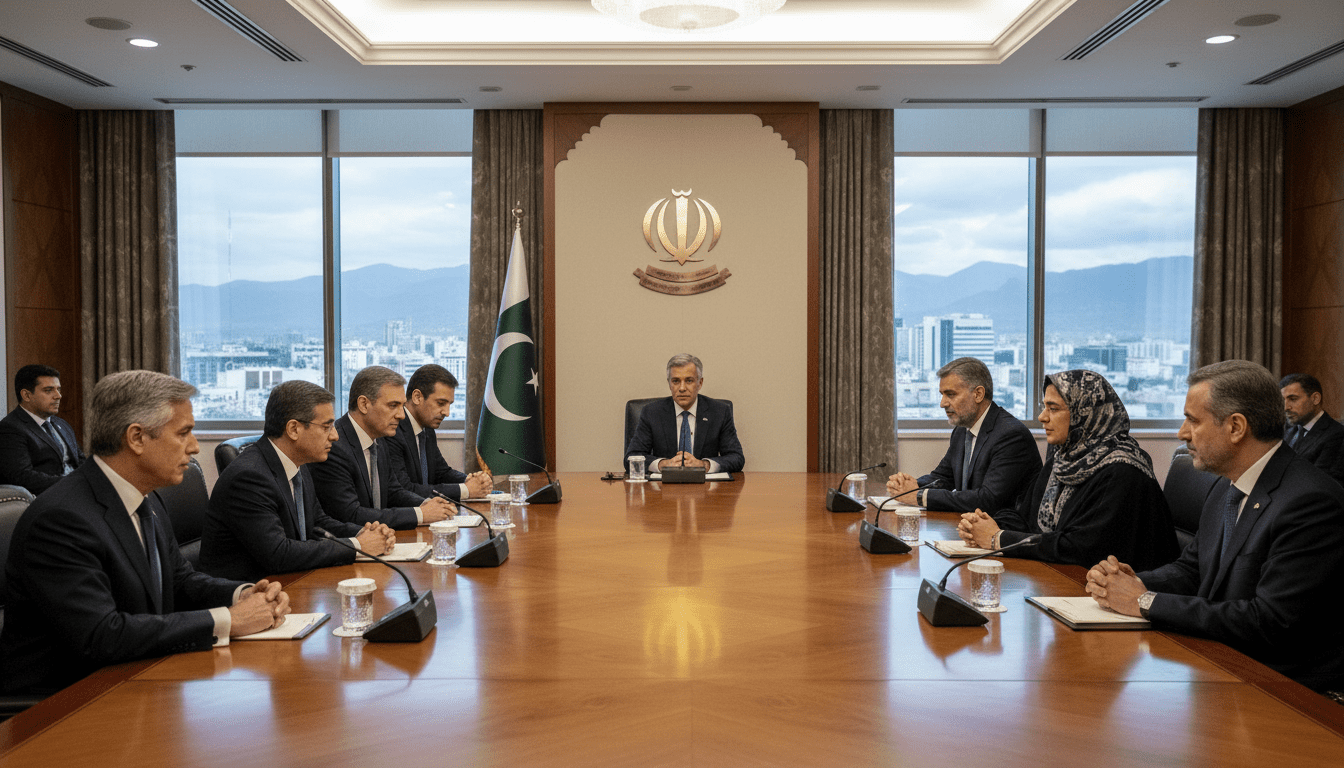
US-Iran peace talks expected to return to Islamabad as ceasefire nears expiry
Pakistan mediates between Washington and Tehran as Islamabad readies for a second round of US-Iran peace talks amid a ceasefire due to expire on April 22, 2026.
Pakistan confirms Islamabad as mediation hub
Pakistan’s Foreign Ministry confirmed on Thursday that the United States and Iran have continued discussions through Islamabad, preparing for a potential second round of US-Iran peace talks. The announcement came as a fragile ceasefire brokered on April 8 approaches its scheduled expiry on April 22, 2026, and no firm date for follow-up negotiations has been set. Foreign Ministry spokesperson Tahir Andrabi emphasized Pakistan’s role as a confidential intermediary and said final decisions on delegation size and participants rest with the negotiating parties.
First round yielded neither breakthrough nor collapse
Officials described the April 12 meeting in Islamabad as inconclusive but not irreparably damaged, with Andrabi saying there was “neither a breakthrough nor a breakdown.” Nuclear issues remain on the agenda, the spokesperson confirmed, though he declined to provide details. Both Washington and Tehran have sent cautious signals of willingness to continue talks, with White House press secretary Karoline Leavitt saying further discussions are “very likely” and Iranian officials reporting ongoing message exchanges routed through Pakistan.
High-level regional shuttle diplomacy underway
Prime Minister Shehbaz Sharif is conducting a regional tour that included Jeddah and Doha this week and will continue to Antalya, seeking diplomatic backing for Pakistan’s mediation. Simultaneously, Chief of Defence Forces Asim Munir led a delegation to Tehran, where he was officially received by Iranian officials and met parliament and foreign ministry figures. Islamabad’s parallel civilian and military outreach appears designed to manage political reassurance with Gulf allies while conducting substantive shuttle diplomacy between Washington and Tehran.
Saudi and Gulf engagement supports mediation
During meetings in Jeddah, Pakistan’s prime minister expressed solidarity with Saudi Arabia amid the wider regional escalation, and Riyadh lauded Pakistan’s “constructive role.” In Doha, Sharif discussed de-escalation and international coordination with Qatar’s emir, underscoring regional interest in preserving the ceasefire. Turkish officials have also engaged on a related track, preparing a regional security platform involving Pakistan and Gulf partners that is intended to run alongside, rather than replace, the US-Iran negotiation process.
Ceasefire faces imminent test on April 22
The two-week truce brokered on April 8 has largely held but is under strain from continued naval and military maneuvers. The United States has maintained a naval blockade on certain Iranian-linked shipping, with U.S. Central Command reporting the diversion of multiple vessels, a move that Tehran says complicates progress. Islamabad and independent analysts see extension of the ceasefire as likely, but they caution that if talks do not resume in short order Pakistan’s role could shift from mediator toward crisis manager focused on restoring temporary pauses in hostilities.
Lebanon and nuclear issues remain major sticking points
Tehran has insisted that any comprehensive arrangement account for the conflict in Lebanon, arguing that Israeli strikes there must be addressed alongside US-Iran negotiations. Washington has resisted linking a Lebanon settlement to the US-Iran track, and recent trilateral discussions in Washington involving Israel and Lebanon produced no immediate ceasefire or follow-up plan. Analysts say a separate, credible move toward cessation in Lebanon would build confidence for Iran, while the unresolved nuclear file continues to be a core hurdle in bilateral negotiations between Tehran and Washington.
Strait of Hormuz blockade heightens pressure on talks
Iran’s effective control and selective closure of the Strait of Hormuz has emerged as a central bargaining chip and source of global economic risk. The waterway is critical to international oil flows, and measures restricting passage have pushed oil prices and market anxiety higher. Experts argue that reopening the strait is essential to any durable agreement, but they also note there is no straightforward military solution; resolving the maritime impasse will likely require explicit and verifiable diplomatic commitments.
Outlook and likely next steps
Diplomats and analysts expect Pakistan to press for confidentiality while working to convene a second round in Islamabad, though no date has been publicly announced. The coming days and the status of the April 22 ceasefire will be pivotal: an extension would buy time for deeper negotiation on nuclear, maritime, and regional security issues, while a lapse could refocus Pakistani efforts on securing another temporary truce. Signals from both capitals remain cautiously optimistic, but significant concessions will be required on Lebanon and maritime access before a lasting deal can be secured.
If talks reconvene in Islamabad, negotiators will face a narrow window to translate cautious optimism into concrete arrangements that address Iran’s regional concerns and U.S. priorities on nuclear and maritime security.
