
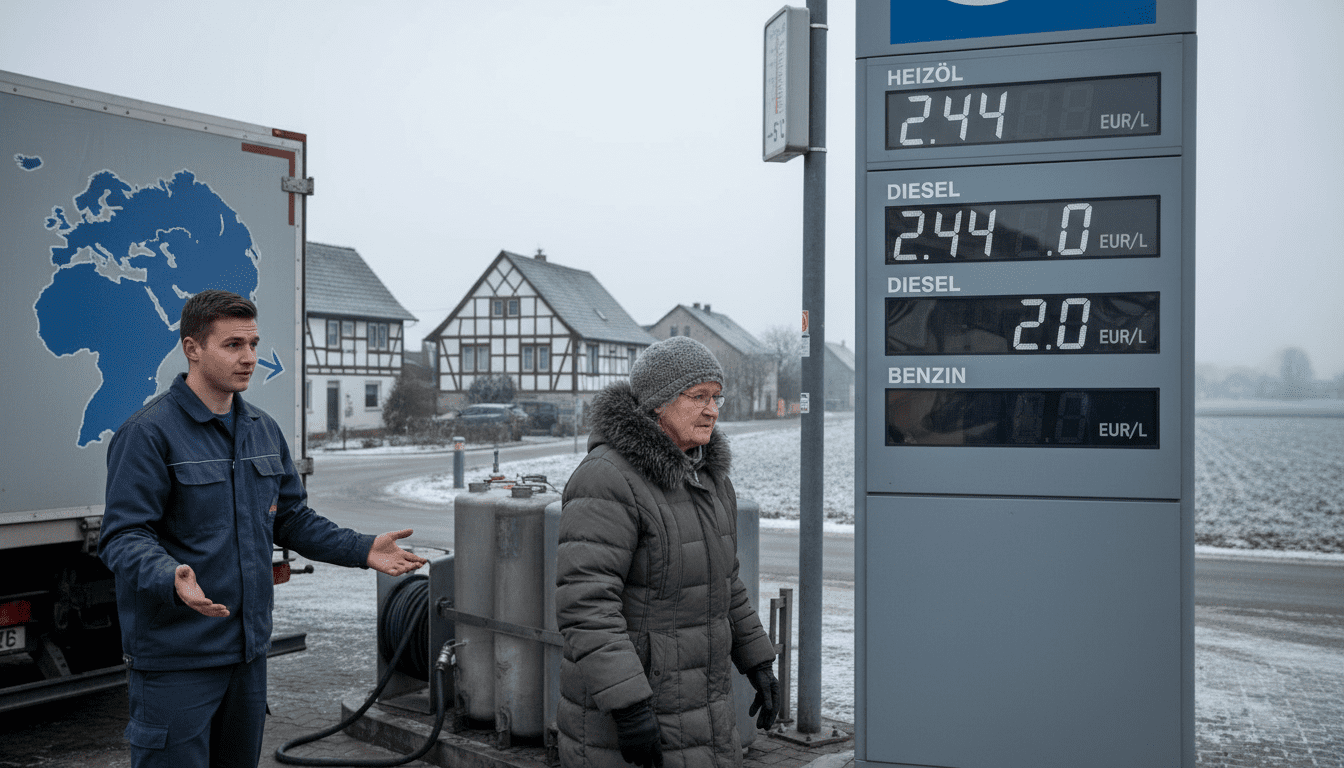
Energy prices in Germany spike as heating oil jumps 44%, stoking inflation fears
Heating oil rose 44% year-on-year in March, while diesel climbed 30% and petrol 17%, raising concern that broader energy prices in Germany will push inflation higher. The sharp rise, reported by the Statistisches Bundesamt, has left households and businesses facing immediate budget pressure. Analysts warn the spike may mark the start of a longer period of elevated costs after a recent Israel–US strike on Iran added new supply risks.
Heating oil surge hits households
The Statistisches Bundesamt data show heating oil prices jumped 44% compared with the same month last year, a rise that can translate into roughly €1,000 or more extra for a typical household filling a tank. For consumers who heat with oil, the increase is an abrupt and tangible shock to annual household budgets ahead of the next billing cycle.
Retailers and regional suppliers say the increase is driven by a mix of global risk premia, tighter refining margins and seasonal demand volatility, which together amplified price moves in March. For those on fixed heating contracts the impact may be gradual, but a large share of households purchase oil intermittently and feel the entire cost at the pump.
Motoring costs climb as fuel follows
Road transport costs have risen in step with heating oil: diesel was reported up 30% and petrol up 17% year-on-year in March. That gap narrows profits for haulage, agriculture and local services that depend on diesel, and is already feeding into higher delivery and commodity prices.
Companies dependent on fleet operations are signalling a squeeze on margins that could be passed on to consumers through higher prices for goods and services. Commuters also face immediate pain at forecourts, with household budgets squeezed by both energy and transport spending.
Middle East strike adds a fresh risk premium
Market observers link the recent price acceleration to geopolitical developments after an Israel–US strike on Iran roughly six weeks earlier, which intensified fears of supply disruptions in a region pivotal to global oil flows. Traders typically add a risk premium to crude and refined-product prices when major producers or shipping lanes face heightened tensions.
The strike has revived concerns about potential retaliatory actions, disruptions to tanker traffic through the Gulf and cascading effects across supply chains. Even if physical supplies remain largely intact, the perception of risk is enough to push commodity and futures prices up, reinforcing upward pressure on domestic energy costs.
Household budgets and inequality implications
The concentrated rise in energy prices risks widening inequality because low-income households spend a larger share of income on heating and fuel. For many, a sudden €1,000 increase to fill a tank or steeper monthly bills will force choices between energy, food and other necessities.
Small businesses and public services with tight margins—childcare providers, social clubs and local trades—face similar pressures that could translate into reduced hours, higher prices or delayed investment. The combined effect of direct energy costs and secondary price pass-through could lift headline inflation measures in the coming months.
Policy makers and markets on alert
European and German policy makers are monitoring developments closely, with central banks watching whether energy-driven price moves translate into persistent inflation. If higher energy costs become entrenched and feed into wages and wider prices, monetary authorities may need to reassess policy settings to anchor inflation expectations.
Fiscal responses are also under consideration in some quarters, with calls for targeted support for vulnerable households and measures to shield critical services from short-term disruption. At the same time, governments face trade-offs between immediate relief and long-term incentives to reduce energy dependence.
Outlook for consumers and businesses
Market participants caution that prices could remain volatile while geopolitical risk persists, and that a gradual transmission into broader inflation is already under way. Consumers are advised to review contracts, seek efficiency improvements and consider hedging options where available, while businesses should reassess logistics costs and incorporate energy scenarios into planning.
The immediate picture is clear: the jump in heating oil, diesel and petrol has already raised living costs and added uncertainty to the economic outlook. How long the higher energy prices persist will depend on developments in the Middle East, global supply responses and policy reactions in the weeks ahead.
