
Germany’s tank rebate debate exposes contradictions in fuel pricing and climate policy
Germany’s tank rebate debate reveals mixed government signals as the finance ministry denies tax windfalls and MPs clash over fuel relief and climate policy.
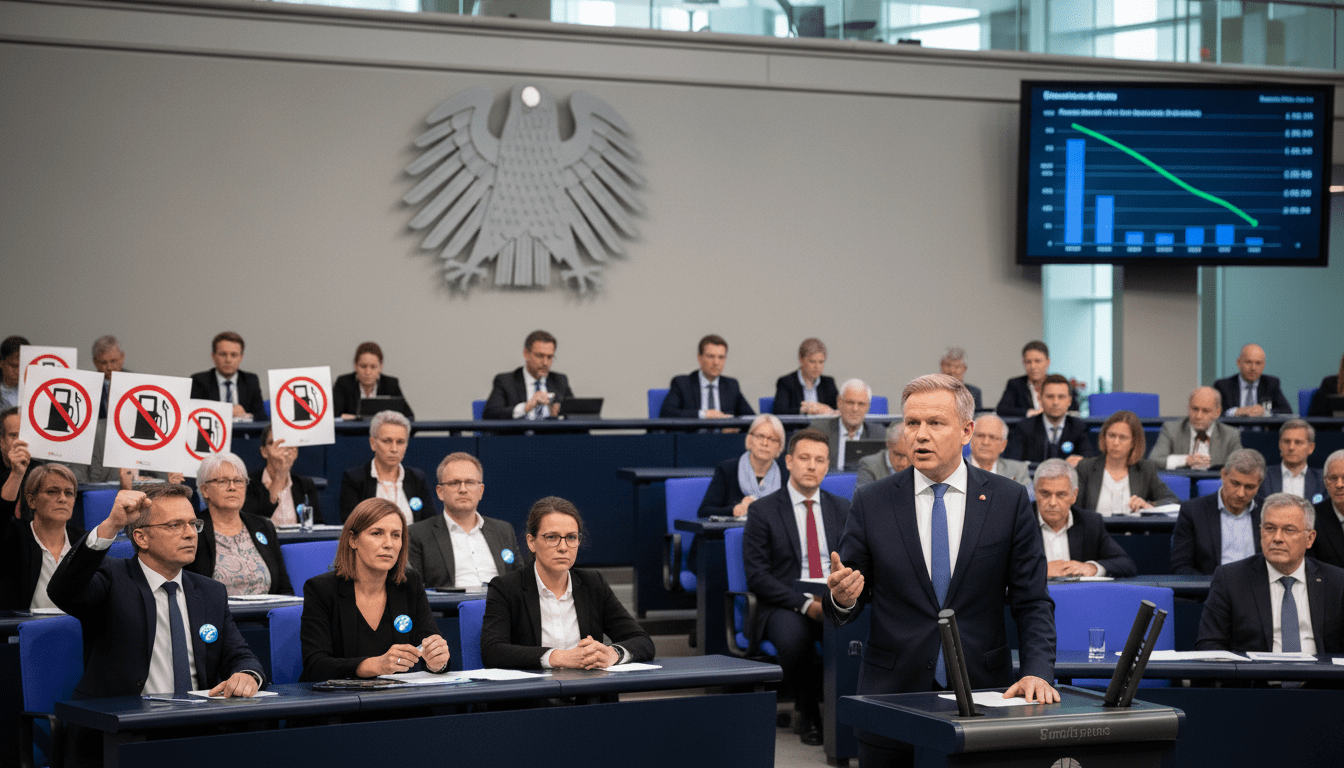
Germany’s Bundestag debate over a proposed tank rebate has sharpened political tensions as the AfD accused the state of profiting from higher fuel prices and the Finance Ministry publicly rejected that claim. The dispute centers on whether rising petrol and diesel costs automatically translate into increased tax receipts that would negate the need for consumer relief. Lawmakers and ministers are now at odds over intervention, conservation trends among drivers, and how short-term measures should align with long-term climate objectives.
AfD accuses state of benefiting from higher fuel prices
The AfD parliamentary group argued on the floor of the Bundestag that the state stands to gain when international events push pump prices up, because value-added and fuel taxes would rise with higher sales prices. In the party’s view, that dynamic undermines calls for a government-funded fuel discount since taxpayers would, in effect, be subsidizing their own relief via larger tax inflows. The charge framed the tank rebate debate in moral terms, suggesting the state should not both collect more and step in to help consumers.
Finance Ministry denies increased revenues
Officials at the Finance Ministry disputed the AfD’s contention, saying recent figures do not show a surge in tax receipts from fuel sales. The ministry’s rebuttal implies that consumption patterns have changed enough that higher per-unit prices are offset by lower overall volumes, keeping VAT and other fuel-related tax revenue steady or falling. That assessment weakens the AfD’s central argument and shifts attention to actual household and business behaviour rather than theoretical tax math.
Drivers appear to be cutting back without state incentives
Economic signals and anecdotal reports suggest many motorists are responding to higher pump prices by reducing consumption rather than demanding compensation. The debate referenced what some describe as a “voluntary speed limit”: drivers are choosing slower speeds and fewer trips to save fuel, effectively lowering aggregate demand. If these trends persist, they could reduce the fiscal case for a broad-based rebate and argue for more targeted measures aimed at vulnerable households.
Green calls for speed limits clash with consumer behaviour
Environmental advocates and the Greens continue to press for regulatory measures such as a permanent speed limit to lock in fuel savings and reduce emissions. But critics in the chamber pointed out that many drivers are already moderating behaviour without new rules, raising questions about the necessity and political appetite for additional legal constraints. The exchange highlighted a deeper split: should policy push citizens to change habits, or acknowledge and support the change already under way through market and personal responses?
Coalition faces incoherent messaging on crisis and climate goals
Opposition speakers noted a contradiction in government rhetoric: ministries encourage citizens to adapt to higher fossil fuel prices by switching heating systems, buying electric cars, or reducing consumption, yet the same institutions declare an emergency when prices rise and demand immediate relief. The coalition government’s posture came under scrutiny when the Bundestag rejected an AfD motion to halt climate policy, underscoring that long-term decarbonisation remains a declared priority. That juxtaposition leaves voters and businesses uncertain about whether short-term interventions will align with or undermine broader climate objectives.
Practical and political trade-offs in designing relief
Designing any fuel relief involves trade-offs between equity, cost, and environmental impact. Universal measures like a tank rebate can be administratively simple but may disproportionately benefit wealthier households that drive more. Targeted support helps those most affected but can be complex to deliver quickly. Lawmakers must also weigh fiscal signals: if tax revenues are not rising as some had feared, the urgency to act on budgetary grounds diminishes, though political pressure to show immediate support for households can remain high.
The parliamentary debate also revisited questions about compensation for habitual high-mileage drivers versus the broader public interest. Supporters of rebates argue that sudden price spikes create hardship for commuters and businesses that rely on road transport, while opponents contend that rewarding heavy fuel consumption contradicts climate aims and fiscal prudence.
Public opinion and market behaviour will be central to how the debate evolves. If drivers continue to conserve and fuel sales remain subdued, momentum for a generous, broad-based rebate may fade, leaving room for more targeted assistance measures. Conversely, renewed price spikes or visible hardship among particular groups could revive calls for rapid government intervention.
Ultimately, the tank rebate conversation has become a proxy for larger tensions in German politics: balancing short-term consumer relief with longer-term climate commitments, and reconciling fiscal responsibility with visible political responsiveness. As the coalition refines its approach, ministers will need to provide clearer signals about policy goals and the criteria that would trigger intervention, or risk further confusion among voters and markets.
