
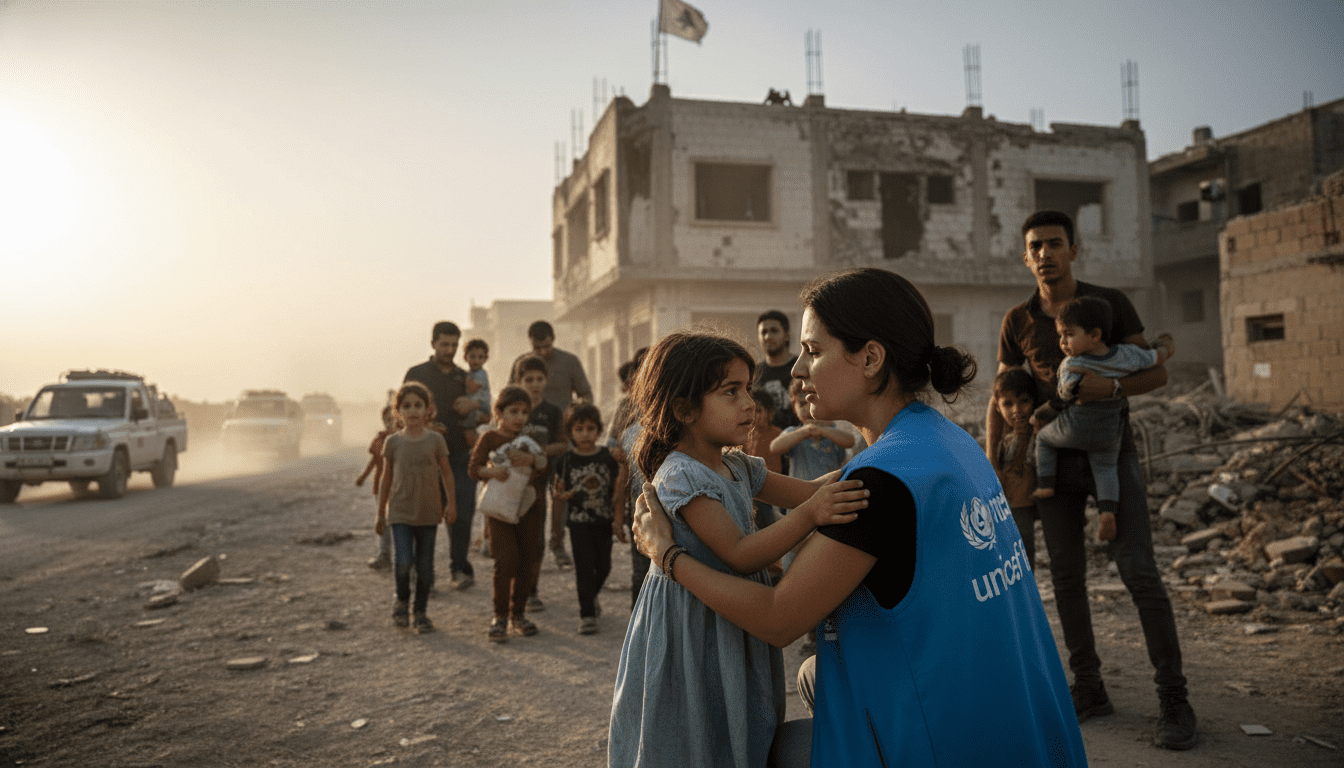
Lebanon ceasefire welcomed by UNICEF as children face mounting toll
UNICEF urges lasting protection for children after a Lebanon ceasefire announced April 17, 2026, as at least 172 children were killed and 415,000 displaced.
UNICEF’s assessment of child casualties and displacement
UNICEF Lebanon said the ceasefire announced on April 17, 2026, offers a critical chance to protect children and families who have endured “immense suffering.”
The agency reported that over the preceding 46 days at least 172 children were killed, 661 injured, and more than 415,000 children were displaced across Lebanon.
UNICEF emphasized that the pause in hostilities must be fully respected and turned into meaningful, sustained protection for children.
Scale of humanitarian need after 46 days of fighting
Humanitarian agencies warn that the large-scale displacement and injuries have strained shelter, health and sanitation services in affected areas.
Many families are living in makeshift sites or with host communities, increasing pressure on already limited water, food and medical supplies.
UNICEF and partners have called for immediate access to deliver life-saving assistance to children and their caregivers.
Ceasefire terms and demands for compliance
UNICEF’s statement underlined that a ceasefire alone does not guarantee safety and called for rules protecting civilians to be upheld by all parties.
The agency urged that the truce include secure humanitarian corridors, unimpeded access for aid workers and assurances against attacks on civilian infrastructure.
Monitoring and accountability mechanisms will be essential to ensure the ceasefire holds and that violations are documented.
Child-focused priorities for recovery and protection
Beyond ending active hostilities, UNICEF highlighted the need for child-centered services including emergency medical care, psychosocial support and the restart of essential education.
Many children who survived bombardment and displacement face trauma, interrupted schooling and increased vulnerability to exploitation.
Providing safe spaces, family tracing and rapid mental health support is critical to preventing long-term harm to a generation of young people.
Coordination with UN agencies and humanitarian partners
UNICEF said it is working with other UN agencies and non-governmental organizations to scale up response plans across Lebanon.
Coordination aims to prioritize the most vulnerable children, restore critical services and rapidly assess damage to homes, schools and clinics.
Donors and regional actors have been urged to fund emergency operations that can expand shelter, health and education interventions immediately.
Immediate operational steps on the ground
Humanitarian responders are preparing to move relief supplies, deploy child protection teams and reestablish mobile health units where clinics were damaged.
Rapid needs assessments are underway to map displaced populations, identify urgent medical cases and prioritize locations for temporary learning and safe spaces.
Ensuring that assistance reaches children irrespective of location or affiliation is being framed as a central operational imperative.
The announcement of a ceasefire in Lebanon presents a pivotal moment to shift from survival to recovery for hundreds of thousands of children, but UNICEF and aid agencies stress that lasting protection will depend on sustained access, accountability for violations and swift, well-funded humanitarian action.
