
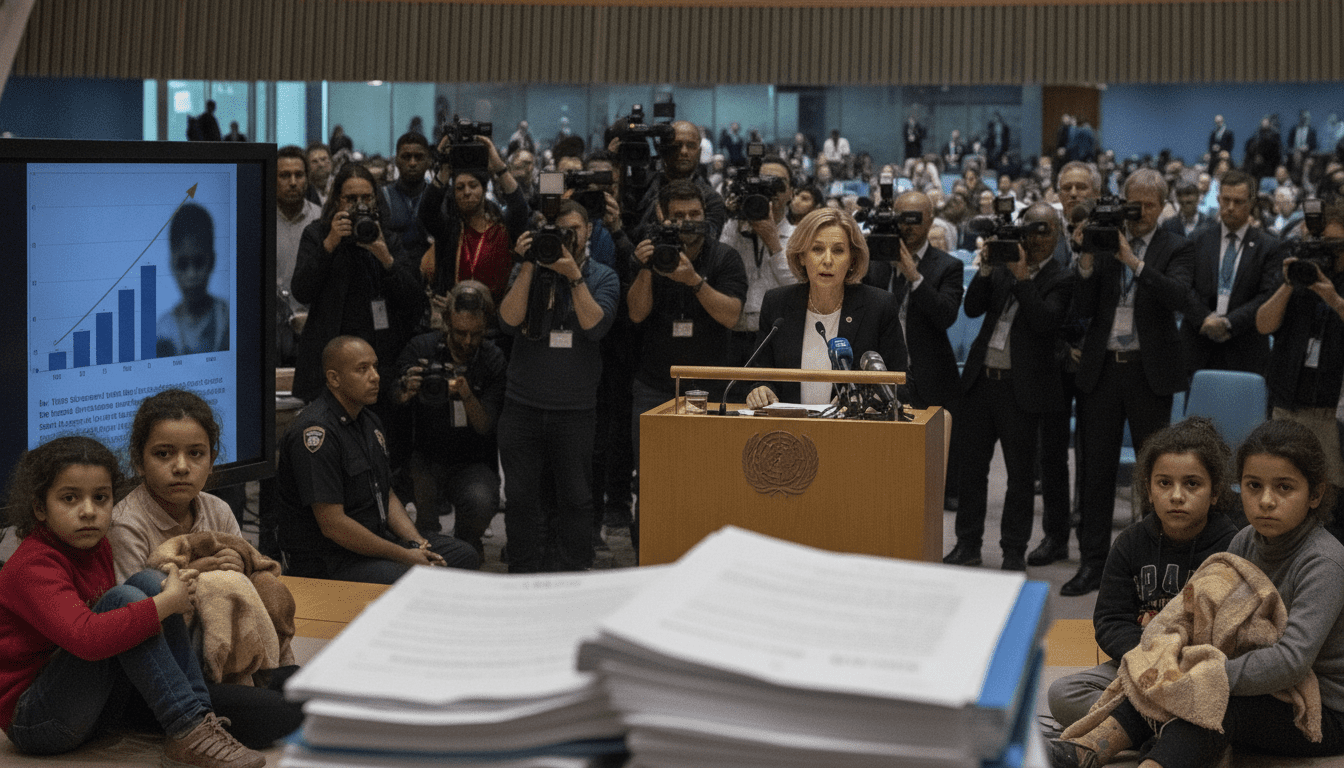
UN committee warns Palestinian children unprotected as Israel curbs human rights groups
UN committee warns Palestinian children unprotected as Israel restricts NGOs, jeopardizing child protection, legal aid and humanitarian work across the occupied Palestinian territories.
UN committee issues formal warning
The United Nations Committee on the Rights of the Child has warned that Palestinian children are “increasingly unprotected” amid a growing squeeze on civil society operating in the occupied Palestinian territories. The 18-member expert body, which reports to the UN Office of the High Commissioner for Human Rights, said measures taken by Israeli authorities are restricting organisations that provide critical services and legal defence for children. The committee’s statement framed the curbs as directly undermining child protection mechanisms in Gaza, the West Bank and East Jerusalem.
Designation of NGOs as security threats
The committee explicitly criticised Israel’s practice of designating certain civil society groups as terrorist organisations, a step that the experts said provides legal grounds for shutting down and obstructing their work. Israeli moves since 2021 have included the formal outlawing of several prominent Palestinian NGOs, actions that aid groups say have chilled advocacy, documentation and legal assistance. Experts warned that such labels carry far-reaching consequences beyond closure, affecting partners, donors and the ability of local staff to operate safely.
Tactics cited: raids, travel bans and sanctions
UN experts listed a range of enforcement tools used against organisations and individuals: military raids on offices, travel restrictions, personal financial sanctions, threats of arrest and the destruction of records. In some cases, the committee said Israel has threatened secondary sanctions against foreign partners and donors, complicating international cooperation. The combination of administrative pressure and criminalisation, the body concluded, is creating an environment in which human rights work is increasingly hazardous and difficult to sustain.
Expiry notices and ministry action
On 30 December, 37 non-governmental organisations were formally notified that their registrations would expire the following day, initiating a statutory two-month window after which they would be required to halt operations across Gaza, the West Bank and East Jerusalem. Israel’s Ministry of Diaspora Affairs later announced a wider suspension policy, saying groups that failed to meet “security and transparency requirements” would see licences frozen. The ministry also said it would act against organisations that did not disclose lists of Palestinian employees, a demand critics say risks singling out local staff and jeopardising their safety.
Operational squeeze and humanitarian warnings
More than 50 international NGOs warned in January that new registration and oversight measures threatened to halt assistance at a moment of acute humanitarian need in Gaza. The groups told authorities that narrow, selective metrics used to assess INGO operations failed to capture how relief and protection services are actually delivered on the ground. Humanitarian agencies say the measures are already impeding movements, shrinking the pool of service providers and making it harder to respond to urgent needs among children and families.
Impact on child protection and legal aid
Child protection providers have historically played a critical role in documenting violations, representing minors in military and civilian courts and delivering psychosocial and material support to families. The committee stressed that without these organisations, Palestinian children face a heightened risk of rights violations occurring with impunity. UN and rights monitors warned that cutbacks to legal aid and case documentation will undermine accountability for abuses and reduce children’s access to basic protections.
Doctors Without Borders and judicial pushback
The clampdown has not been limited to Palestinian groups. Israel moved to ban Doctors Without Borders (MSF) after the organisation declined to hand over lists of Palestinian staff, prompting 17 international aid agencies to petition Israel’s Supreme Court in February. A court injunction has so far allowed MSF and others to continue operating temporarily, but legal challenges do not remove the immediate operational and security risks that staff and partners face. Aid groups say repeated legal uncertainty is itself a deterrent to sustained humanitarian engagement.
UN demands and international accountability calls
The Committee on the Rights of the Child and the UN Office of the High Commissioner for Human Rights urged Israeli authorities to lift restrictions on child rights defenders and to allow NGOs to resume full operations without threats of criminalisation. The experts called on the international community to deploy “all available means” to hold authorities accountable for measures that endanger children and to prioritise steps that restore protective services. The committee underscored that protecting organisations that work with minors is essential to upholding children’s rights under international law.
Palestinian children face immediate and longer-term consequences if organisations that defend their rights are dismantled or driven from the field, experts say; diminished legal support, interrupted aid flows and reduced monitoring capacity all increase the likelihood of unaddressed violations. With registration deadlines and legal processes ongoing, rights groups and UN bodies are pressing for rapid remedies to avert further erosion of child protection systems in the occupied territories.
