
EU Meets Taliban Delegation in Brussels to Discuss Consular Services
EU meets Taliban delegation in Brussels to discuss consular services and migrant returns, prompting criticism from rights groups and activists over human rights concerns.
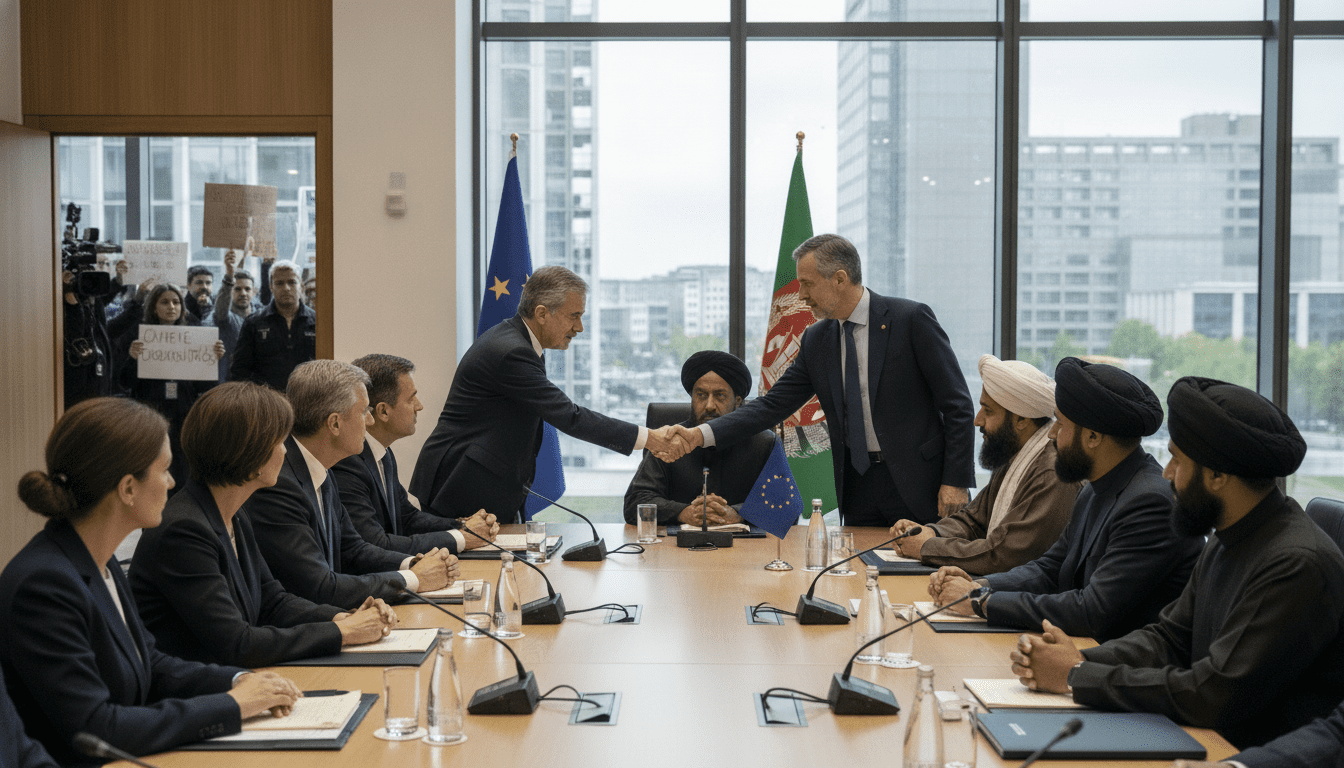
The European Union met a Taliban delegation in Brussels to discuss the resumption of consular services for Afghans in the EU and arrangements described by the Taliban as a “dignified return” of migrants. The meeting, held at an undisclosed location in the Belgian capital, was called historic by Taliban officials and immediately prompted sharp criticism from human rights groups and public figures. EU representatives said they were addressing practical issues affecting Afghan nationals in Europe, while stressing that no member state has recognized the Taliban government in Kabul.
EU and Taliban Hold Brussels Talks
The Brussels meeting brought EU diplomats into direct contact with Taliban representatives for discussions that officials said were technical in nature. Taliban spokespersons characterized the encounter as a step toward normalizing services for Afghans abroad and framed it as a breakthrough for bilateral problems. EU sources described the talks as narrowly focused, with an emphasis on consular access and migration-related procedures rather than formal diplomatic recognition.
Agenda Focused on Consular Services and Returns
EU officials and the Taliban reportedly concentrated on methods to restore consular support to Afghan citizens living or traveling within the EU, including document issuance and registration processes. Both sides discussed mechanisms intended to facilitate what the Taliban called a dignified process for migrants who may be returned to Afghanistan. EU diplomats emphasized that any operational arrangements would need to comply with European legal obligations, including asylum and non-refoulement protections.
Belgium Issued Short-Term Visas
Belgium provided the Taliban delegation with visas valid for 24 hours to permit travel to Brussels, a measure that stopped short of broader Schengen access or formal accreditation. Belgian Foreign Minister Maxime Prévot said his government did not recognize the Taliban regime but had agreed to issue the temporary permits at the request of EU partners. The brief visas were intended solely to enable participation in the Brussels meetings and did not alter Belgium’s official stance toward the Taliban government in Afghanistan.
Human Rights Groups Warn of Risks
Human Rights Watch and other advocacy organizations condemned the meetings, arguing that engaging the Taliban without firm human rights safeguards risks undermining Europe’s legal and moral obligations. Researchers warned that pragmatic talks could be perceived as legitimizing a regime responsible for widespread abuses, and they stressed that protection and accountability must take precedence over migration-control objectives. Rights advocates urged the EU to ensure that any operational cooperation does not facilitate returns to situations where individuals face persecution or violence.
Prominent Voices Condemn Engagement
High-profile critics amplified those concerns, with Nobel laureate Malala Yousafzai calling on European leaders not to confer legitimacy on a government she described as responsible for one of the world’s worst human rights crises. Public statements on social media demanded that any engagement begin and end with clear commitments to the rights of Afghan women and girls. The backlash from activists and rights groups is likely to intensify scrutiny of the EU’s approach and to shape public debate in member states.
Diplomatic Precedent and Limits
Although participants framed the Brussels talks as limited and technical, the encounter marks a departure from strict diplomatic isolation and raises questions about where pragmatic cooperation ends and political recognition begins. No EU country has formally recognized the Taliban government since it regained control of Afghanistan in August 2021, and officials insist that the meeting does not alter that legal position. Nevertheless, the talks expose a tension within EU policymaking between managing migration flows and upholding international human rights commitments.
The outcome of the discussions has not been publicly detailed by EU institutions, and it remains unclear what operational steps, if any, will follow the delegation’s visit. Brussels faces pressure from member states to address practical consular problems and migration management, while also confronting demands from civil society to maintain strict human rights conditions for any engagement. Observers say future EU action will be closely watched for signs of either increased technical cooperation or renewed emphasis on accountability and protection.
