
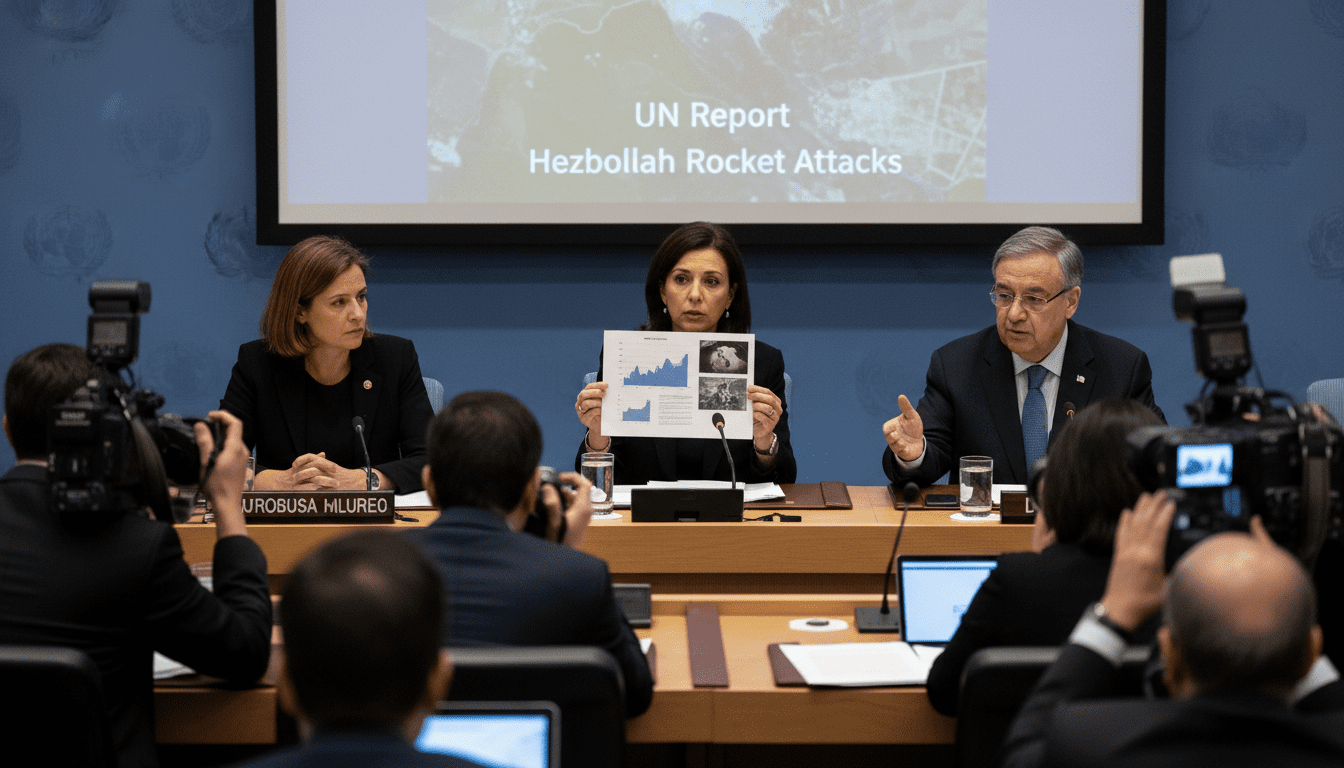
UN report finds Hezbollah rocket attacks may have breached international humanitarian law
UN report says Hezbollah rocket attacks and Israeli strikes in March may have violated humanitarian law, citing civilian deaths and killed journalists.
The United Nations human rights office released a report on Friday finding that Hezbollah rocket attacks and recent Israeli strikes during the early March escalation may have amounted to serious breaches of international humanitarian law. The UN inquiry examined the first three weeks of fighting that began on March 2 and documented strikes that hit civilian areas in both Lebanon and Israel. The report raises concerns about the lawfulness of attacks by both parties and highlights significant civilian harm.
UN findings on strikes and rockets
The Office of the United Nations High Commissioner for Human Rights documented multiple incidents in which multi‑storey residential buildings were struck, in some cases collapsing and killing whole families. The report cited a March 8 strike in Sir el‑Gharbiyeh, Nabatieh governorate, where at least 13 civilians were reported killed, including women and children. OHCHR spokesperson Thameen Al‑Kheetan said such outcomes may constitute serious violations of international humanitarian law given the predictable civilian presence in those buildings.
The report also recorded cases in which warnings prior to strikes were either not given or were judged ineffective, reducing civilians’ opportunity to evacuate to safety. UN investigators said that when warnings are issued, they must be feasible and adequate to allow genuine protection; otherwise, they do not absolve attacking forces of legal responsibility. The UN noted it had not received immediate responses from the Israeli military or Hezbollah to the findings.
Civilian toll and displacement in Lebanon
The UN assessment came amid a mounting humanitarian toll in southern Lebanon where more than 2,400 people have been reported killed since Israeli bombardment and ground operations began. Large swathes of towns and villages sustained damage, and thousands of residents were displaced as front‑line areas became combat zones. Hospitals, schools and other key civilian infrastructure suffered interruptions, deepening the crisis for communities already struggling to cope.
Families whose homes were destroyed face urgent shelter and basic needs shortages, according to humanitarian sources cited by the UN. Aid groups are reporting constrained access in parts of southern Lebanon due to security risks and damaged transport routes. The scale of destruction has prompted calls from international agencies for expanded humanitarian corridors and safe passage for civilians in need.
Warnings, targeting and alleged violations
The UN report scrutinized the proportionality and distinction principles that govern lawful targeting in armed conflict, concluding that some Israeli strikes could not be reconciled with those standards. Investigators found instances where residential buildings were hit and entire households killed, outcomes that may indicate unlawful attacks if military advantage was not proportionate to the civilian cost. The report emphasized that adherence to international humanitarian law requires concrete measures to avoid or minimize civilian harm.
On the other side, the UN criticized Hezbollah for firing unguided rockets that lack precision and are incapable of reliably discriminating between military and civilian targets. Those launches damaged buildings and infrastructure inside Israel and, according to the report, likely violated legal obligations that prohibit indiscriminate attacks. The investigators urged both parties to abide by their duties to protect civilians and civilian objects.
Hezbollah rocket attacks and impact inside Israel
Hezbollah’s rocket barrages, launched in the wake of US‑Israeli actions against Iran that precipitated the exchange, were documented as striking populated areas and damaging civilian structures. While such barrages were presented by Hezbollah as retaliatory strikes, the UN noted their inaccuracy and the foreseeable risk to noncombatants. Inside Israel, residential neighborhoods and services were affected, causing casualties and forcing evacuations in some localities near the border.
The report did not attribute the totality of civilian harm on either side to a single cause, but it stressed that both the tactics employed and the weaponry used shaped the pattern of losses. In particular, the use of unguided rockets in populated regions raises distinct legal and moral concerns given the established duty to direct operations only at military objectives.
Journalists killed and attacks on media
The OHCHR singled out attacks affecting journalists as potentially amounting to war crimes if shown to be deliberate. An Israeli airstrike on Wednesday hit the village of at‑Tiri in southern Lebanon, killing veteran journalist Amal Khalil and wounding a colleague, Zeinab Faraj. According to Lebanese health authorities, rescue teams attempting to recover victims came under fire, forcing them to withdraw and complicating rapid life‑saving efforts.
Lebanese officials, including the prime minister, denounced the strike, with claims that such attacks could constitute crimes against humanity. The UN noted that Khalil was the ninth journalist to be killed in Lebanon this year, underscoring the acute risks faced by media personnel operating in active conflict zones and the imperative of protecting civilians who document and report on hostilities.
Ceasefire status and political developments
A fragile ceasefire was reported following the initial weeks of escalation, with political leaders indicating temporary pauses in large‑scale operations. The truce was announced to be extended for an additional three weeks by the United States, according to public statements, creating a narrow window for diplomacy and humanitarian relief. Despite the lull, ground forces remained in some seized border areas and tensions persisted on both sides of the frontier.
Diplomatic actors and humanitarian agencies have called for the cessation of hostilities to be made more durable and for unfettered access to affected populations. The UN report urged immediate measures to prevent further civilian casualties and recommended transparent, independent investigations into alleged breaches of international law.
The United Nations human rights office said its findings aim to inform accountability processes and to press parties to respect legal obligations that protect civilians during armed conflict. The report’s publication adds pressure on international and regional actors to pursue de‑escalation, allow humanitarian operations, and ensure impartial investigations into the incidents documented.
