
Federal judge orders removal of Trump name from Kennedy Center facade
Federal judge orders removal of ‘Donald J. Trump’ from the Kennedy Center facade after the president’s takeover sparked cancellations, litigation, and protests.
The Kennedy Center in Washington has been stripped of signage bearing the name “Donald J. Trump” after a federal judge ordered its removal, marking a legal rebuke to the president’s takeover of the national performing arts complex. The decision follows months of controversy that began when the facility’s leadership was replaced and its marquee was altered, provoking cancellations, lawsuits and public demonstrations.
Judge gives board tight deadline to remove letters
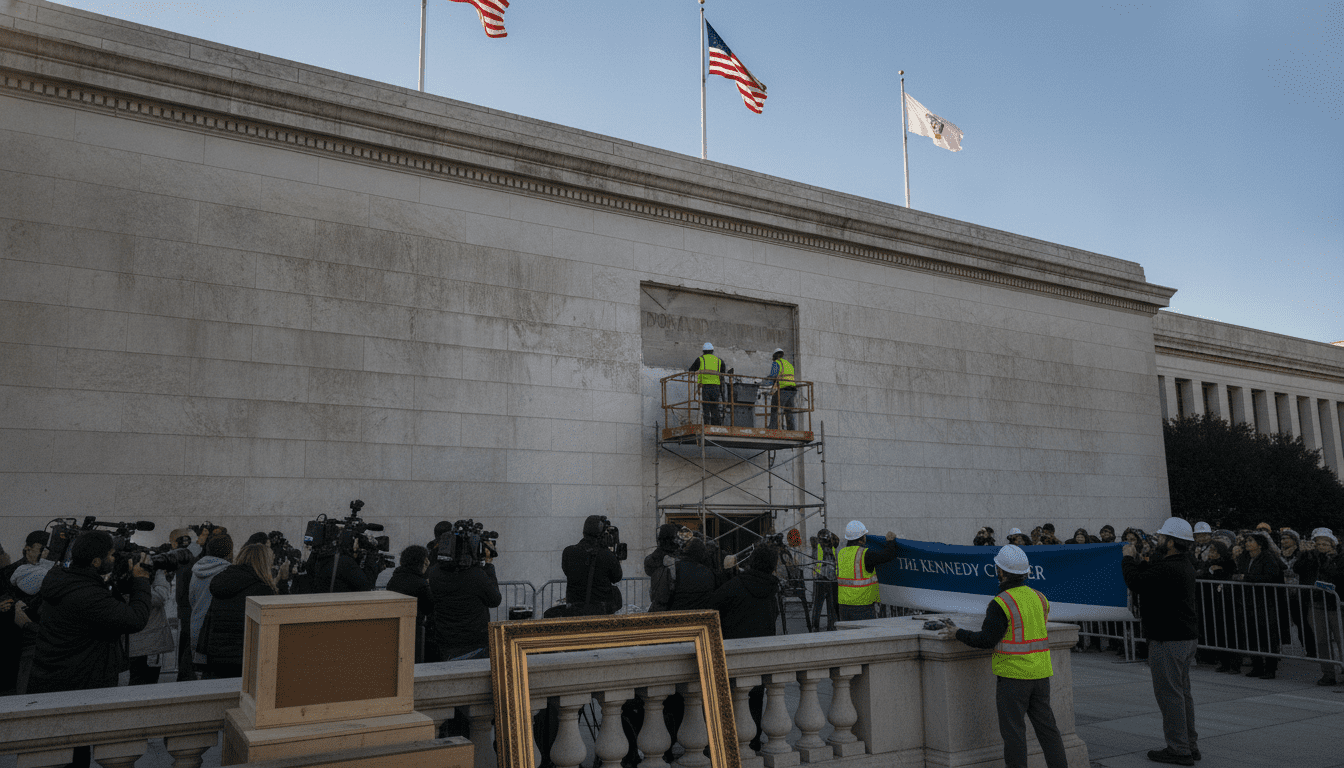
A federal judge intervened this week, instructing the Kennedy Center’s board to take down the oversized letters that had been affixed above the institution’s name. The court originally set a deadline late on a Friday and, after a board request, extended it to the following Saturday afternoon to allow work crews to complete the dismantling.
The order also directed the removal of the Trump name from institutional materials, including email headers and program guides, while the litigation proceeds. The judge cited legal limits on unilateral renaming and sign changes for a monument established by legislative action.
How the Trump name came to sit above John F. Kennedy Center
On December 19, 2025, large letters reading “Donald J. Trump and” were installed above the line “John F. Kennedy Center for the Performing Arts,” creating a conspicuous and controversial new façade. The change occurred two weeks after the center had hosted the World Cup draw, an event that included a ceremony in which FIFA’s president presented the U.S. president with a newly created prize.
The signage and the leadership shake-up followed the president’s assumption of direct control of the center shortly after his inauguration. Officials who had managed programming and partnerships were dismissed, and the president installed loyalists to oversee the venue’s operations.
Takeover led to cancellations and steep attendance declines
Following the takeover, a string of scheduled performances and partnerships were canceled or withdrawn, with some artists and producers publicly distancing themselves from the center. High-profile withdrawals included creative teams associated with major productions, and ticket sales fell sharply as patrons and presenters reacted to the new management.
Those cancellations, coupled with uncertainty around programming and leadership, prompted criticism from arts managers and former staff who warned that the cultural damage could be long-lasting. Former program directors said rebuilding audience trust and donor support would be a difficult, multi-year effort.
Court concludes only Congress can rename the national memorial
In his ruling, the judge emphasized that the center was created by Congress in 1964 to honor the late President John F. Kennedy and that its name is protected by federal statute. The court found there was no legal basis for a unilateral rebranding by the president and ordered a reversal of the changes to the building and official materials.
The decision also blocked a planned closure announced in February 2026, which had proposed taking the center offline in July for a two-year renovation. The court ruled that the planned shutdown could not proceed without compliance with statutory protections and oversight, curbing what the judge described as an attempt to alter a federally established institution without legislative approval.
Crowds gather, reactions split outside the center
On the weekend crews removed the letters, crowds and camera crews gathered outside the Kennedy Center to watch and to voice their positions. Lawmakers, local advocates and visitors framed the day as a victory for the rule of law, while some supporters of the president expressed frustration at what they called judicial overreach.
Among those celebrating, Representative Joyce Beatty described the order as a restoration of the public’s ownership of the national memorial and posted video remarks from inside the center’s grand foyer. Others at the site offered sharp criticism of the president, calling the episode an affront to civic tradition and cultural institutions.
Uncertainty remains about the Kennedy Center’s path forward. Former managers and leading artists warn that reversing the physical signage is only the first step, and that repairing reputational harm, restoring programming partnerships and re-establishing donor confidence will require sustained effort and clear governance.
The legal case is expected to continue, and the court’s order leaves in place a framework for further proceedings that could shape the center’s governance and operations in the months ahead.
