
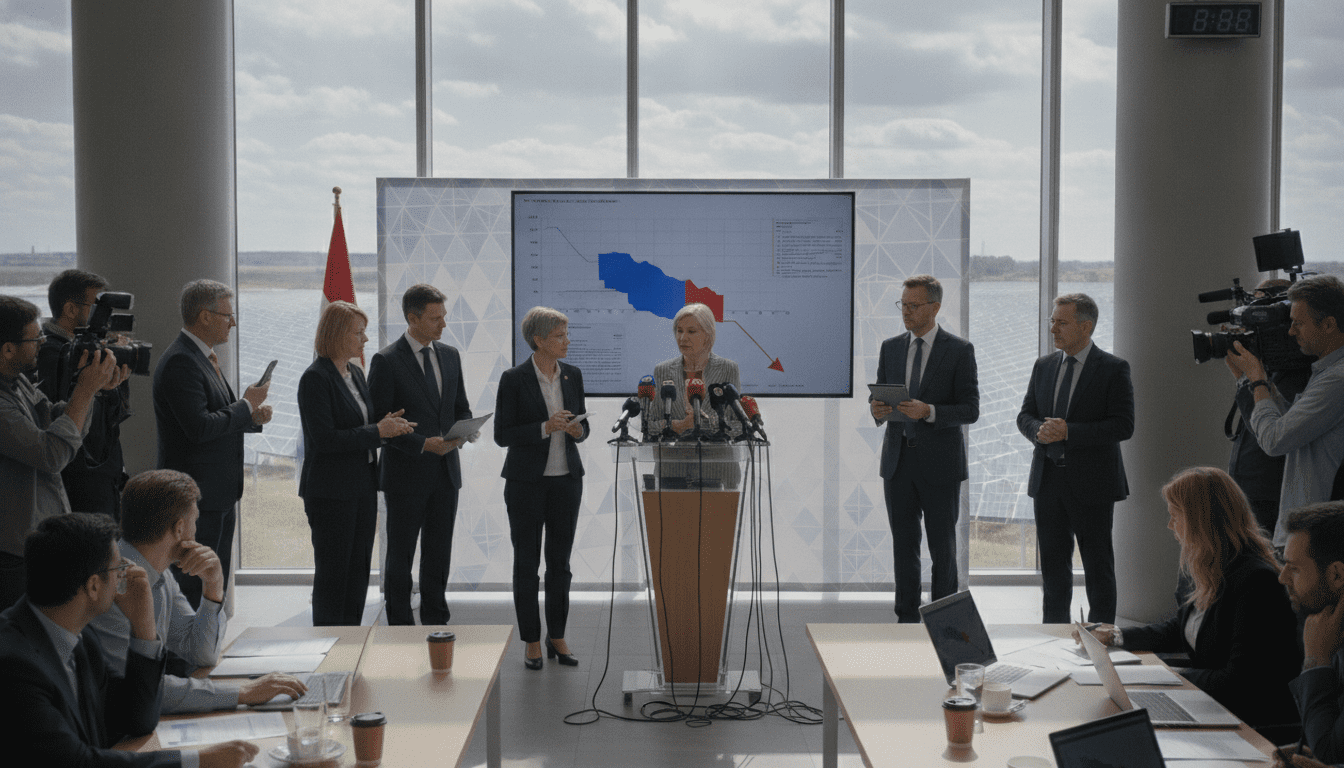
Negative electricity prices rise as renewables flood the grid, study finds
Analysis finds negative electricity prices are rising in Germany as renewables outpace demand, highlighting grid bottlenecks and urgent storage and grid upgrades.
The occurrence of negative electricity prices has become more frequent, according to a new evaluation of market data, signaling growing imbalances between generation and consumption. The analysis links the trend to high midday solar output and insufficient transmission capacity, which together push wholesale prices below zero when supply outstrips demand. Market observers say the pattern underscores the urgency of expanding grid infrastructure and adding flexibility measures to integrate renewable energy reliably.
Analysis identifies pattern of more frequent negative pricing
A recent evaluation of market data shows that episodes of negative wholesale power prices are now a recurring feature rather than an exception. These negative price intervals most often appear during hours of strong solar generation and relatively low electricity demand, when the market cannot absorb all available renewable output. Analysts interpret the pattern as a sign that current grid and market arrangements are struggling to accommodate the rapid rise in renewable capacity.
Midday solar surplus is a key driver
Large-scale and rooftop solar installations produce sharp supply peaks around midday on sunny days, creating a temporary surplus that the market must clear. When demand remains weak, prices can fall below zero, effectively forcing generators to pay to remain connected to the grid or to be curtailed. This dynamic is amplified in regions with high concentrations of photovoltaic capacity, where local generation can overwhelm distribution networks during peak insolation.
Transmission constraints and regional congestion worsen oversupply
Grid bottlenecks prevent surplus electricity from moving quickly to demand centers or across borders, which amplifies local price collapses. Constrained lines and limited interconnection capacity mean that excess generation cannot be exported or redirected, so market prices reflect oversupply in specific zones. Operators sometimes respond with curtailment orders, but curtailment reduces renewable output and can be costly to administer, while leaving the structural causes unaddressed.
Negative prices reshape generator economics and market behavior
Persistent negative electricity prices alter the incentives faced by conventional and flexible generators. Thermal plants that cannot ramp down easily may face financial strain if they are repeatedly paid to avoid feeding electricity into the grid. At the same time, negative prices create opportunities for storage operators and demand-response programs to capture cheap or even negatively priced energy, but insufficient storage capacity limits that mitigation today. Traders and utilities are increasingly adjusting bidding strategies and maintenance schedules to manage exposure to price swings.
Policy and investment responses under discussion
Energy regulators, grid operators and policymakers are pointing to three broad responses: faster grid expansion, greater storage deployment, and enhanced demand-side flexibility. Strengthening transmission corridors and adding interconnectors can reduce regional imbalances by enabling excess power to reach other markets. Large-scale batteries, hydrogen production, and flexible industrial loads can absorb surplus generation, while market reforms could better reward providers of flexibility and fast response.
Short-term measures and long-term planning both required
In the near term, targeted curtailment protocols and temporal price signals can reduce the most disruptive negative-price events, but these are palliative rather than structural fixes. Long-term solutions require coordinated planning between network developers and market designers so that grid expansion, storage siting and flexibility incentives follow the geographic and temporal patterns of renewable generation. Without that alignment, negative electricity prices will remain a recurring symptom of an electricity system under strain.
The rising frequency of negative electricity prices is a market signal that Germany’s power system is entering a new phase of complexity as variable renewables scale up. Tackling the problem will demand a combination of investments in networks and storage, smarter market rules to value flexibility, and clearer prioritization of projects that relieve congestion where renewables are most concentrated. Only a coordinated push on those fronts will convert intermittent surpluses into manageable resources rather than recurring disruptions.
