
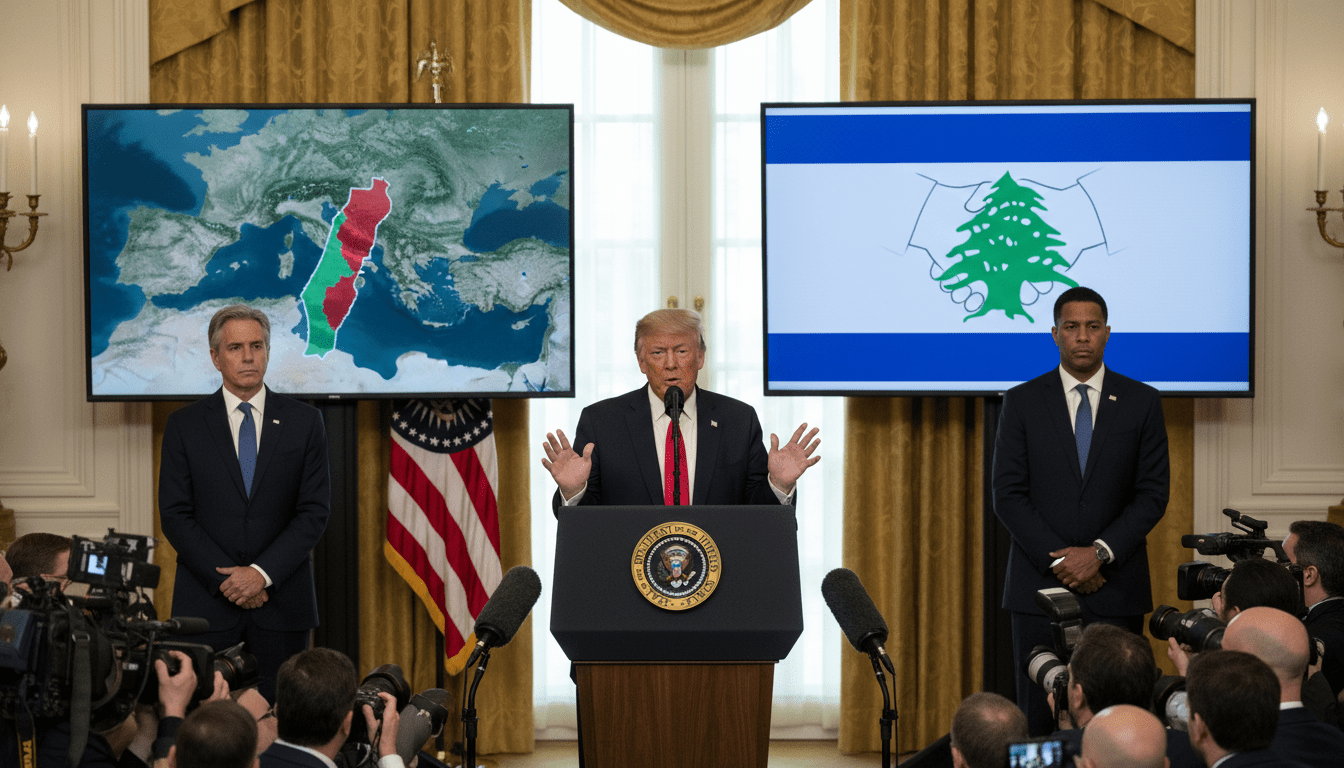
Hezbollah-Israel ceasefire announced by Trump, a ten-day pause that leaves Lebanon asking what’s next
Trump announced a ten-day Hezbollah-Israel ceasefire starting at midnight, a pause that leaves many Lebanese uncertain about enforcement and what happens next.
The United States president announced a ceasefire between Hezbollah and Israel to begin at midnight and to run initially for ten days, calling the halt a diplomatic achievement. The Hezbollah-Israel ceasefire was presented as a pause in hostilities, though details on enforcement and monitoring were sparse. Many Lebanese citizens reacted with indifference or cautious skepticism, asking whether the truce will hold and what follow-up steps will come from regional actors.
Trump Announces Ceasefire and Claims a Record
President Donald Trump announced the Hezbollah-Israel ceasefire on Thursday evening, saying the agreement would be effective from midnight and last for ten days. He also asserted that this marked the tenth war he had brought to an end, a claim he did not substantiate with public evidence. The announcement framed the pause as an immediate de-escalation while leaving unanswered questions about the mechanisms that will sustain it.
Terms and Immediate Effects of the Truce
According to the announcement, the ceasefire applies to exchanges between Hezbollah and Israeli forces and is scheduled to last ten days initially. The public statement did not specify monitoring arrangements, third-party guarantors, or consequences for violations. Local reports from Lebanon and Israel after the midnight deadline showed a reduction in reported exchanges, but independent verification remained limited.
Public Reaction in Lebanon and Northern Israel
On the streets of Beirut and towns nearer the border, many Lebanese residents expressed a muted response to the Hezbollah-Israel ceasefire, describing relief mixed with fatigue. For communities that have endured repeated rounds of fighting, a temporary pause offers respite but little certainty about reconstruction or long-term safety. In Israeli border communities, residents welcomed a reduction in immediate danger while remaining cautious about a potential resurgence.
Military and Diplomatic Uncertainties Persist
Military analysts cautioned that a stated Hezbollah-Israel ceasefire is only as durable as the parties’ willingness to respect it and the presence of effective enforcement mechanisms. Both sides retain significant conventional and asymmetric capabilities that could trigger renewed clashes if provocations occur. Diplomats warned that without clear political or security arrangements, localized skirmishes or miscalculations could rapidly unravel the pause.
Trump’s Role and the International Response
The U.S. role in announcing the truce places Washington at the center of the diplomatic narrative, even as other international actors have long been involved in efforts to reduce border violence. International reaction in the immediate aftermath was measured, with few major capitals issuing detailed endorsements or oversight plans. Observers noted that presidential proclamations can help lower tensions temporarily but typically require follow-up diplomacy and multilateral engagement to produce sustained results.
Humanitarian and Political Implications for Lebanon
A short-term Hezbollah-Israel ceasefire may provide space for humanitarian relief to reach affected communities and for emergency services to address damage and displacement. However, Lebanese civil society leaders and aid organizations stressed that ten days is insufficient to meet longer-term recovery needs or to stabilize communities financially and psychologically. Politically, the pause does not resolve the core disputes that feed periodic escalations, leaving many in Lebanon skeptical that the truce will translate into a lasting political settlement.
The declared pause between Hezbollah and Israel offers an immediate but fragile reduction in violence, giving residents a temporary sense of breathing room while raising pressing questions about monitoring, accountability, and long-term solutions.
