
Tour de France 2026: Route, Key Stages and Contenders from Barcelona to Paris
Tour de France 2026 route unveiled: 21 stages from Barcelona to Paris, 3,321 km, two Alpe d’Huez finishes, Galibier ascent; favorites Pogacar, Vingegaard.
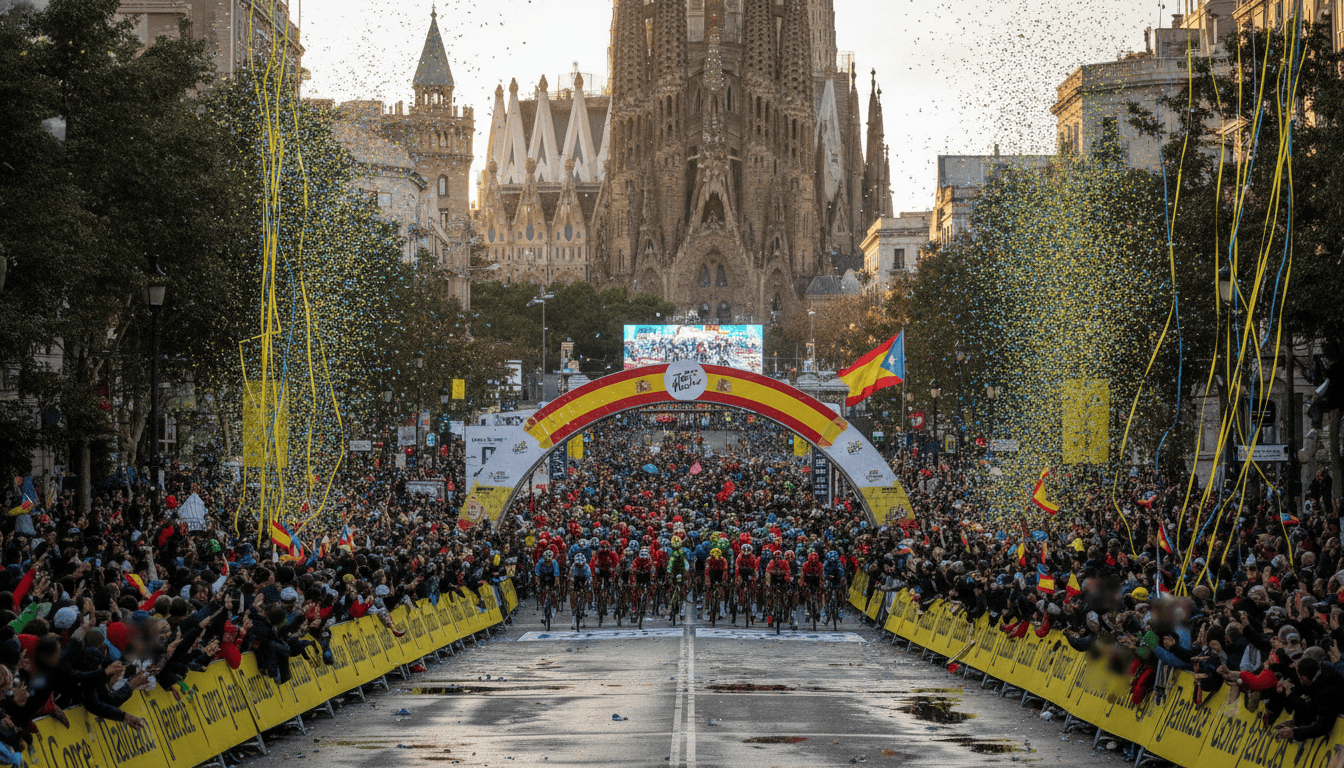
The Tour de France 2026 began on July 4, 2026, with a Grand Départ in Barcelona and will conclude on July 26, 2026, on the Champs-Élysées in Paris. The race covers 21 stages and a total of 3,321 kilometres, testing riders with eight mountain finishes, two time trials and 54,450 metres of climbing. This edition opens with a team time trial in Catalonia and reserves decisive high-mountain days, including back-to-back finishes on Alpe d’Huez and a Galibier crossing, that are likely to shape the general classification.
Grand Départ in Barcelona and early terrain
The race opens with a 19.6-kilometre team time trial in Barcelona on July 4 that finishes near the Montjuïc and the Olympiastadium. The short, technical course and final ramps make it a tense first chance for teams to claim time and put pressure on rivals. Stage 2 through Tarragona and the mixed profiles of the opening week ensure early opportunities for punchy climbers and strong sprinters alike.
Stage makeup, distance and rest days
Organisers have scheduled 7 flat stages, 4 hilly stages and 8 mountain stages, distributed across 21 days plus two rest days on July 13 and July 20. The route traverses 29 départements and totals 3,321 km, with the peloton facing two time trials: the team effort on day one and a 26.1-kilometre individual time trial between Évian-les-Bains and Thonon-les-Bains on July 21. These mixed features create openings for both GC specialists and stage hunters.
Königsetappe: Galibier, Croix de Fer and Alpe d’Huez
The penultimate mountain block is the declared Königsetappe on July 25, a 170.9-kilometre ordeal that includes the Col de la Croix de Fer, the Col du Télégraphe and the Col du Galibier at 2,624 metres. Riders will face 17.7 kilometres averaging 6.9 percent to reach the high point, followed by the Col de Sarenne and a final ascent to Alpe d’Huez. These climbs, combined with the earlier Alpe d’Huez summit on July 24, present a rare double test of endurance and tactics in the final week.
Double Alpe d’Huez and mountain strategy
Alpe d’Huez serves as a finish on both July 24 and July 25, the first after a shorter, intense 127.9-kilometre stage and the second as the climax of the long mountain day. The two-stage sequence amplifies the importance of team support, recovery and energy management. Riders and directors will have to balance aggressive moves early with preservation for the second ascent, making these days likely decisive for the overall podium.
Favorites and the expected duel for yellow
The pre-race narrative centres on a duel between defending champion Tadej Pogačar and Jonas Vingegaard, who both come into the Tour with strong seasons. Pogačar seeks a fifth title after winning in 2025, while Vingegaard, a two-time winner himself, arrives fresh from victories in the Giro d’Italia and Paris–Nice. French hope Paul Seixas, 19, has drawn attention after strong spring results and remains one to watch, while Remco Evenepoel and Florian Lipowitz are also named among realistic podium contenders.
German interest and the Vogesen stage near the border
German riders will find moments to shine, notably on the July 18 Vogesen stage that starts in Mulhouse, just 20 kilometres from the German border. That 155.3-kilometre day includes three first-category climbs—Grand Ballon, Ballon d’Alsace and Col du Haag—and could produce loud local support for German contenders. Florian Lipowitz, racing with Red Bull–Bora–hansgrohe alongside Remco Evenepoel, returns under elevated expectations after a podium in his previous Tour.
Teams, captains and race dynamics
A total of 23 teams and 184 riders start the Tour de France 2026, with established squads fielding clear leaders for GC, sprint and classics ambitions. UAE Team Emirates enters with Tadej Pogačar, while Team Visma-Lease a Bike leads with Jonas Vingegaard. Decathlon CMA CGM headlines the French challenge with Paul Seixas; Red Bull–Bora–hansgrohe nominate a two-pronged leadership with Evenepoel and Lipowitz. Team tactics, especially on mountain stages and in the team time trial, will determine who can protect leaders and apply pressure.
Broadcast plans and how to follow the race
Live television coverage is available in Germany through the ARD, which begins daily broadcasts around 14:00 CET and supplements with earlier streaming on its online service. Eurosport provides free-to-air coverage in parts of Europe and additional streaming is available via Discovery’s platforms and commercial services. International viewers should consult local broadcasters for start times, as coverage windows vary according to stage profiles and local schedules.
The Tour de France 2026 promises a blend of tactical time trials, explosive mid-mountain stages and punishing Alpine climbs that should produce a dramatic battle for the yellow jersey over three weeks.
