
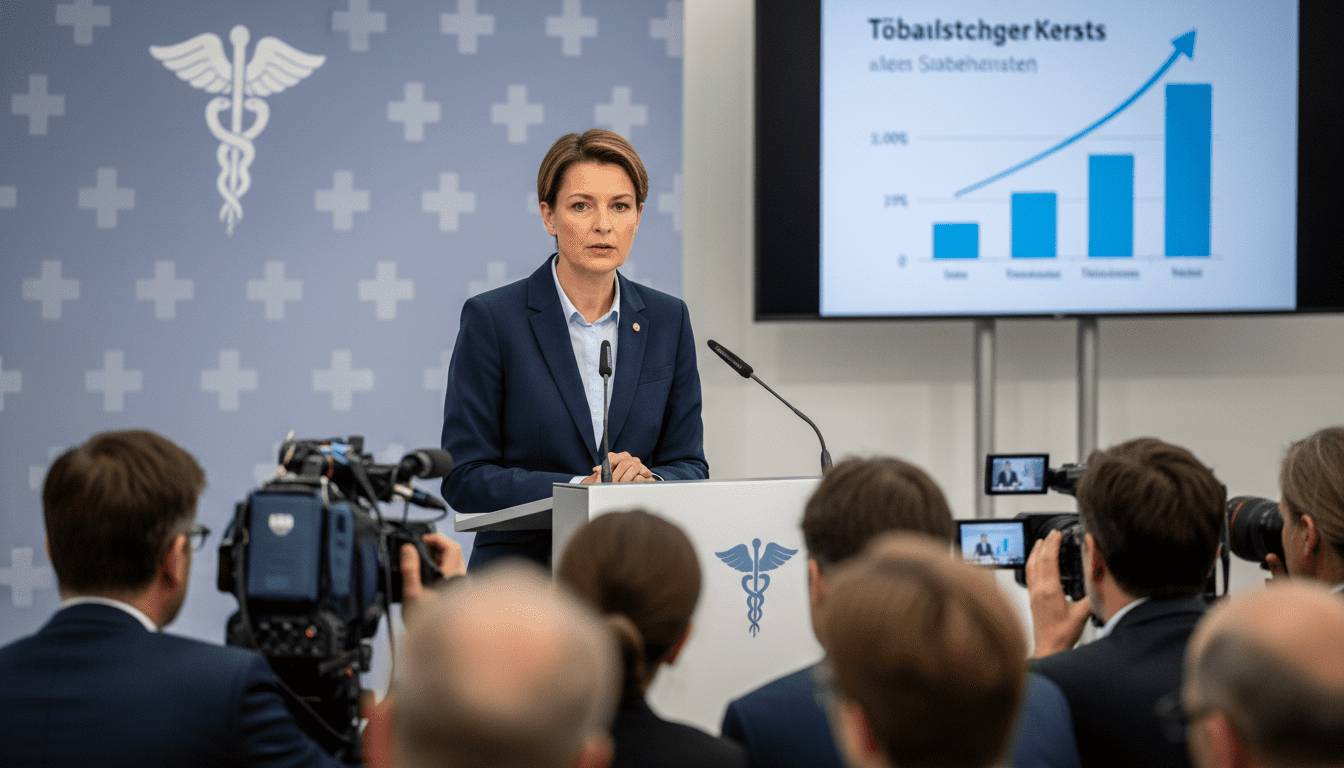
German doctors call for tobacco tax increase revenues to be earmarked for healthcare
German GPs and the federal drug commissioner demand that tobacco tax increase revenues be earmarked for prevention, treatment and cessation services nationwide.
The German medical community has pressed the government to ensure that revenues from a proposed tobacco tax increase are explicitly reinvested in the health system. House physicians warned that higher proceeds must fund smoking prevention, cessation programs and care for those affected by tobacco-related illnesses. The call comes as a reform commission’s recommendations appear set to be implemented sooner than initially planned.
GPs insist revenue be reinvested in healthcare
Nicola Buhlinger‑Göpfarth, chair of the German General Practitioners Association, said a tobacco tax increase is "right and sensible" but must be matched by clear rules on where the money goes. She argued it would be "completely wrong" to allocate the new revenues to unrelated budget items before the funds even materialize. The association wants the additional receipts to flow directly into prevention, treatment and services that help patients quit smoking.
Doctors highlighted that smoking imposes heavy costs both on individuals and on the health system through chronic disease treatment and lost productivity. They urged targeted investment in counseling, pharmacological support and community programs aimed at high‑risk groups. The medical community framed earmarking as a measure to close the loop between taxation policy and concrete public health benefits.
Drug commissioner supports tax rise and prevention spending
Hendrik Streeck, the federal government’s drug commissioner, welcomed the planned tobacco tax increase and pressed for dedicated spending on prevention and cessation. He said higher tobacco prices are an effective public health tool that can reduce uptake among young people and make quitting more achievable. Streeck stressed that revenues should underwrite counseling, medication and low‑threshold help so that people who want to stop smoking are not left to do it alone.
The commissioner characterized the measure as health policy rather than moralizing, saying the objective is to protect vulnerable groups and reduce long‑term harm. He linked price signals to reduced consumption and described reinvesting proceeds as essential to a responsible strategy. Such comments reinforce a common line among health officials that taxation should be coupled with accessible support services.
Timing of the reform and legal framework
Current tobacco tax rates are set under rules that extend through February 14, 2027, but a commission on statutory health insurance financing proposed higher levies thereafter. Government officials now appear to be accelerating elements of that package so that parts of the tax increase could take effect within the current year. The commission also recommended higher taxes on spirits, reflecting a broader shift toward using excise policy to bolster public health funding.
Implementing the change will require legislation and parliamentary debate, including decisions about whether additional proceeds are ring‑fenced or absorbed into general budgetary needs. Lawmakers must determine the legal mechanism for any earmarking and whether it would be temporary or permanent. The pace of parliamentary work and coalition negotiations will shape the final design and timetable.
Proposed uses: prevention, cessation and care
Health officials and physicians outlined specific priorities for any newly raised tobacco revenues, centering on prevention and direct patient support. Suggested allocations include expanded smoking‑cessation counseling in primary care, broader reimbursement for nicotine replacement therapies and medications, and targeted outreach to adolescents and high‑risk populations. Observers also recommended public information campaigns and funding for low‑threshold services in community health centers.
Physicians emphasized that investment should be measurable and tied to outcomes such as quit rates and reduced hospital admissions for smoking‑related illnesses. They called for transparent reporting on how funds are spent and outcomes achieved. Such accountability would aim to ensure that fiscal measures translate into real reductions in tobacco harm.
Political trade‑offs and fiscal considerations
Earmarking tax receipts for health programs often provokes debate between advocates of targeted spending and proponents of general budget flexibility. Finance ministries typically resist strict ring‑fencing, arguing that fiscal priorities change and earmarked funds can limit responsiveness. Health groups counter that the public health rationale for directed spending on smoking prevention is strong and that visible returns can build public support for higher excise rates.
Stakeholders now face choices about the size of any tax increase, the split of revenue between prevention and treatment, and oversight mechanisms to monitor impact. The outcome will reflect bargaining among health advocates, fiscal authorities and political parties in the coalition. Close attention is likely in the coming months as draft legislation is negotiated.
The government’s next steps will determine whether a tobacco tax increase becomes a vehicle for expanded prevention and treatment or simply a revenue stream for broader spending. Medical professionals say advancing clear safeguards and transparent allocation rules is essential if the tax is to deliver measurable health gains.
