
Tartan Army Boston: Scots Turn Fenway Marches and Pub Nights into Sister-City Cheers
Tartan Army Boston: Scottish fans filled downtown with kilts, song and charity, prompting a sister-city pact and boosting the local economy and charity gifts.
The Tartan Army transformed downtown Boston into a weeklong festival of kilts, bagpipes and public goodwill, prompting the Boston Globe to publish a full-page thank-you and officials to sign a spontaneous sister-city agreement. The presence of tens of thousands of Scottish supporters lifted stadium atmospheres, filled hotels and bars, and left local leaders praising the visitors’ conduct. Boston’s embrace of the Scots has prompted talk of lasting civic ties as the national team moves on to its remaining World Cup fixtures.
Boston Globe tribute and a surprise sister-city signing
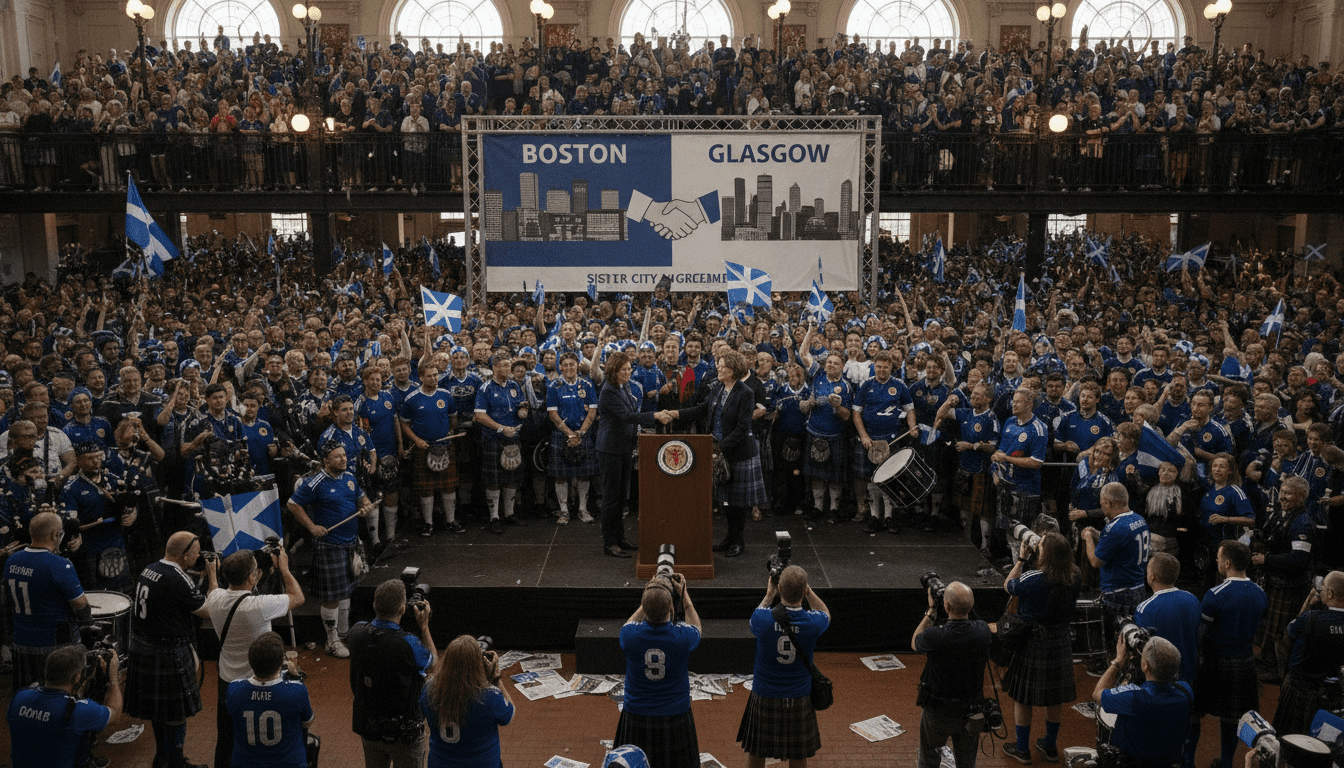
The Boston Globe dedicated a full page to the Tartan Army, publishing an open letter that thanked the visitors “for the laughter, the bagpipes and the memories.” The public message captured a wider city sentiment as Scottish fans mixed with residents across neighborhoods. In a ceremonial moment, Mayor Michelle Wu signed documents formalizing a sister-city understanding in the presence of cheering supporters who sang “No Scotland, No Party.”
Crowds, chants and a Fenway fan march
As many as 50,000 Scots descended on Boston and nearby communities to back their national team, creating scenes of mass celebration in streets and pubs. Thousands in kilts staged a long march to Fenway Park, where they joined a Red Sox crowd and sang for hours as if their team were on the field. The Red Sox president publicly thanked the visitors, noting the fans treated the ballpark “like their own home.”
Economic lift and inflated match-day costs
The influx generated a significant economic impact: hotels, restaurants and nightlife venues reported record demand and higher prices that contributed to a combined spending total likely in the hundreds of millions. Black‑market ticket prices for even modest matches reached four-figure levels as fans chased an appearance by Scotland at the World Cup after a 28-year absence. Local business owners said supply chains for pubs and bars were stretched to meet continuous demand.
Civic pranks, traditions and citywide decorations
Visitors brought familiar rituals from home, including the playful placement of orange traffic cones atop statues—a tradition traced to a Glasgow prank in the late 1980s. Public art and monuments across Boston were temporarily adorned with cones and other mementos, turning the city’s streets into an impromptu cultural exhibit. Fans also filled parks and promenades with singing, collective anthems and traditional songs such as “500 Miles” and “We’ll Be Coming.”
Orderly support, extended hours and inventive workarounds
City officials credited much of the smooth public order to the Tartan Army’s self-regulation and cooperative behavior. Mayor Wu eased certain late‑night restrictions to accommodate celebrations, and police reported few incidents of violence or serious disorder. Facing local rules that restrict open‑container drinking before a set hour, one group rented a boat in the harbor and converted it into a floating pub to continue festivities lawfully.
Transport improvisation and charity fundraising
When stadium shuttle costs from downtown approached $100—far above typical fares—supporters pooled resources and hired yellow school buses to move large groups at lower rates. A portion of bus-ticket proceeds went to Boston charities, reflecting an organized philanthropic streak among the fans. One fundraiser saw a Scottish supporter walk coast‑to‑coast from California to Boston to raise money, and the Scottish government later supplemented the campaign to help reach a seven‑figure target.
Sporting stakes and the next stops for Scotland
On the sporting side, Scotland’s traveling supporters left for Miami and other host cities as their team prepared for final group-stage matches that could determine advancement. The atmosphere in Boston has been framed as part of a larger story in which fan culture may now become as consequential as match results. If Scotland progresses, conditional knockout pairings could bring high-profile fixtures back to North American venues, intensifying interest in the team’s travel footprint.
The week in Boston crystallized why the Tartan Army is widely regarded as one of international football’s most celebrated supporter groups: their presence delivered noise, commerce and a rare civic goodwill that city officials and local businesses described as transformative. Whether the sister-city pact endures as a formal program or remains a symbolic nod, the encounters in bars, on sidewalks and at stadiums have already reshaped local memories and may encourage future visits in both directions.
