
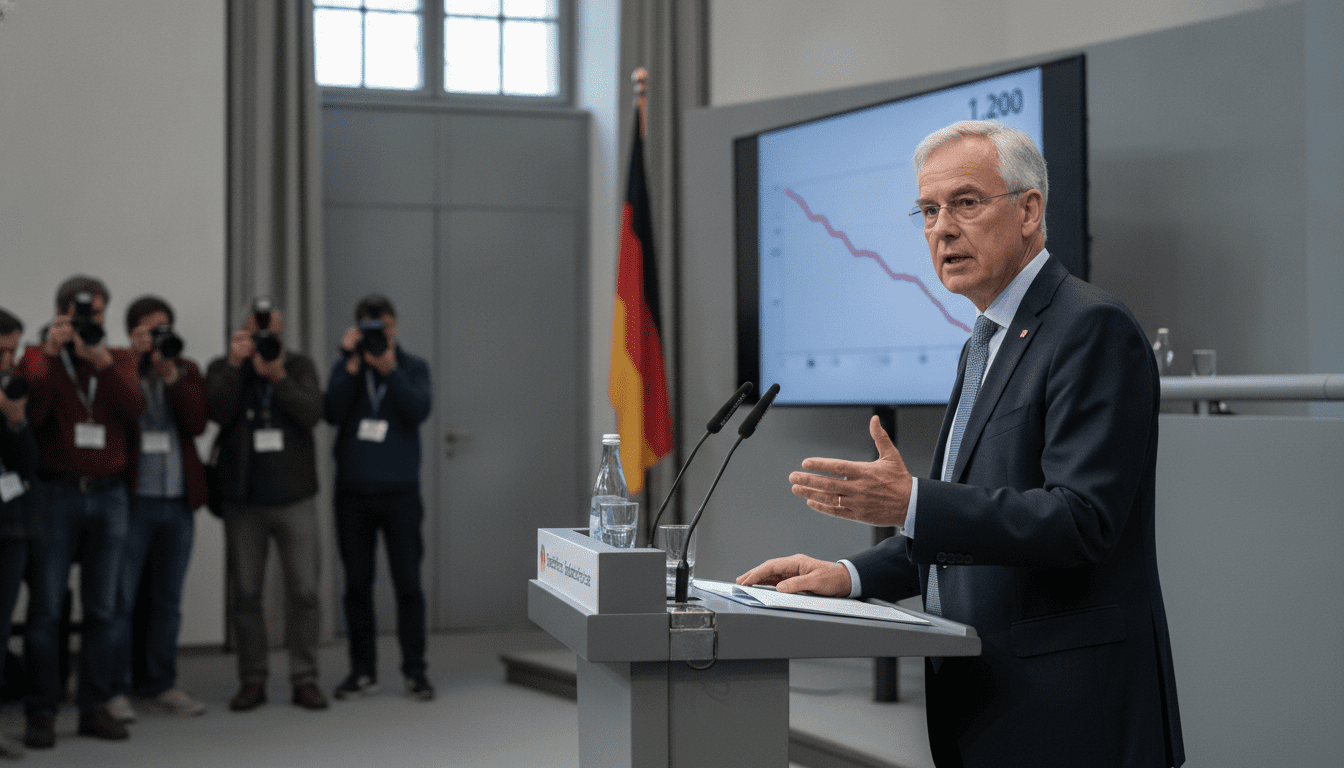
Josef Hecken: “1200 hospital sites would be enough” for Germany’s healthcare
Josef Hecken says 1200 hospital sites would be enough for Germany, urging focus on quality, medical progress and realistic consolidation of care now.
Josef Hecken, a CDU-affiliated former head of the Gemeinsamen Bundesausschuss, told an interview that a network of roughly 1,200 hospital locations could meet Germany’s needs while enabling better specialization and outcomes. Hecken linked the figure to advances in medicine and to the need for sustainable funding, arguing that sheer site numbers should be weighed against care quality and resource allocation. His comments revive a contentious policy debate on hospital consolidation, rural access and the future shape of the German health system.
Hecken’s hospital-capacity claim
Hecken framed the 1,200-site estimate as a pragmatic response to demographic trends and technological change rather than a prescriptive target. He said that fewer, better-equipped hospitals could concentrate specialist teams and high-tech diagnostic and treatment capabilities, which he believes would raise overall treatment quality. He acknowledged that any consolidation must be phased and balanced with measures to maintain emergency and primary care access in less densely populated regions.
Experience at the Gemeinsamen Bundesausschuss
Hecken spent 14 years at the Gemeinsamen Bundesausschuss, where he oversaw large-scale allocation decisions for statutory health insurance funds and contributed to setting clinical and reimbursement standards. That tenure, he said, informed his view that policy should reward proven outcomes and evidence-based investment in services that demonstrably improve patient survival and recovery. He drew on that experience to argue for clearer criteria to assess which hospitals should be maintained, upgraded or merged.
The case for consolidation and quality
Proponents of consolidation point to specialist concentration, higher procedure volumes and the potential for better training and research as benefits of fewer sites. Hecken emphasized volume–outcome relationships in complex surgeries and suggested that pooling resources could make expensive technologies like hybrid operating rooms and advanced imaging financially and clinically viable. He also stressed that consolidation must come with safeguards, including transport planning and strengthened outpatient networks, to prevent local gaps in care.
On prevention, personal habits and public message
In the interview Hecken spoke candidly about his own lifestyle and reluctance to preach on individual habits, noting he was a long-term smoker but preferred systemic approaches to health promotion. He argued that prevention policies should be designed to change population-level risk factors through taxation, regulation and targeted programs rather than moralizing public figures. At the same time, he acknowledged that prevention and early detection remain essential complements to structural hospital reforms.
Political reactions and party perspectives
Hecken’s remarks are likely to stir debate among federal and state policymakers, hospital associations and local stakeholders who fear job losses and reduced regional services. Parties and health-sector groups will assess the proposal through differing lenses: fiscal efficiency and specialization on one side, and local accessibility and economic impact on the other. Municipal leaders in rural areas have previously resisted closures, underscoring the political complexity of translating consolidation arguments into concrete policy.
Patient access, transport and emergency planning
Any move toward fewer hospital sites would require parallel investment in ambulance services, telemedicine and regional coordination to preserve timely emergency care. Hecken acknowledged the logistical challenge of ensuring that patients in remote areas can reach specialist centers within clinically acceptable timeframes. He recommended integrated planning between health ministries, emergency services and regional authorities to design transport corridors, patient pathways and local stabilization units where full-scale hospitals are no longer viable.
The discussion led by Hecken touches on core tensions in German health policy: balancing fiscal sustainability and high-quality specialized care against commitments to comprehensive local services. His emphasis on evidence, phased implementation and complementary measures such as better outpatient care, transport planning and prevention frames consolidation as a systemic redesign rather than a blunt austerity measure.
Hecken’s intervention ensures the debate will remain active as federal and state leaders prepare budgetary and structural reforms, with decisions likely to hinge on concrete impact studies, regional negotiations and the political appetite for change.
