
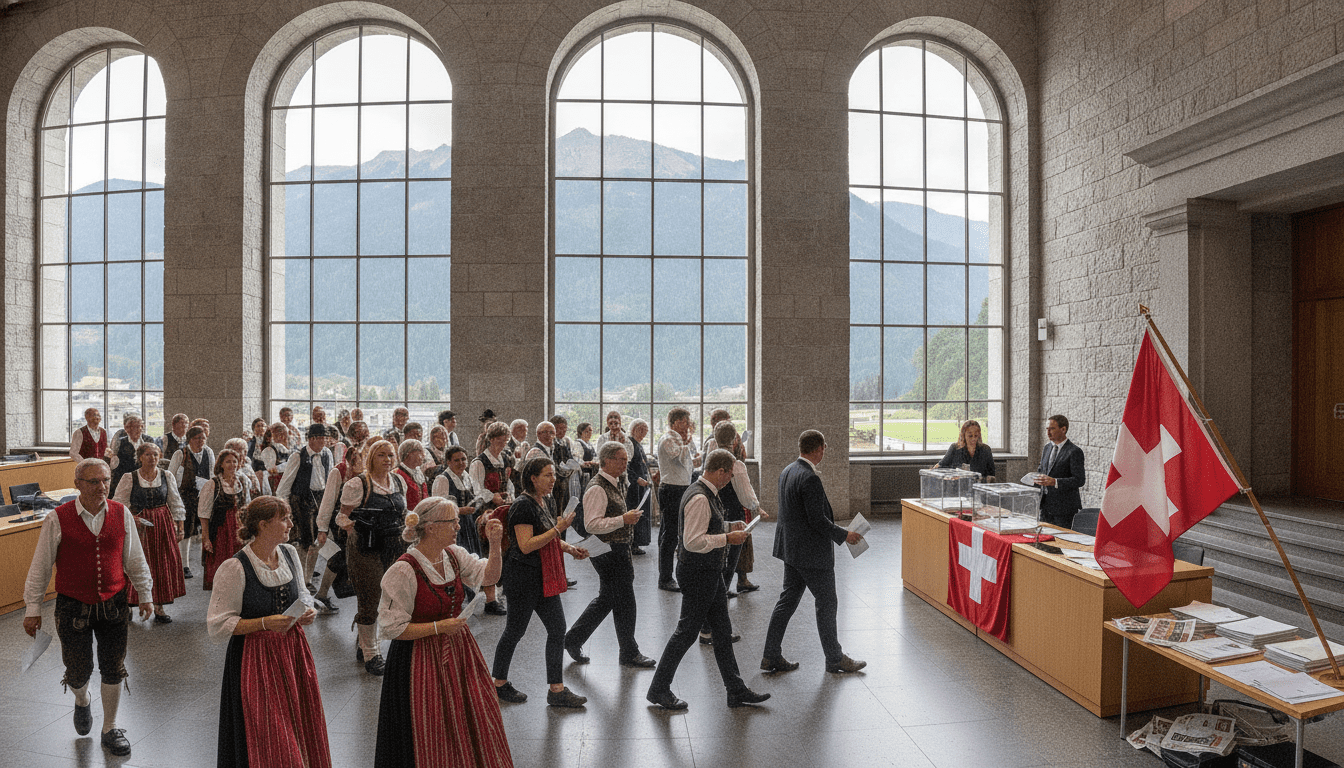
Swiss voters appear set to reject the population cap in early returns
Swiss population cap referendum shows a clear ‘No’ trend in initial counts, signaling voters are likely to reject the SVP-backed proposal to limit growth.
Early returns on June 14, 2026 indicate that Swiss voters are leaning against the population cap referendum, a vote prompted by the right-wing Swiss People’s Party (SVP) that sought to cap the nation’s population at 10 million. The proposal, known as the “No 10-Million Switzerland” initiative, aimed to curb migration and slow demographic growth but faced strong opposition from centrist and left-leaning parties. Partial tallies released by cantonal authorities and media outlets show a consistent lead for the No campaign in urban and suburban districts, suggesting a nationwide rejection is likely.
Early Results Point to a Clear No Majority
Early officially reported counts show the No side leading by a margin that widens as urban precincts report in. Major cities, where higher population density and service-sector employment concentrate, recorded particularly strong support for rejecting the population cap. Cantonal election offices reported that rural areas remained more divided, but the combined urban totals appear sufficient to tilt national results toward defeat of the initiative.
SVP’s Proposal and Campaign Strategy
The initiative proposed an absolute cap on residents at 10 million, requiring stricter controls on immigration and long-term residence permits once that threshold was reached. The SVP framed the measure as necessary to protect Swiss infrastructure, environment, and public services from unchecked growth. Opponents countered that the cap would isolate Switzerland economically and legally, threatening bilateral accords with the EU and undermining labor-market needs.
Turnout Patterns and Regional Variation
Voter turnout varied significantly between cantons, with higher participation recorded in regions where the campaign generated intense local debate. Urban cantons such as Zurich, Geneva and Vaud showed robust turnout favoring the No camp, while several rural and German-speaking central cantons reported closer contests. Analysts note that demographic differences—age, education level and employment in international sectors—helped shape the geographic split in voting.
Reactions from Political Leaders and Parties
Political leaders from federal and cantonal levels reacted quickly as early returns emerged, with many cautioning against drawing final conclusions until all ballots are counted. Government ministers and opposition party figures emphasized the need for calm and legal clarity pending official certification of the result. The SVP acknowledged the early trend but framed any outcome as a mandate to continue pressing migration concerns through parliamentary channels and future initiatives.
Economic and Legal Concerns Raised by Opponents
Economists and business associations warned throughout the campaign that a population cap could create labor shortages and complicate critical cross-border agreements. Legal experts also highlighted the difficulty of reconciling a fixed population ceiling with existing treaties that govern movement of goods and people. Opponents argued that targeted policy measures—investment in housing, local infrastructure and integration programs—would better address growth pressures than a blunt constitutional cap.
What the Likely Rejection Means for Swiss Policy
If the No majority holds in final counts, the result will leave migration and demographic policy to parliamentary debate and government regulation rather than constitutional limits. Lawmakers are expected to revisit existing frameworks for regional planning, housing and labor-market access to address concerns raised during the campaign. The vote is likely to sharpen political debate ahead of upcoming parliamentary work on immigration, urban planning and international cooperation.
Public commentary following the initial returns emphasized both relief among business leaders and disappointment among SVP supporters who sought a constitutional change. Observers predict continued contestation over migration policy in Switzerland, but a rejection of the population cap would keep major regulatory levers within the reach of elected legislatures rather than locked into the constitution.
Final official results and canton-by-canton totals will be published by Swiss electoral authorities in the coming days, after all ballots—especially postal and late-arriving votes—are fully counted and certified.
