
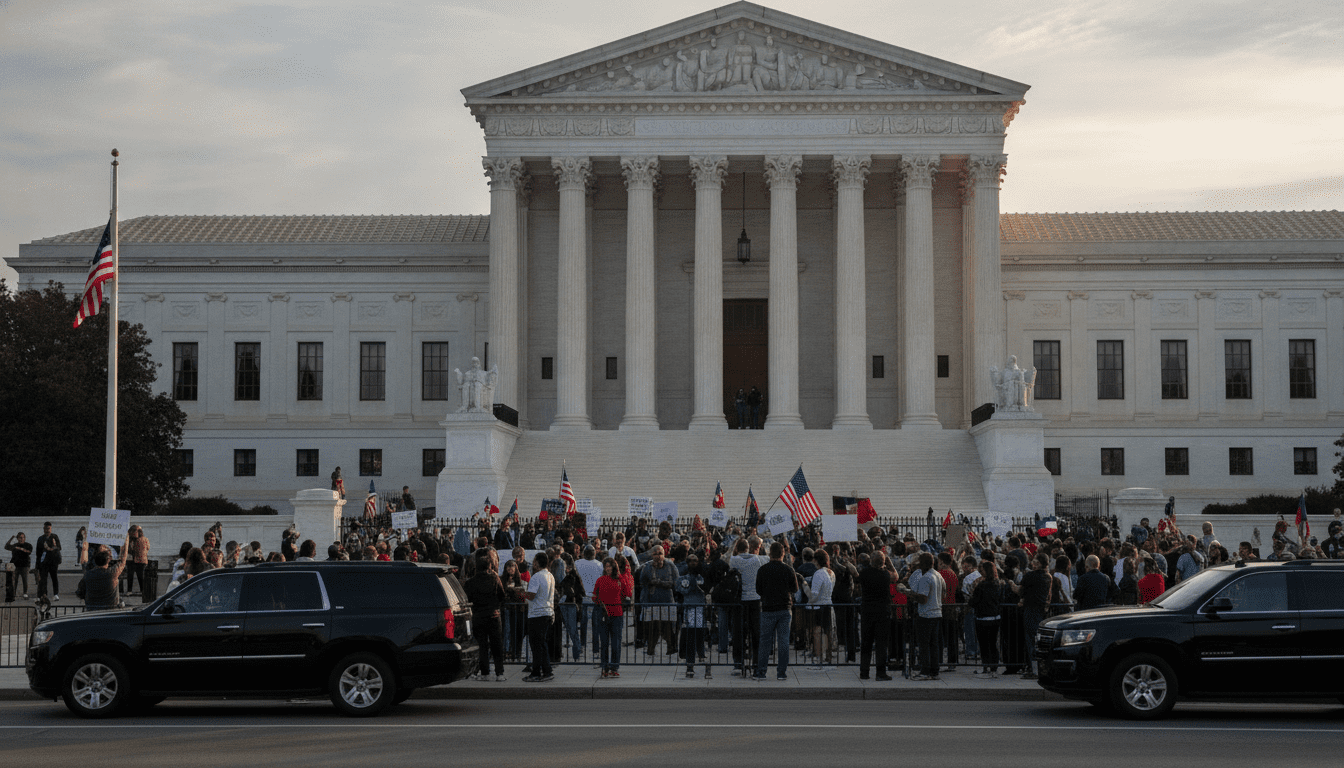
Supreme Court Allows End to Temporary Protected Status for Haitians and Syrians
Supreme Court ruling lets the administration end Temporary Protected Status for Haitians and Syrians, jeopardizing residency, work permits and family unity across the US.
The Supreme Court’s 6-3 decision this week clears the way for the administration to terminate Temporary Protected Status for nationals of Haiti and Syria, a move that advocates say will put hundreds of thousands of residents at risk of deportation. Temporary Protected Status, the keyword here, has been used for more than a decade to shield people from return to countries plagued by natural disaster, conflict or instability. The ruling immediately raises questions about residents’ legal status, employment authorizations and the stability of communities that rely on TPS holders.
Supreme Court decision and legal holding
The court’s majority held that challenges to the termination of TPS are not for the judiciary to decide, effectively limiting courts’ ability to review the Department of Homeland Security’s determinations. That legal posture removes a significant check on executive discretion over designations and terminations of Temporary Protected Status. Dissenting justices warned the decision strips affected people of procedural protections and could leave families without meaningful recourse in federal court.
Legal experts say the holding changes not just the fate of current TPS beneficiaries but the balance of power between agencies and courts. By insulating certain agency decisions from judicial review, the ruling may narrow avenues for lawsuits that previously argued terminations violated statutory requirements. Observers predict a new wave of litigation testing the scope of the decision and whether narrower claims remain reviewable.
Who is affected: Haitian and Syrian TPS holders
Haiti and Syria have been designated for TPS for over a decade—Haiti since the 2010 earthquake and Syria since the start of its civil war in 2012. Roughly 350,000 Haitian nationals and about 6,000 Syrian nationals currently hold TPS, according to estimates used by immigrant advocacy groups. Those beneficiaries have been authorized to live and work in the United States while their home countries were judged unsafe for return.
TPS holders include a broad cross-section of workers, parents and long-term residents who have built lives in the United States. Many entered as temporary residents but have remained for years, raising U.S.-citizen children, operating businesses and contributing to local economies. The court’s decision creates immediate uncertainty for individuals who relied on TPS as their primary legal protection against deportation.
Risks to families and communities
Immigrant-rights organizations warn the ruling will increase the likelihood of family separations, particularly among households with mixed immigration status. Parents who hold TPS but whose children are U.S. citizens face the prospect of forced departure or prolonged legal limbo. Community groups emphasize the emotional and economic toll that sudden removals would impose on schools, neighborhoods and local services.
Advocates also underscore broader human-rights concerns, arguing that deportation to countries experiencing violence, political collapse or humanitarian crises could expose people to grave harm. Human rights researchers fear the decision grants the secretary of homeland security sweeping discretion to declare returns permissible without robust, independent human-rights scrutiny. Local leaders in cities with substantial Haitian and Syrian populations say they are preparing social supports and legal aid to help families navigate possible changes.
Economic and workforce consequences for employers
Business groups and unions have sounded alarms over the ruling’s impact on employers that depend on TPS holders across multiple sectors. TPS beneficiaries work in hospitality, construction, food service, education and health care; their sudden loss of work authorization could create labor shortages in already strained industries. The Migration Policy Institute reported that Haitian immigrants held more than 103,000 health-care jobs in 2021, a figure that illustrates how concentrated some TPS holders are in critical services.
Unions representing nurses and other health professionals warn the decision could exacerbate staffing crises in hospitals and long-term care facilities. Employers say abrupt disruptions to personnel and the resulting administrative burden—terminating payroll, reassigning duties and recruiting replacements—would carry costs for operations and patients alike. Small businesses run by TPS holders also face loss of owners and managers, which could ripple through local economies.
Broader legal and policy implications
Legal scholars note the decision could be used by the administration to revisit TPS terminations for other countries, including Venezuela, Somalia and Ethiopia, where designations have been contested. By narrowing judicial oversight, the ruling may make it harder for courts to enforce statutory procedural safeguards that had previously required inter-agency review before ending TPS. Civil-society groups see the opinion as a precedent that could expand executive latitude over immigration protections beyond Haiti and Syria.
The ruling may also intensify debate in Congress over statutory reforms to clarify the scope of TPS and to establish explicit judicial review mechanisms. Some lawmakers argue that only legislative action can restore predictability and protect long-term residents who have no other immigration pathway. Others maintain that TPS was always meant to be a temporary, executive-driven program and that Congress must articulate a durable solution.
Political responses and next steps
Advocacy organizations, faith groups and municipal leaders have called for immediate congressional action to protect TPS holders, including proposals to extend or codify status for affected populations. In April, the House passed a bipartisan bill to extend TPS protections for Haitian nationals through 2029; that measure has not cleared the Senate. Lawmakers from both parties face pressure to act, but prospects for durable legislation remain uncertain.
Immigration advocates are also mobilizing to provide legal assistance and to press state and local officials to limit entanglement with federal enforcement where possible. Meanwhile, some TPS holders are exploring alternative immigration paths, such as family-based petitions or asylum claims, though eligibility varies widely and those processes can be lengthy. As the policy and legal fallout unfolds, communities and employers are bracing for change while urging lawmakers to offer clear, humane solutions.
