
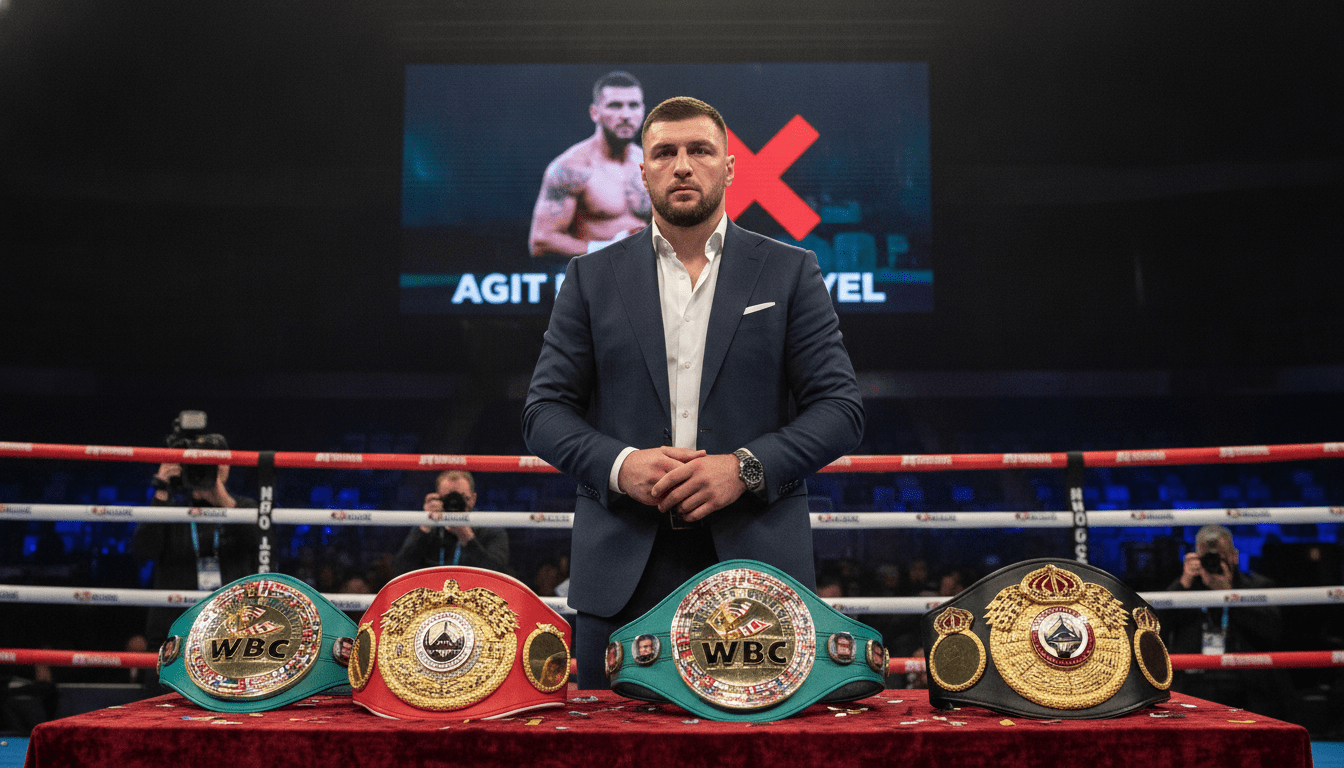
Alexander Usyk Relinquishes Three World Titles, Fight with Agit Kabayel Now Unlikely
Alexander Usyk has relinquished his remaining WBA, WBC and IBF world titles but said he will remain active in boxing, making a showdown with Agit Kabayel unlikely.
Alexander Usyk confirmed on Friday that he has voluntarily given up his three remaining world titles, saying in an Instagram message that he is not retiring from the sport. The 39-year-old added that “there will be more” to come while emphasizing his intention to stay involved in boxing. The announcement effectively removes a major obstacle to a mandated clash with German heavyweight Agit Kabayel and shifts title-contending plans across the sanctioning bodies.
Usyk Announces Relinquishment of Three Titles
Alexander Usyk’s announcement came via social media, where he stated he was laying down the belts but would not leave boxing. He still held the WBA, WBC and IBF versions prior to this decision and confirmed that he wants to continue his career in some capacity. The move follows a prior relinquishment of the WBO title in November 2025, narrowing his championship holdings before this latest step.
The statement does not include details on timing for future fights or the specific reasons for surrendering the belts, and it left promoters and sanctioning organizations to manage the administrative consequences. Usyk’s approach appears deliberate and framed as a recalibration rather than an exit, signaling a measured transition rather than abrupt retirement.
WBC Order and Kabayel Standoff
The WBC had previously ordered a fight between Usyk and Agit Kabayel after Kabayel publicly pressed for the matchup, including entering the ring to demand the contest. Usyk, however, had shown reluctance toward a fight with Kabayel and often responded evasively to the challenge. With the champion relinquishing the WBC belt, the immediate path to a Usyk–Kabayel meeting is now highly uncertain.
Kabayel, regarded in Germany as a leading domestic heavyweight prospect, had repeatedly voiced his readiness to face Usyk, banking on a WBC directive to force negotiations. The association’s order created momentum for the bout, but the champion’s decision to vacate removes the imperative for Usyk to accept and compels the WBC to consider alternative routes to name a new titleholder.
Usyk’s Career and Undefeated Record
Usyk turned professional in 2013 and captured his first world title at cruiserweight in 2016, beginning a rise that eventually carried him into the heavyweight ranks. He later moved up, claiming heavyweight titles and at one point unifying belts across competing sanctioning bodies. Across his professional career he has remained unbeaten, a distinction that has shaped his marketability and bargaining position within the sport.
Notable recent activity includes a successful defense of the WBC title in Giza against Dutch fighter Rico Verhoeven, an event that underscored Usyk’s continuing draw at heavyweight. His track record of title wins in multiple divisions and an unblemished record give him leverage when choosing opponents and timing for future fights.
Implications for Heavyweight Rankings and Titles
Vacating three major belts at once forces the WBA, WBC and IBF to accelerate internal processes to fill championship vacancies and to set up mandatory challengers. Sanctioning bodies typically promote top-ranked contenders or order eliminators to produce a new titleholder, a sequence that can rapidly reorder the heavyweight landscape. The departure of Usyk from titleholder status opens opportunities for established contenders and rising stars to stake claims.
Promoters and broadcasters will need to adjust planned cards and negotiating strategies as belts become available and governing organizations issue directives. The ripple effects could change matchmaking priorities in Europe and beyond, with national federations and major promoters eyeing the newly open championship paths.
Next Steps and Potential Matchups
Although Alexander Usyk relinquished the belts, his statement that “there will be more” suggests he remains open to competition, whether in high-profile bouts or selective appearances. His decision allows him greater flexibility in choosing opponents without the constraints of mandatory defense schedules imposed by sanctioning bodies. That latitude could be used to pursue marquee fights, exhibition-style events, or carefully chosen comeback bouts.
For promoters and contenders, the immediate business is logistical: sanctioning bodies must finalize plans for vacant belts while managers assess viable opponents for Usyk should he seek a return to title contention. Observers will also watch for timing and location signals, as Usyk’s status as a global draw means any future fight would attract broad international interest and strategic planning.
Usyk’s announcement reshapes the heavyweight picture and underscores the growing fluidity in championship stewardship across boxing’s major organizations. Fans and industry figures alike will be tracking formal notices from the WBA, WBC and IBF in the coming weeks as those bodies outline procedures to fill the vacant titles.
The sport now faces a period of adjustment as governing organizations, promoters and fighters respond to the sudden availability of three major championships and to Usyk’s stated intention to remain an active figure in boxing.
