
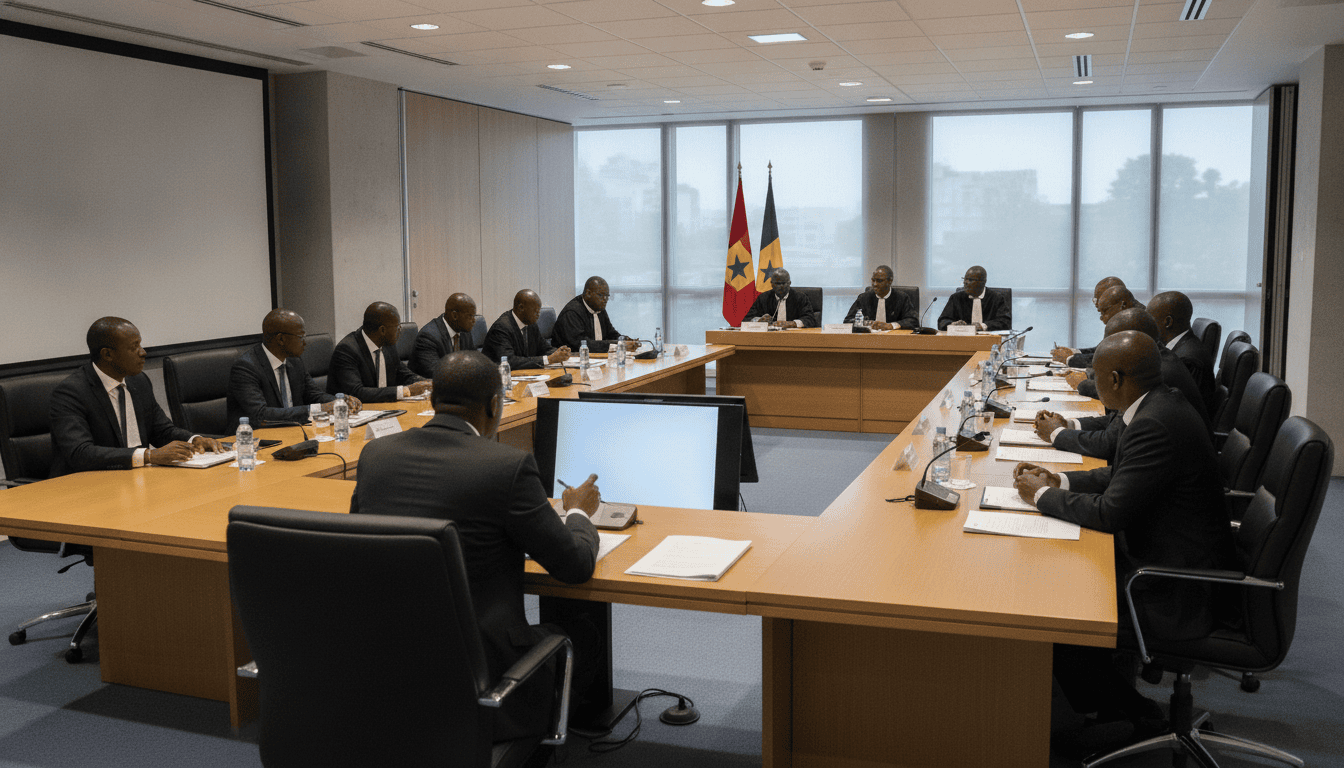
Senegal AFCON title appeal set for October 8 at CAS in Lausanne
Senegal AFCON title appeal hearing will be held at the Court of Arbitration for Sport on October 8, with judges meeting behind closed doors and no verdict date yet.
CAS schedules October 8 hearing in Lausanne
The Court of Arbitration for Sport confirmed that Senegal’s appeal over the Africa Cup of Nations title will be heard on October 8 at its Lausanne headquarters. The announcement formalizes a timetable for a case that has divided African football since the chaotic final in Rabat earlier this year.
Preparations for the appeal were ongoing during the recent World Cup, and CAS said the hearing will take place behind closed doors, with no target date set for a ruling. The court noted that its judges may take several months to announce a decision after the hearing concludes.
Hearing to be conducted in private with no verdict timeline
CAS emphasized the confidential nature of the proceedings, stating the session will not be open to the public or media. Closed hearings are routine for some arbitration cases, but the privacy increases uncertainty about when parties might disclose evidence or legal arguments.
While arbitration panels often issue decisions weeks to months after hearings, the absence of a target date means stakeholders and fans must wait for CAS to publish its ruling. The court’s timetable leaves open the possibility of protracted legal exchanges before a final outcome is reached.
Timeline and preparation during the World Cup
Legal teams for both Senegal and the Confederation of African Football continued to prepare briefs and evidence while national teams competed at the World Cup. Morocco advanced to the quarterfinals at the global tournament, while Senegal was eliminated in the round of 32 by Belgium, but the legal dispute remained active behind the scenes.
Sources close to the case said counsel for Senegal compiled procedural records and witness statements during the international break, aiming to make a consolidated presentation to the CAS panel. CAF officials likewise defended the confederation’s earlier appeal ruling that transferred the title to Morocco.
Facts from the Rabat final that underpin the dispute
The procedural conflict stems from the Africa Cup of Nations final in Rabat, where Senegal defeated Morocco 1-0 after extra time. Late in stoppage time, Moroccan players were awarded a penalty that sparked a heated on-field reaction and a temporary walk-off by Senegal’s players before play resumed and the kick was saved.
CAF appeal judges later ruled that Senegal had defaulted the match by leaving the field, a conclusion that led the confederation to award the championship to Morocco several weeks after the final. Senegal’s appeal to CAS argues that the application of default was procedurally and legally incorrect.
CAF decision and contested application of football laws
The central legal point in Senegal’s AFCON title appeal concerns the interplay between match officials’ decisions and post-match disciplinary processes. Senegal contends that the referee’s decision on the field is final under the Laws of the Game and that a unilateral declaration of default by CAF appeal judges misapplied those principles.
CAF maintains that its appeals panel acted within confederation regulations in adjudicating alleged misconduct and determining the proper outcome. The dispute raises questions about the scope of administrative reviews after a match and whether confederation-level sanctions can effectively overturn results recorded by match officials.
Potential outcomes and wider implications for African football
Should CAS uphold Senegal’s appeal, the ruling could reinstate Senegal as the 2025 Africa Cup of Nations champion and prompt scrutiny of CAF’s appeals procedures. A decision in Senegal’s favor would likely require CAF to reverse its earlier award and might trigger procedural reforms to prevent similar disputes in future tournaments.
Conversely, if CAS upholds CAF’s decision, the confederation’s authority to adjudicate post-match discipline and outcomes would be affirmed, setting a precedent for administrative resolution of match incidents. Either outcome will influence how federations, referees and confederation appeal bodies interact in high-stakes fixtures going forward.
The October hearing at CAS now becomes the next decisive moment in a controversy that has unsettled supporters across the continent and prompted debate among football legal experts. The case will be closely watched for its legal reasoning and its potential to reshape governance and disciplinary practice in African football.
