
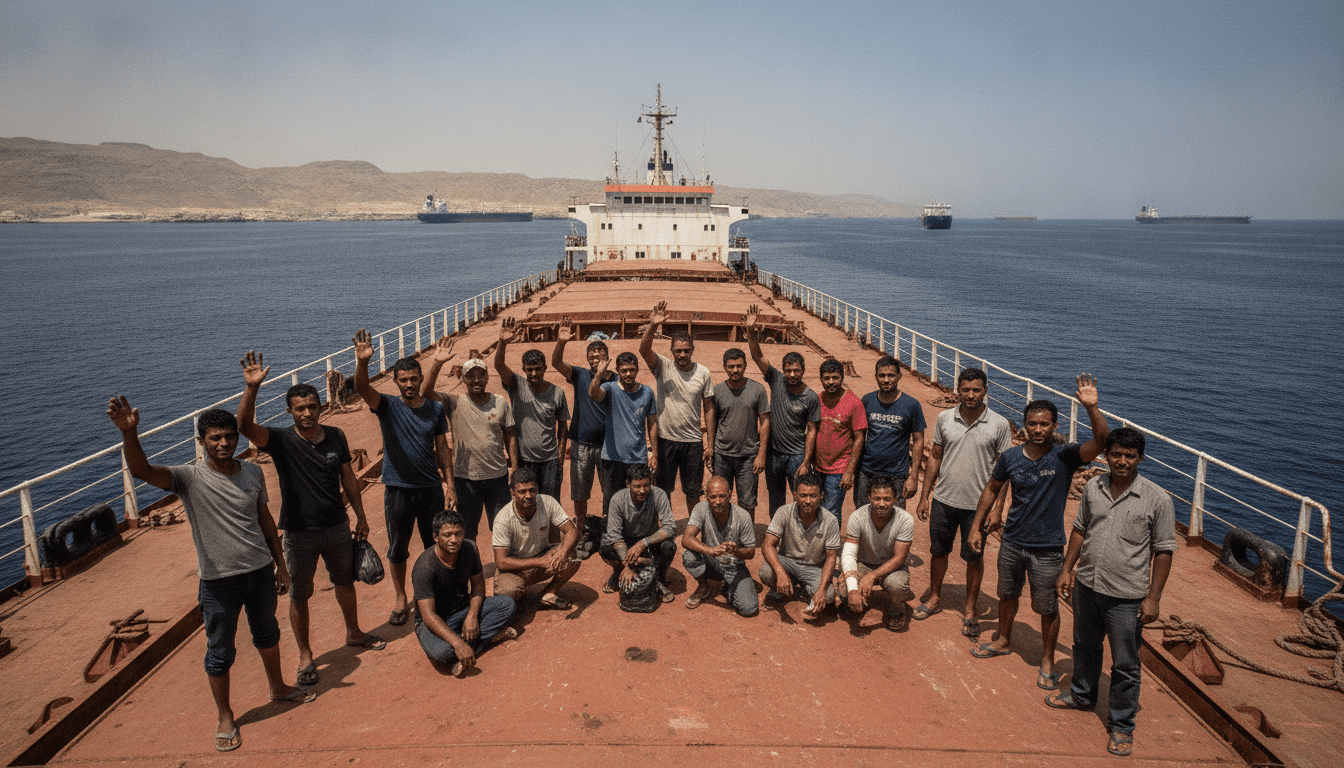
Seafarers Stranded in the Strait of Hormuz Begin Returning Home After Months Afloat
After months trapped in the Strait of Hormuz, thousands of seafarers face unpaid wages, trauma and abandonment as shipping resumes and calls grow for maritime labour reform.
Summary of the situation
Thousands of seafarers stranded in the Strait of Hormuz since late February are beginning to leave the Gulf as maritime traffic partially resumes, according to estimates that put the number affected at around 20,000. The stranded seafarers endured rationed water and food, intermittent sheltering from drone and rocket fire, and uncertainty about when — or if — they would see their families again. The disruptions to cargo and energy shipments drew global attention to the strategic chokepoint, but the human cost for crews remained largely out of sight.
Conditions aboard blocked vessels
Life aboard the immobilized ships became increasingly precarious as weeks turned into months for many crew members. Water and food were reported to be tightly rationed, and medical supplies grew scarce on vessels anchored or sheltering offshore. Sailors described frequent alarms and explosions overhead when defensive fire intercepted munitions, creating constant fear and a high risk environment for non-combatants.
Human toll and casualties
Several crew members lost their lives during the period of heightened hostilities and blockade, and many more are likely to suffer lasting physical and psychological harm. Witnesses and shipping sources reported that some projectiles struck tankers and port facilities, while others detonated in the air after being hit by defensive measures. The trauma of exposure to combat conditions at sea has raised urgent concerns among maritime unions and humanitarian organisations.
Payroll failures and contract abandonment
A large share of the stranded seafarers still await owed wages and formal repatriation, with contracts often expiring while crews remained at sea. Labour advocates say many vessels were effectively abandoned by employers unwilling or unable to cover the cost of crew rotations or flights home. Those left behind are predominantly from lower-income countries in Asia and Africa, and union representatives have described the pattern as tantamount to modern slavery in its severity.
Role of shipping companies and information gaps
Shipping companies’ instructions to crews to avoid media contact compounded the lack of public awareness about the sailors’ plight. Industry fear of reputational damage appears to have led some operators to limit reporting from their vessels, which in turn reduced pressure on governments and humanitarian agencies to respond. The absence of sustained media scrutiny meant the sailors’ needs were sidelined even as shortages of oil, gas and fertiliser reverberated through global markets.
Geopolitical backdrop and commercial impact
The standoff around the Strait of Hormuz emerged amid a broader contest over the control of a critical maritime corridor linking the Gulf to international waters. Commercial disruptions have had clear economic effects, highlighting how quickly geopolitical friction can cascade into supply shortages. Yet the bargaining between state actors often left the crews — who keep global trade moving — exposed to danger and neglect.
Calls for international protections and reform
Maritime unions, labour NGOs and some governments are urging concrete measures to prevent recurrence, including stricter enforcement of wage and repatriation rules and clearer contingency responsibilities for shipowners. Proposals include dedicated financial guarantees for crew wages, faster channels for issuing humanitarian relief, and stronger penalties for companies that abandon crews in crisis zones. Advocates stress that addressing systemic abuse in shipping will require sustained oversight, not just episodic attention during headline-making crises.
Seafarers stranded in the Strait of Hormuz have become a stark reminder that supply-chain disruptions conceal a human story of vulnerability and sacrifice. As vessels move again and commerce resumes, labour groups warn that without durable reforms the crews who sustained global trade will remain at risk of being forgotten once the headlines fade.
