
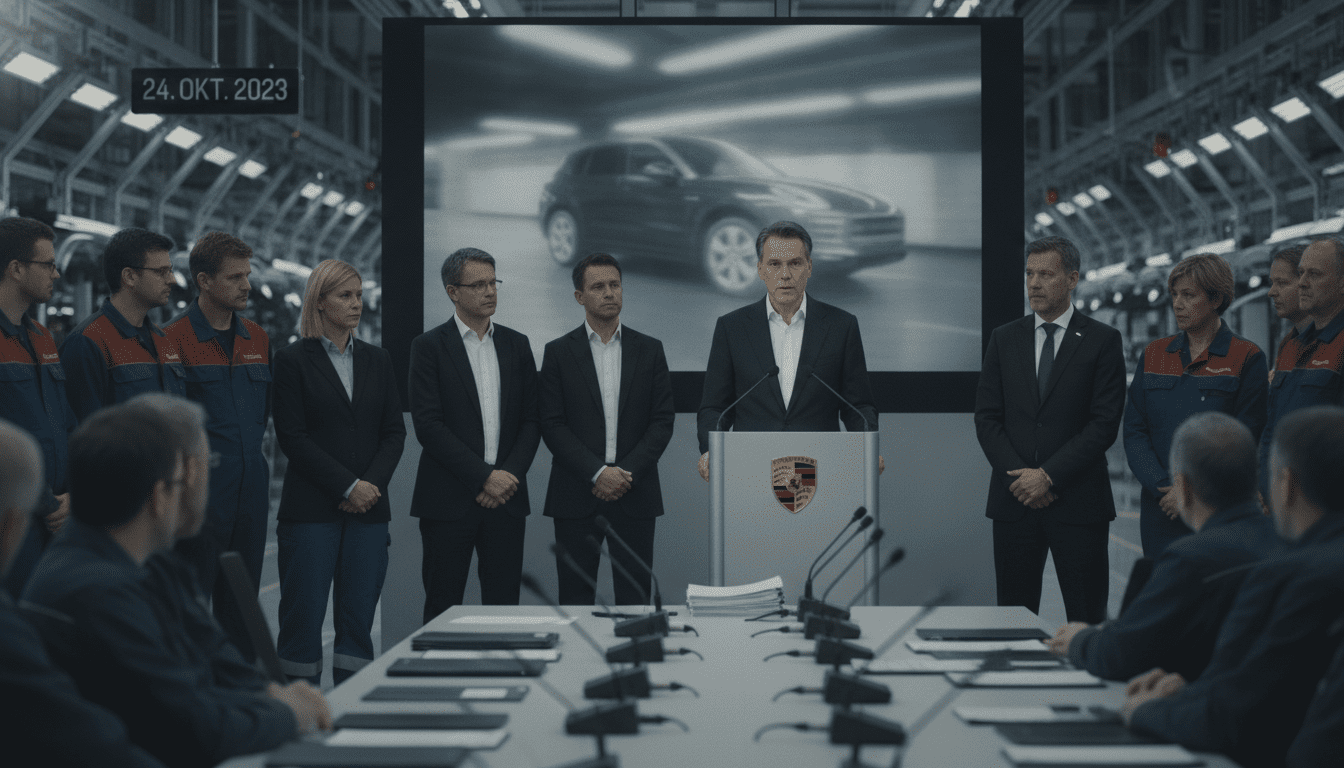
Cayenne production in Leipzig: Porsche to move electric SUV from Bratislava as workers accept pay cuts
Porsche to shift Cayenne production in Leipzig from Bratislava to use plant capacity; workers agree to wage cuts to bring the electric SUV back to Germany.
Porsche announced on June 27, 2026, that it will relocate Cayenne production in Leipzig, transferring assembly of the electric luxury SUV from a Volkswagen plant in Bratislava. The move is intended to increase utilization at the Leipzig factory and consolidate more production under Porsche’s own roof. As part of the plan, employees will accept wage concessions to make the relocation financially viable.
Porsche confirms relocation plan
Porsche’s management presented the decision as a strategic reallocation of manufacturing that positions the Cayenne closer to the company’s core operations in Germany. The company said the shift will allow Leipzig to take on a larger share of SUV production, freeing capacity for other programs at different sites. Executives framed the change as part of a broader restructuring of production to align with demand and platform strategies.
Workers agree to wage concessions
Labor negotiations produced an agreement requiring compensation adjustments for some employees to offset higher domestic manufacturing costs. Company officials argued that the concessions were necessary to keep the project sustainable while preserving jobs at the Leipzig plant. Worker representatives, while noting the burden of lower pay, pointed to the trade-off of increased employment stability and the long-term benefits of locating a flagship model in Germany.
Leipzig chosen to maximize plant capacity
Leipzig has been targeted because of underused capacity and existing expertise assembling Porsche SUVs and electric drivetrains. Company sources emphasize the importance of maximizing utilization in modern, high-investment factories to protect competitiveness amid the industry’s shift to electrification. Bringing Cayenne assembly to Leipzig also groups more engineering, logistics and quality-control functions in proximity to Porsche’s research and management teams.
Electric Cayenne production is complex
Manufacturing the electric Cayenne involves high-voltage systems, sophisticated battery integration and precise software calibration, which makes coordination with engineering teams critical. Porsche engineers have cited the technical benefits of producing the model closer to in-house teams that develop vehicle software and electronic architectures. The increased complexity of electric vehicle assembly raises unit costs, which executives say the relocation seeks to manage through operational efficiencies and targeted labor cost adjustments.
Impact on Bratislava and regional supply chains
The move reduces assembly work at the Volkswagen-operated plant in Bratislava, prompting questions about future utilization there and potential ripple effects for suppliers in the region. Manufacturers and parts vendors that had supplied the Cayenne program will need to renegotiate logistics and volumes as production shifts westward. Local officials and unions in Slovakia are expected to engage with Volkswagen and Porsche to discuss the implications and potential mitigation measures for affected workers.
Porsche frames the decision as a balancing act between preserving industrial capacity in Germany and maintaining cost discipline; the company must weigh higher domestic labor costs against benefits from tighter integration of production and development. Observers say the agreement underlines how manufacturers are increasingly reconfiguring production footprints in response to electrification, rising wage pressures, and the strategic desire to keep critical models close to corporate centers. The relocation will be closely watched across the industry for its operational and political consequences.
