
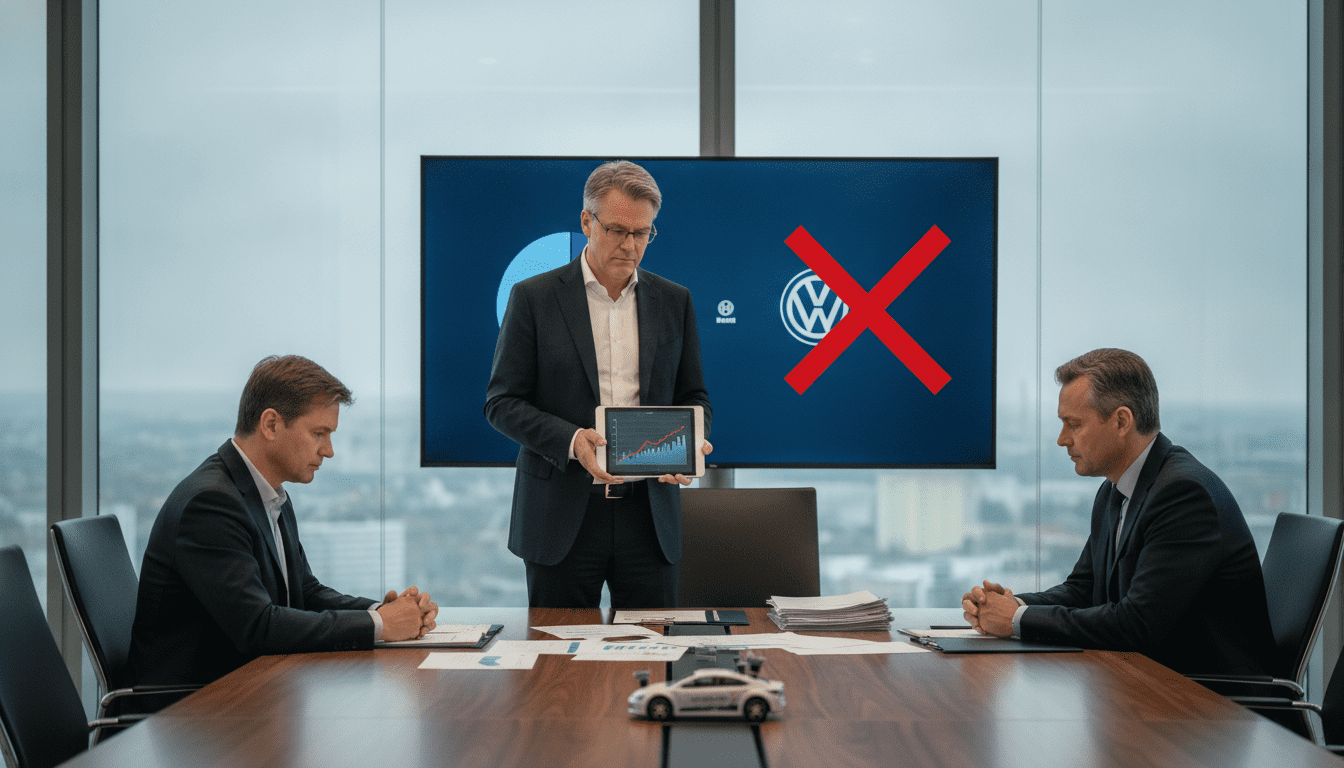
Volkswagen Weighs Exit from Bosch Autonomous Driving Alliance After €1.5bn Investment
Volkswagen is reportedly weighing a withdrawal from the Volkswagen-Bosch autonomous driving alliance after investing €1.5 billion, citing slow technical progress and concerns that the jointly developed system is not competitive. The potential split, first reported on June 28, 2026, reflects growing unease within VW leadership about the pace of development and the viability of the partnership’s strategy. Any decision to disengage would reshape Volkswagen’s self-driving roadmap and raise questions about industry collaboration on advanced driver assistance and autonomous systems.
Boardroom concerns over technical progress
Senior executives at Volkswagen have expressed frustration with the pace of development in the alliance, arguing the joint technology fails to meet internal benchmarks for performance and cost-effectiveness. Company sources say software integration, sensor fusion and validation milestones have lagged behind timelines set when the partnership was formed. That assessment has prompted a strategic review by VW’s board to determine whether continued investment can deliver the expected competitive advantage.
Financial stakes of a €1.5 billion commitment
Volkswagen’s reported €1.5 billion commitment to the joint effort represents a significant capital allocation in a field where returns are uncertain and development cycles are long. The sum covers joint engineering, software platforms, sensor procurement, and validation infrastructure, and a premature exit could force VW to take impairment charges or renegotiate asset ownership. Financial officers will weigh the cost of continued partnership against the expense and time required to pivot to alternative suppliers or to scale up in-house capabilities.
Consequences for Volkswagen’s autonomous roadmap
A withdrawal from the Bosch alliance would require Volkswagen to reassess its timeline for deploying higher-level autonomous functions across its brands. VW may accelerate internal development teams or seek new external partners to maintain its market ambitions, but either route will demand fresh investment and could delay commercial rollouts. The company faces a choice between doubling down on a reshaped partnership model, building proprietary software stacks, or selectively licensing third-party systems to keep vehicles competitive.
Bosch reaction and supplier relationship risks
Bosch, as a major supplier and partner, would confront operational and reputational implications if Volkswagen pursues an exit, complicating existing contracts and collaborative projects. The supplier relationship between automakers and large component suppliers is interconnected; disruptions could ripple into other development programs and sourcing agreements. Both sides will likely enter intensive negotiations over intellectual property, joint assets, and the division of ongoing development responsibilities if a formal disengagement process begins.
Industry competition and regulatory backdrop
The news comes at a time when global rivals have advanced distinct approaches to autonomy, combining in-house software development with strategic partnerships and heavy cloud investments. Competition from established autonomous specialists and tech companies has raised the bar for performance and cost, intensifying pressure on traditional supplier alliances to deliver rapidly. Regulators in the European Union and Germany are also tightening standards for safety validation and certification, which increases the technical burden on any party attempting to bring a production-ready system to market.
Options for Volkswagen and wider market impact
If Volkswagen exits the alliance, available options include buying out Bosch’s share of joint assets, licensing the technology under revised terms, or transferring development responsibilities entirely in-house or to new partners. Such moves would reshape supplier dynamics in the European automotive sector and could prompt other manufacturers to reevaluate their collaborative models for automated driving. Investors and customers will watch how VW balances near-term commercial pressures against the long-term strategic necessity of robust automated driving capabilities.
Volkswagen’s potential decision to leave the Bosch autonomous driving alliance underscores the high stakes and complexity of developing production-ready self-driving technology at scale. The outcome will influence Volkswagen’s product planning, financial statements and supplier relationships, and it may set a precedent for how automakers manage costly, long-term technology partnerships in an increasingly competitive field.
