
German health care system under strain: high spending, mixed results, and political limits on reform
Germany’s health care system faces a public-perception crisis as patient experiences of crowded emergency departments clash with data showing above‑average spending and staffing, experts say.
A patient’s emergency visit sparks wider questions
A recent personal emergency that required referral to hospital care ended with treatment but highlighted long waits and closed doors at multiple facilities. That experience has become a familiar anecdote for many Germans who encounter busy emergency departments and delayed outpatient appointments. The episode prompted scrutiny of whether those individual encounters reflect systemic shortages or a deeper mismatch between expectations and outcomes in the German health care system.
Aggregated data tell a different story
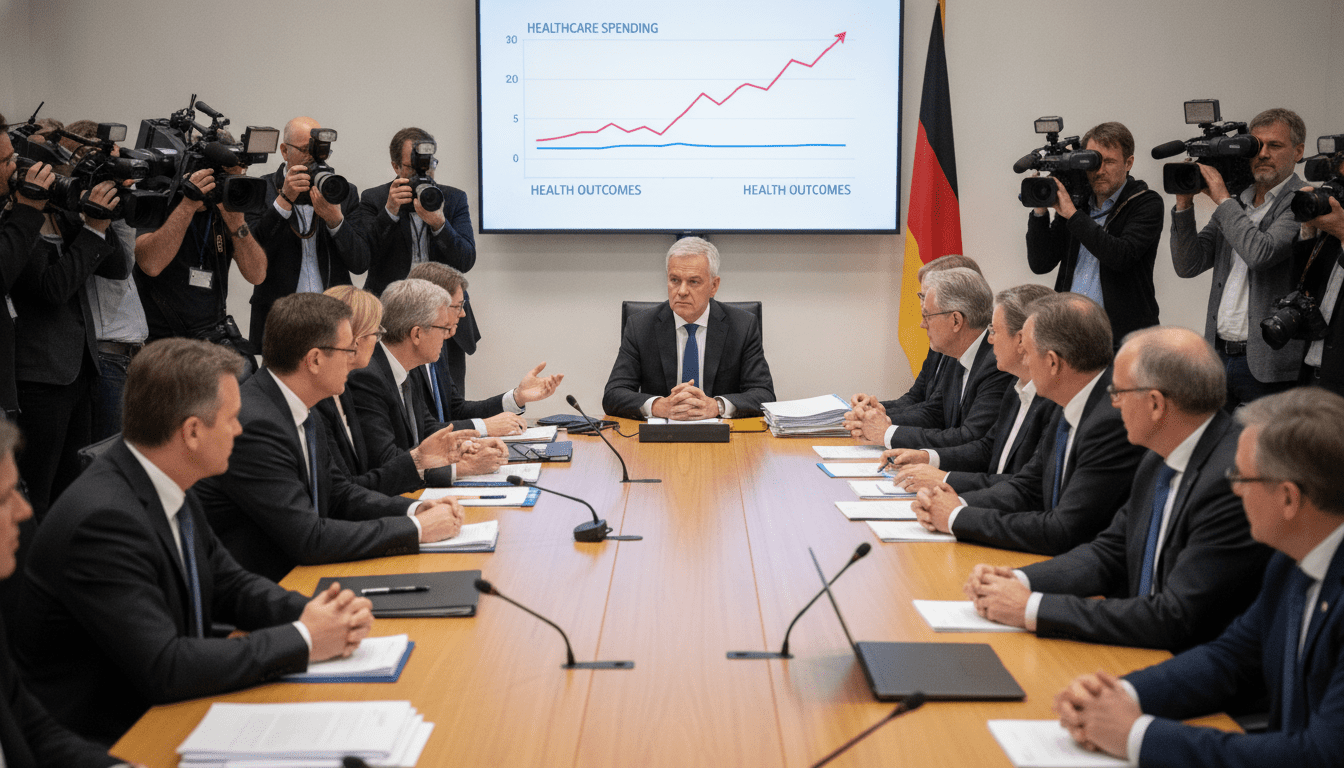
Health economists emphasize that individual stories must be weighed against national statistics. Germany spends a larger share of its economy on health than most European peers and staffs hospitals more densely per capita. Yet those aggregate figures do not automatically translate into uniformly superior health outcomes. Analysts point to a gap between high inputs — money, beds and medical personnel — and middling international performance on indicators like life expectancy.
Spending, staffing and hospital density in perspective
Recent figures show Germany devotes roughly 12.2 percent of GDP to health care, well above many neighbors. The country also records a relatively high ratio of physicians — about 4.7 doctors per 1,000 inhabitants — and a dense hospital network with more beds per capita than most OECD countries. At the same time, the average number of annual doctor visits per person is far higher in Germany than in some comparator countries, suggesting that supply and payment incentives may be driving utilization as much as unmet need.
Health outcomes lag despite heavy investment
Measured outcomes raise concerns. Life expectancy in Germany sits below top-ranking peers, and international reviews note bureaucratic burdens, fragmented care pathways and a high volume of elective procedures as persistent weaknesses. Forecasts of rising social contribution rates to fund health and pensions have added pressure on policymakers to confront the system’s long‑term sustainability.
Expectations and incentives shape demand
Experts argue that public expectations — a demand for near‑universal, maximal access to services at every local hospital — are a central driver of the system’s structure. Cultural and political resistance to closures or service concentration makes restructuring politically costly. Meanwhile, payment and organizational incentives can encourage frequent consultations and procedures, which increases overall costs without guaranteed additional health benefit.
Reform proposals face political constraints
Proposals framed as structural reform often encounter strong local opposition. Consolidating smaller hospitals into regional centers can improve efficiency and outcomes, but visible short‑term losses — longer travel times or local job cuts — fuel public backlash. Recent policy initiatives from the federal health ministry have emphasized cost containment, a pragmatic approach some analysts view as realistic given the political limits on deeper change. Specialists warn that without clearer prioritization and changes in incentives, expenditure will continue to rise with only incremental improvements in outcomes.
Expert voices and the balance between ethics and efficiency
Health economists affiliated with research institutes stress that prioritizing health services is not a purely technical exercise but involves difficult ethical trade‑offs. While many reject commodifying health care, they also point out that unlimited expansion of services is unaffordable. Debates over triage during the pandemic illustrated the political sensitivity of explicit prioritization. Analysts advocate transparent public discussion about which services deliver the greatest marginal benefit and how to redesign incentives to favor prevention and coordinated outpatient care.
Germany’s health care system now sits at an inflection point where cost pressures, public expectations and political realities collide. Individual patients continue to experience bottlenecks in emergency departments and specialist access even as national spending and staffing remain high. Meaningful improvement will require policy choices that reconcile short‑term political costs with long‑term gains in efficiency and population health.
Longer‑term change will depend on shifting incentives, improving care coordination and creating political space for structural consolidation where it demonstrably raises quality and reduces waste. Only by aligning public expectations with transparent, evidence‑based priorities can the German health care system hope to deliver better outcomes without unsustainable cost growth.
