
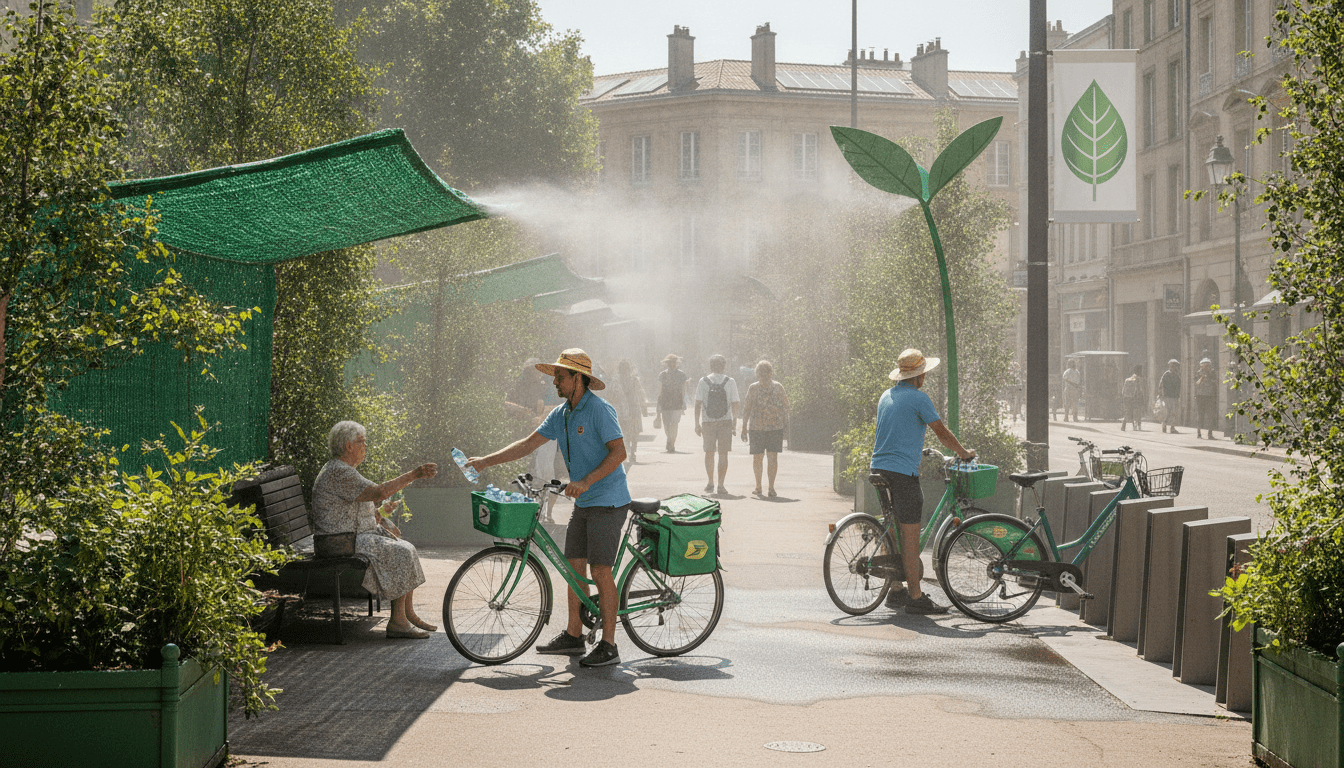
Heatwave Protection in France Intensifies as Postal Workers Become Cooling Responders
France repurposes postal workers nationwide, paints streets white, plants trees and opens cooling zones as heatwave protection after the deadly 2003 summer.
France has moved quickly to expand heatwave protection in France this summer, deploying postal workers as frontline welfare checkers and rolling out urban cooling measures in major cities. The Paris government’s plan asks postmen to monitor vulnerable residents, remind them to hydrate and alert social services if someone appears at risk. Municipalities are also experimenting with white-painted streets, new shaded sleeping areas in parks and replacing parking spots with trees to lower temperatures on the ground.
Postal workers reassigned as heat responders
Postal employees are being asked to extend their regular rounds with simple welfare checks in neighborhoods with many isolated or elderly residents. Their new duties include brief wellbeing questions, ensuring access to water and notifying authorities when someone seems unwell or unreachable. Officials argue the nationwide postal network offers an efficient, low-cost means to reach people who might otherwise be overlooked during extreme heat.
Memories of the 2003 mortality crisis
The shift in tactics is rooted in the catastrophic summer of 2003, when an unprecedented heatwave killed an estimated 15,000 to 20,000 people in France. That event exposed how quickly heat can become lethal for seniors living alone and how municipal systems were unprepared to cope with mass casualties. Policymakers cite those failures as a primary reason for more proactive planning and community-level interventions today.
City-level tactics: white streets, green sleeping areas and trees
Local governments are testing several urban design changes proven to reduce surface and ambient temperatures. Painting pavements and road surfaces white reflects more sunlight and can lower ground heat, while converting parking bays into tree-lined strips increases shade and evaporative cooling. Cities are also designating shaded “sleeping zones” in parks where people without access to cool housing can rest safely during the hottest hours.
Lyon’s pragmatic measures: drinking fountains and cooling paths
Lyon is being held up as a practical example of city-led adaptation, installing additional drinking-water fountains and carving out shaded walking routes that link parks, public squares and transport hubs. Those “cool paths” are intended to offer continuous relief for people walking across the city and to guide residents toward cooler microclimates. Local officials report higher use of public fountains and shaded corridors during heat spikes, suggesting these measures can change behavior quickly.
Limits of resources and uneven political attention
Despite growing municipal innovation, gaps remain in personnel, equipment and funding that hinder broad implementation of heatwave protection in France. Some local governments say they lack sufficient staff for outreach and that available cooling centers fill rapidly during severe heat events. At the same time, critics warn that national political debate has not kept pace with the urgency of climate-driven temperature extremes, leaving municipalities to develop ad hoc solutions.
Scaling up and the need for systematic planning
Experts and city administrators emphasize that patchwork measures must be paired with longer-term planning to protect vulnerable populations sustainably. Recommendations include formalizing postal outreach into emergency protocols, expanding public water infrastructure and integrating heat-reduction standards into urban planning codes. Public education campaigns and improved data on at-risk households are also seen as essential to ensure resources reach those who need them most.
France’s current actions reflect lessons learned over two decades: targeted outreach, simple urban-design fixes and local experimentation can reduce harm during heatwaves, but they do not eliminate the need for sustained investment and national coordination. Municipal successes offer a roadmap, yet officials acknowledge that protecting residents from rising temperatures will require persistent effort across multiple levels of government.
