
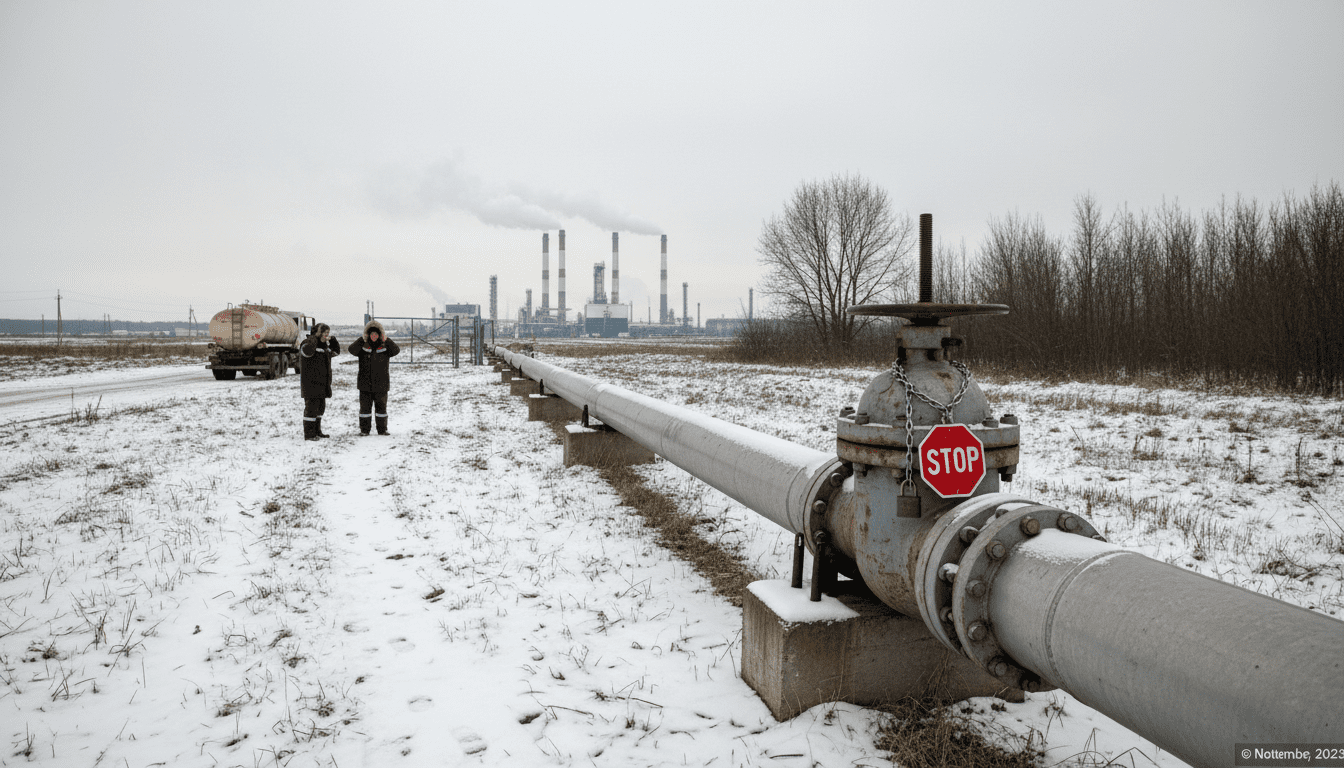
Russia halts Kazakh oil via Druzhba pipeline, putting Schwedt refinery supplies at risk
Russia will halt Kazakh oil via the Druzhba pipeline on May 1, 2026, threatening Schwedt refinery supplies and raising fears for Berlin-Brandenburg fuel.
The Kremlin has announced that transit of Kazakh crude through the Druzhba pipeline to Germany will be suspended from May 1, 2026, citing technical reasons that analysts say are likely political in motivation. The move puts the PCK Schwedt refinery at the centre of an unfolding supply risk that could affect road fuels, jet kerosene and bitumen used in construction. German and regional officials have begun contingency planning even as public reassurances aim to prevent panic buying.
Kremlin orders halt to Kazakh oil via Druzhba pipeline
Russia said last week that deliveries of Kazakh crude through the Druzhba pipeline will stop on May 1, 2026, attributing the interruption to technical issues on the route. Observers and industry contacts interpret the announcement as politically driven and warn the disruption could last longer than the time needed to fix infrastructure. The prospect of an extended halt has prompted heightened scrutiny of fuel flows into eastern Germany and neighbouring Poland.
Schwedt refinery’s role for Berlin and Brandenburg
The PCK Schwedt refinery processes the bulk of fuels consumed in Berlin and Brandenburg, making it pivotal to regional mobility and commerce. Officials note that as many as nine in ten vehicles in the area rely on products refined in Schwedt, and the Berlin Brandenburg Airport draws a substantial share of its jet fuel from the facility. Any significant loss of crude feedstock to Schwedt therefore risks localized shortages or price spikes for gasoline, diesel and aviation fuel.
Schwedt also produces bitumen, a key binder for asphalt used in road construction, so construction schedules and maintenance projects could face material constraints. Local industry groups have warned that prolonged supply interruptions would ripple into the building sector and public works, compounding economic effects beyond the fuel market. The refinery’s output mix and regional integration heighten the consequences of a transit suspension through the Druzhba pipeline.
Immediate operational impact and inventory buffers
Rosneft Deutschland, the majority shareholder in PCK, must find replacements for more than two million tonnes of Kazakh crude that flowed to Schwedt last year, a task made difficult by market upheaval and differences in crude quality. Company and government sources estimate the refinery could continue normal operations for roughly four to six weeks without those imports, depending on current inventories and tank levels. Mineral oil pipeline and tank storage capacities in Schwedt, which hold about 300,000 cubic metres, provide a temporary cushion but are not a long-term solution.
Refinery economics and technical constraints magnify the risk: operators consider runs below 80 percent utilization financially marginal, and throughput under 60 percent creates operational and safety challenges for process teams. That sensitivity means that even partial or phased reductions in crude supply could force changes in production patterns, with knock-on effects on wholesale markets and consumer prices in the region.
Seaports and pipelines as alternative supply routes
Operators have turned attention to seaborne imports through Rostock and Gdańsk as primary alternatives to the Druzhba corridor, but both routes face capacity and regulatory limits. The Rostock terminal and its pipeline connection to Schwedt are currently capped at roughly 6.8 million tonnes per year unless a long-planned upgrade is authorised and funded. Danzig (Gdańsk) supplies reach Schwedt via the Polish “Pommersche Leitung” and Polish pipeline segments, with that route historically handling sizable volumes but subject to commercial and political oversight.
Last year PCK processed in excess of ten million tonnes of crude, with around two million tonnes supplied via the Druzhba route from Kazakhstan and the rest arriving largely by pipeline from Rostock and Gdańsk. Even if seaport throughput is increased, bottlenecks and the pace of logistical adjustments mean short-term substitution will be limited, and rapid uplift of seaborne volumes faces physical and permitting hurdles.
Polish talks and ownership questions
Berlin has engaged Warsaw about expanding deliveries through Gdańsk, but those discussions intersect with political sensitivities over the refinery’s shareholder structure. Rosneft Deutschland’s ties to the Russian parent company have complicated supply and investment choices since the Russian invasion of Ukraine, prompting the German government to place the majority stake under trusteeship in 2022. Poland’s state-linked groups, including Orlen, have previously expressed interest in PCK stakes and in strengthening supply links, but formal shifts in ownership or guaranteed access for Rosneft Deutschland remain unresolved.
Other potential buyers and terminal operators have signalled readiness to ship crude or to use rail and coastal tankers in emergencies, but commercial agreements and regulatory approvals would be required to implement such measures at scale. The political overlay of energy security and sanctions considerations adds a layer of complexity to what might otherwise be logistics-focused negotiations.
Quality and technical matching complicate swaps
Not all crude grades are interchangeable for the Schwedt refinery, which was optimised over decades for crude characteristics similar to Russian and Kazakh oils. Substitutes of different density and sulfur profile can reduce yields of key products or require processing adjustments that take time and investment. Finding a sufficient volume of compatible crude on short notice is therefore more difficult than securing any crude cargo and transport route.
Rail alternatives, while discussed in proposals, are impractical at the scale needed; the equivalent of the expected monthly deliveries would entail thousands of tank cars and lengthy trains, and would still not address crude-quality matching. For Rosneft Deutschland and its partners, the dual challenge of sourcing compatible grades and arranging an alternative pipeline or sea route is central to avoiding a prolonged downturn in Schwedt’s output.
If supplies do stop on May 1, 2026, industry sources expect a window of several weeks before major disruption, but that buffer depends on immediate measures to shift cargoes and on diplomatic progress with Polish partners. The coming days will determine whether market adjustments and contingency shipments can avert a sustained shortfall for consumers and critical infrastructure.
