
Study Finds Marshall Fire Indoor Air Quality Linked to Lingering Symptoms in Survivors
New CU Boulder study links Marshall Fire indoor air quality to headaches, sore throats and odd tastes months after the Dec. 30, 2021 blaze; simple filtration helped. (155 characters)
Six months after the Dec. 30, 2021 Marshall Fire, more than half of residents living in homes that survived reported physical symptoms they attributed to poor indoor air quality, a new University of Colorado Boulder study found. The research, which measured gases inside a standing house and surveyed neighbors, identifies a pattern of headaches, sore throats and unusual tastes that persisted into mid-2022. The study raises questions about how quickly people can safely return to homes damaged by nearby structure fires.
Researchers Deploy Instruments Days After the December 2021 Blaze
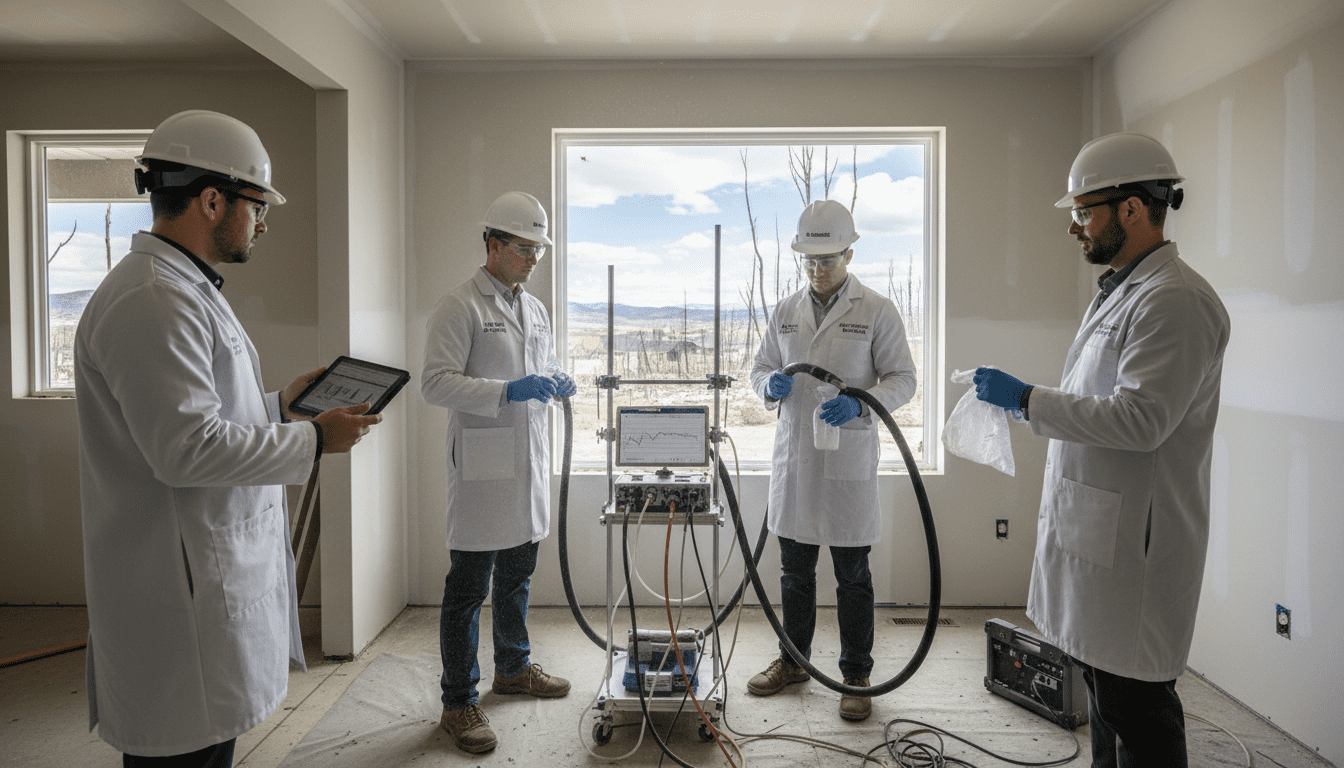
Ten days after the Marshall Fire ignited on Dec. 30, 2021, CU Boulder scientists placed air-monitoring instruments inside an intact house adjacent to a block where multiple homes burned. The team continuously tracked roughly 50 gases over a five-week period to capture how airborne contaminants behaved in a surviving dwelling. Those early measurements were intended to complement a broader public health survey launched by the same research group.
The field campaign was led by chemists and geographers at CU Boulder who responded to calls from residents worried about smells and ash once people returned. Their rapid deployment allowed the team to measure short-term peaks and longer-lasting pollutants that would not have been recorded weeks or months later.
Gas Measurements Show Elevated VOCs and Persistent Hazards
Air sampling inside the standing home revealed elevated levels of volatile organic compounds, including benzene, a substance associated with petroleum products and combustion. The researchers reported concentrations and compound mixtures they described as comparable to urban smog episodes, with hazardous gases lingering for weeks after the fire. Those findings highlight the difference between vegetation smoke and smoke and fumes produced when homes, vehicles and household materials burn.
The study cautioned that detected VOCs were not necessarily present at levels that, by themselves, guarantee long-term cancer risk, but they can produce acute symptoms such as headaches, sore throats and eye irritation. The chemical fingerprint inside burned neighborhoods included a mix of combustion byproducts that can settle into carpets, furniture and drywall, prolonging indoor exposure.
Survey of Residents Documents Symptom Patterns at Six Months and One Year
Researchers surveyed residents within the burn perimeter and a random sample within two miles, collecting 642 responses at the six-month mark (June 30, 2022) and 413 responses at one year (Dec. 30, 2022). At six months, 55 percent of respondents reported at least one symptom they attributed to the fire, with patterns tied to what people found when they re-entered their homes. Those who discovered ash indoors were roughly three times more likely to report headaches, and those who noticed an unusual odor were about four times more likely to report head pain.
Geographic and wind-direction mapping showed symptom clustering near destroyed homes and downwind zones, suggesting exposures were not random but related to where materials burned and how contaminants traveled. By the one-year survey, reported symptoms had declined to 33 percent and confidence in indoor air quality had generally improved, though researchers emphasized that the long-term health consequences remain uncertain.
Dust and Residue Tests Reveal Metals and PAHs in Survivors’ Homes
Complementary dust sampling detected elevated levels of metals such as copper, zinc and arsenic, along with polycyclic aromatic hydrocarbons (PAHs), a group of industrial pollutants produced by incomplete combustion. These residues can adhere to settled dust and porous surfaces and be re-entrained into indoor air by normal household activity. The presence of melted plastics, electronics and vehicle materials in nearby burned structures likely contributed to the complex mixture of contaminants.
Authors warned that the combination of gases and particulate-bound chemicals creates exposure pathways that differ from wildfire-vegetation smoke, because burned household materials emit distinct toxins. The study therefore frames the Marshall Fire as an example of how structure fires in the wildland-urban interface generate a different indoor air risk profile than landscape fires alone.
Low-Cost Measures Shown to Improve Indoor Air for Returning Residents
The CU Boulder team found that simple interventions—opening windows when outdoor air quality permitted and running carbon-activated air filters—substantially improved measured indoor air quality. Residents who implemented ventilation and filtration reported greater confidence in their homes’ air at the one-year survey and experienced fewer lingering symptoms. The researchers emphasized that timely cleaning to remove ash and contaminated dust from surfaces and soft furnishings also reduces re-exposure.
Despite these practical steps, the study’s authors urged caution for anyone entering smoke- or ash-damaged homes immediately after a WUI (wildland-urban interface) fire, advising the use of well-fitting respirators (such as KN95 masks), gloves, and protective cleaning practices until professional remediation is completed. They noted that community guidance has been sparse and uneven despite clear demand for actionable instructions.
Researchers Call for Clearer Return-to-Home Standards and Insurance Guidance
Study co-authors said their findings should inform policymakers, public health officials and insurers about when it is safe for occupants to return to homes that were exposed to nearby structure fires. The team wants standard protocols for screening indoor air, prioritizing safe re-entry, and supporting remediation, particularly as fires in populated areas become more frequent. They also highlighted the need for further research to determine whether these midterm exposures lead to long-term health effects.
Local officials and disaster-response agencies were urged to consider rapid indoor air assessments and public messaging that distinguishes vegetation smoke from the more complex hazards of burned buildings. The researchers described their work as an early step toward filling an evidence gap that has left many homeowners uncertain about safety after surviving nearby structure fires.
The Marshall Fire study provides the first detailed look at indoor air in homes affected by adjacent building combustion and links those conditions to resident-reported symptoms. While the immediate risks can be mitigated with ventilation, filtration and cleaning, the research underscores the urgency of developing clear, science-based guidance so that communities can return home with confidence and protection.
