
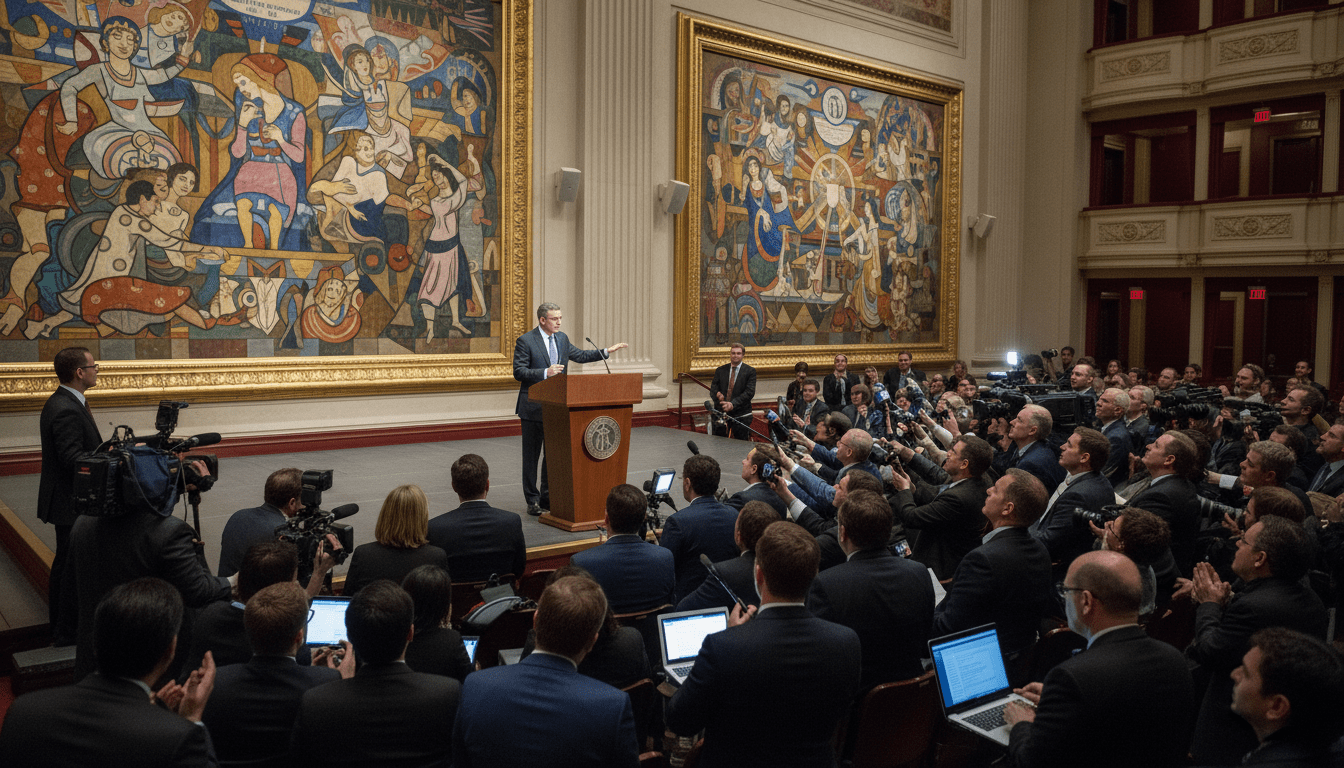
Metropolitan Opera Chagall murals sale sparks debate as works remain on display
Metropolitan Opera Chagall murals sale: The Met plans to sell Marc Chagall’s foyer murals while they remain on view, raising funds amid post‑pandemic pressures.
The Metropolitan Opera has announced plans for a Metropolitan Opera Chagall murals sale that would transfer ownership of two monumental Marc Chagall works while keeping them installed in the opera house’s foyer. The opera’s leadership says the move is part of a broader fundraising effort to stabilize the institution after financial setbacks following the COVID‑19 pandemic. Sotheby’s has been engaged to value and market the works, which the Met says will remain in place regardless of a new owner.
Met Announces Sale of Two Chagall Murals
The two paintings identified for sale are the site‑specific murals Chagall created for the Met’s Lincoln Center opening in 1966, commonly known as The Sources of Music and The Triumph of Music. The opera has framed the transaction as a sale of title and associated rights rather than a transfer of physical custody, so the panels will stay mounted in the public foyer. The announcement has drawn attention because it separates legal ownership from physical stewardship in a high‑profile cultural setting.
Sotheby’s Issues $55 Million Estimate
Auction house estimates released in connection with the sale place the value of the pair at about $55 million, a figure aligned with recent prices for major modernist works on the secondary market. Sotheby’s involvement signals the opera’s intent to pursue an open, market‑based process rather than a private negotiated gift. Market watchers say the unique, immovable nature of the murals will complicate valuation and could narrow the pool of potential buyers to institutions or patrons comfortable with a hands‑off ownership.
Murals Will Remain on Display; Buyer Receives Commemorative Plaque
Under the proposed arrangement, the buyer would acquire ownership but not the right to relocate the murals; instead a commemorative plaque acknowledging the purchaser would be placed near the works. The Met has stressed continuity: the murals would continue to be visible to the public through the building’s glass façade and in the foyer for visitors and passersby. Opera officials present the structure as a way to monetize an asset without disrupting the venue’s artistic program or its relationship with audiences.
French Moral Rights Restrict Alteration and Relocation
Legal experts note that Marc Chagall executed the murals in France and that French moral‑rights law grants the artist—and in many cases his heirs—ongoing authority to prevent distortion, mutilation or relocation of works. Those protections can limit an owner’s ability to move or modify artworks created under French jurisdiction. The Met recognizes those constraints and says the sale respects the legal and ethical obligations tied to Chagall’s original intent for the pieces.
Chagall’s Images Are Woven into the Met’s History
The two eleven‑by‑nine‑meter murals were designed specifically for the Met’s opening and include theatrical and musical motifs, including a floating image of Mozart and figures from The Magic Flute. The works have hung prominently since 1966 and are widely regarded as part of the building’s visual identity. Even the Met’s early director is depicted among the figures, underscoring how closely the paintings are entwined with the institution’s own story.
Met Cites Post‑Pandemic Shortfall as Motive for Sale
The Met’s leadership has framed the transaction as a response to a prolonged funding gap exacerbated by the pandemic’s disruption of performances, subscriptions and touring income. Management says the organization has sought numerous revenue avenues to restore financial stability and support programming. Critics and supporters alike acknowledge the dilemma: monetizing a high‑value cultural asset can bring needed funds but also raises questions about stewardship and the public interest.
The proposal has provoked debate among arts patrons, legal scholars and museum professionals about the balance between raising operating revenue and preserving public access to iconic works. Some observers welcome a transparent sale process that generates cash while keeping the murals publicly visible, while others worry that transferring title severs a symbolic public claim to the works. The Met has pledged that any sale will include legally binding terms to preserve the murals’ location and condition.
Public reaction is likely to shape the pace and structure of any eventual transaction, and arts funders may be asked to weigh in as potential buyers or supporters of alternative financing models. For now, the murals continue to hang where Chagall placed them more than half a century ago, visible to millions of visitors, even as the institution explores an uncommon approach to leveraging cultural assets.
