
Mali attacks: Coordinated weekend assaults leave capital shaken and Kidal contested
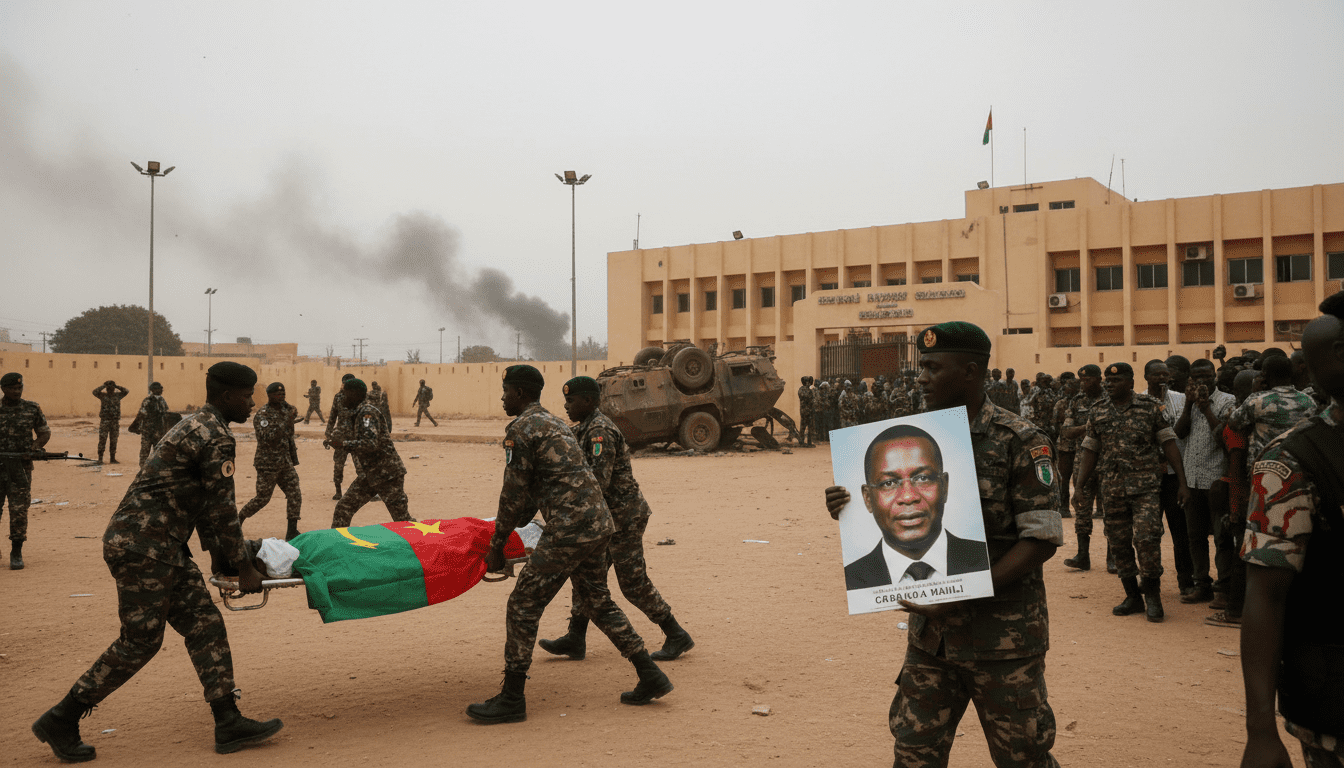
Widespread, near-simultaneous attacks across Mali over the weekend marked the most intense violence the country has seen since 2012, with the Mali attacks striking military posts and political residences from Bamako to Kidal. Reports say the assailants targeted the houses of President Assimi Goïta and Defense Minister Sadio Camara in the capital, and Africa Report cited multiple sources claiming Camara was killed by a suicide car bomb that demolished his home. Security officials and analysts warned the scale and coordination of the Mali attacks could reverberate across the Sahel, altering military calculations and diplomatic ties.
Coordinated assaults strike Bamako, Kidal and central Mali
Initial gunfire and explosions were reported in Bamako on Saturday, followed by accounts of attacks in central towns and Gao in the north, indicating a broad geographic sweep. Eyewitness videos circulating on social platforms showed armed men moving on motorcycles and pickup trucks along city approaches while residents watched, at first stunned and then increasingly alarmed. Military spokespeople in Bamako said forces were working to repel the attackers and that some assailants had fled, but provided limited detail on casualties or precise locations of ongoing clashes.
Defense minister reportedly killed in suicide car bombing
According to media reports citing multiple sources, Defense Minister Sadio Camara’s residence in Bamako was struck by a suicide vehicle-borne improvised explosive device that destroyed the house and reportedly killed the minister. Malian officials have been inconclusive in public statements, and confirmation from independent authorities remained pending as of Sunday night. If verified, Camara’s death would represent a major blow to the military government, removing a key interlocutor with Russia and a central figure in Mali’s security leadership.
Kidal reverts to rebel control; Russian ‘Afrikakorps’ and army besieged
Video footage from Kidal showed armed fighters celebrating in the city center and raised questions about control of urban areas that had been reclaimed in previous operations. Local security analysts said the city was again under the influence of insurgents, while Malian army units and fighters aligned with Russia’s new Afrikacorps—successor to the Wagner group—appeared to have withdrawn into garrison compounds. Those forces reportedly faced sustained mortar and heavy-machine-gun fire, and sources described insurgents blending into civilian populations, complicating attempts by troops to reassert control.
Islamist groups and Tuareg rebels claim joint operation
The Azawad Liberation Front, a Tuareg separatist movement, and the jihadist coalition Jamaat Nusrat Al-Islam wal-Muslimin (JNIM) both issued statements framing the weekend’s action as a coordinated operation, with JNIM explicitly acknowledging cooperation and calling the Tuareg fighters “brothers.” Observers said the partnership reflects pragmatic alliances on the ground that fuse separatist aims and jihadist operational capacity, allowing insurgents to strike urban centers more effectively than in prior years. Analysts caution that such tactical marriages increase unpredictability and complicate political solutions aimed at isolating extremist elements.
Fuel blockade and shift to urban warfare preceded the attacks
Security sources and local reporting indicate the attacks were preceded by a prolonged fuel blockade that severely disrupted Bamako’s economy, triggering school closures and hampering services. JNIM has used economic leverage before, and conflict monitors note a broader strategic shift: since 2022, insurgents in the Sahel have concentrated more frequently on urban targets and supply routes, multiplying attacks in towns and along convoys. International Crisis Group analysts have highlighted this trend, observing a spike in assaults on cities across Burkina Faso, Mali and Niger and urging states to prioritize defense of population centers and access corridors.
Regional and diplomatic stakes for Russia and Sahel governments
The weekend’s events place fresh strain on Mali’s military rulers and on Moscow, which invested heavily in reclaiming Kidal in prior campaigns and positioned the Afrikacorps as a central security partner. Ulf Laessing of the Konrad-Adenauer-Stiftung warned that the loss of Kidal’s streets to insurgents constitutes a psychological and strategic setback after years of effort by Russian-aligned forces. The reported death of Camara, if confirmed, would also complicate bilateral coordination; he had been a primary Russian contact within Mali’s junta, and his absence could prompt reassessments in Moscow and among regional partners.
The attacks are likely to intensify pressure on neighboring states already coping with cross-border insurgency and could prompt shifts in military deployments, international assistance, and humanitarian responses. Governments in the Sahel have repeatedly said they must adapt to insurgents’ greater willingness to strike cities; the weekend’s operations will probably accelerate those debates and the mobilization of resources to protect supply lines and urban populations.
Ongoing uncertainty about casualty numbers, the exact holdings of government and rebel forces in contested towns, and the status of key officials means the situation remains fluid. Investigations by Malian authorities and reporting from international monitors will determine whether the weekend marks a turning point in the conflict or a dramatic episode in a continuing pattern of insurgent escalation.
