
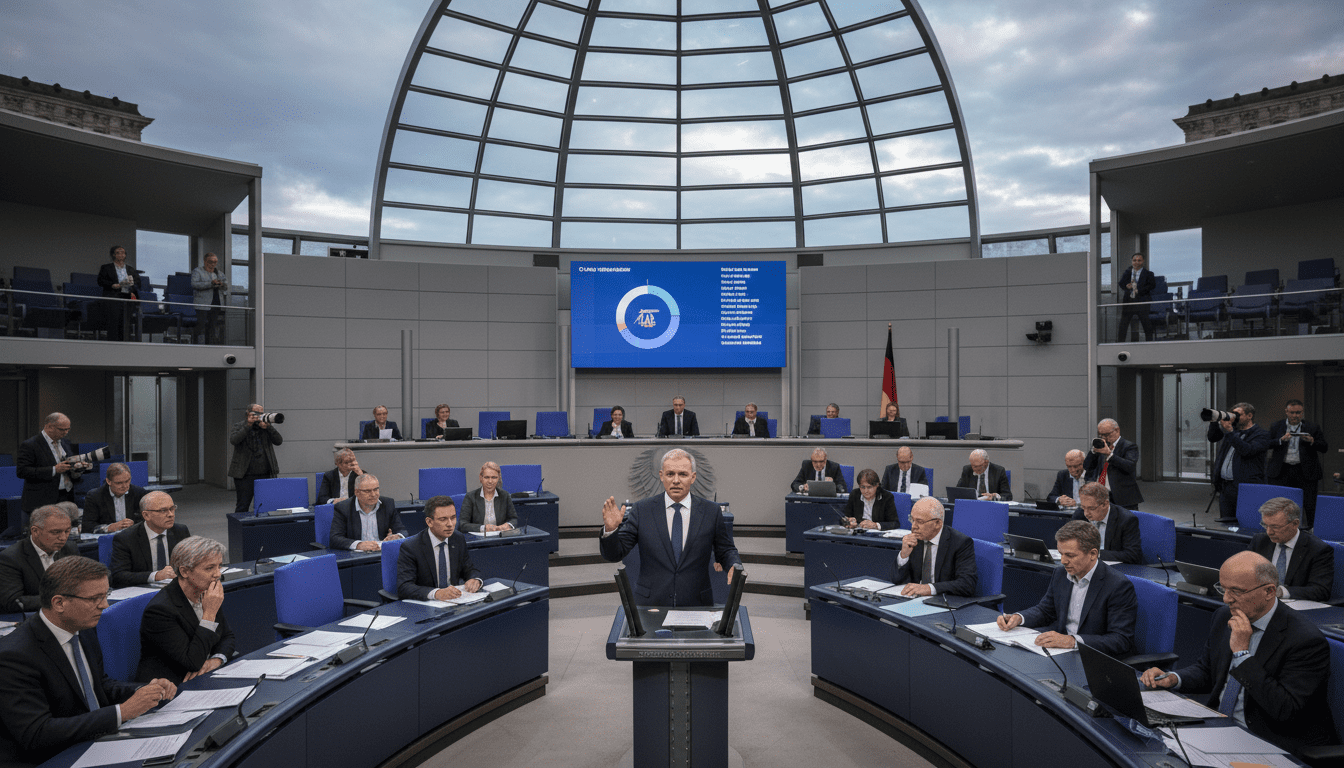
Germany Debates Debt Brake Suspension Amid Rising Energy Costs
Germany debates an emergency debt brake suspension as parties weigh relief measures, rising interest burdens and AfD polling pressure shaping fiscal choices and reform prospects.
Germany’s major parties have opened a public debate over an emergency debt brake suspension after a new wave of relief measures aimed at easing energy costs. The proposal for a debt brake suspension — Schuldenbremse in German — has moved from fringe discussion into mainstream negotiation as politicians seek immediate tools to soften the impact of higher prices on households. Allies and opponents alike frame the move as a choice between fiscal rules and rapid social relief, while concern grows about long-term budgetary consequences.
Coalition Pushes Emergency Debt Brake Suspension
Coalition leaders in both the Union and the SPD have proposed a temporary suspension of the debt brake to finance across-the-board relief measures, arguing that exceptional circumstances warrant exceptional responses. The debate mirrors earlier crisis-era policymaking where quick relief packages were favored over targeted structural reforms. Proponents contend a suspension would allow immediate support — such as fuel subsidies and one-off payments — without squeezing other budget lines.
Critics warn that suspending the debt brake sets a precedent that could undermine fiscal discipline and embolden future emergency claims. They point to the cumulative impact of prior debt-financed packages and argue for more targeted, means-tested assistance. The impasse has turned into a political signal: parties prefer visible short-term relief to politically costly structural adjustments.
Rising Interest Burden and Budget Constraints
The federal budget now carries significantly higher interest obligations, with analysts estimating annual interest costs have risen into the tens of billions of euros range. These growing interest payments limit the room for new investments in areas such as industrial transition, infrastructure modernization and climate-related projects. Lawmakers face the trade-off of borrowing to cushion immediate shocks or preserving fiscal headroom for long-term strategic spending.
Budget officials emphasize that recurring debt-financed measures increase vulnerability to future rate shocks and reduce flexibility for crisis response. The argument has added urgency to discussions over whether temporary suspension should be tied to clear limits, sunset clauses and offsetting reforms. Without disciplined parameters, fiscal experts fear a gradual erosion of the constraints the debt brake was meant to guarantee.
AfD’s Polling Gains Shape Relief Politics
High polling numbers for the AfD have exerted pressure on mainstream parties to deliver broad, visible relief rather than politically painful reforms. Observers note that the rise of right-wing populism influences the calculus: parties seek fast, populist-friendly measures to blunt the AfD’s appeal without ceding ground on core policy issues. The result is political momentum for sweeping, non-targeted subsidies that are easier to sell to wide audiences.
This dynamic has produced policy choices that prioritize electoral optics over fiscal precision, according to several political strategists. The pressure is particularly acute in the eastern Länder, where AfD support remains strongest and where election outcomes could reshape Bundestag dynamics. As a consequence, debates over the debt brake have become intertwined with broader electoral strategy.
Missed Reform Opportunity Amid Crisis
Analysts argue that the current crisis could have served as a trigger for major structural reforms comparable to earlier landmark changes in Germany. Past crises have yielded significant policy shifts — for instance, reforms that reshaped labor markets — by leveraging the urgency of economic adjustment. Critics now contend that the focus on immediate relief has crowded out more ambitious conversations about pension, taxation and labor-market reforms.
Opponents of the reform-first approach say the political environment is unfavorable for measures that carry short-term costs, such as tougher eligibility rules or tax code changes. Yet advocates maintain that delaying reforms will compound fiscal strain and make eventual adjustments more painful. There remains a narrow window for lawmakers to pair short-term support with binding commitments to efficiency-enhancing reforms.
Healthcare Bill Advances to Cabinet
Amid the broader fiscal contest, a high-profile healthcare reform has been slated to reach the cabinet for approval, signaling one substantive policy movement in an otherwise gridlocked agenda. The measure is being presented as a priority that could shore up long-term system sustainability, though parliamentary passage is far from guaranteed. Supporters say the bill demonstrates that targeted reform remains possible even in a tense fiscal environment.
Opponents in labor and civil-society groups have already voiced concerns over potential trade-offs, indicating the parliamentary debate will be intense. How the healthcare bill is financed — through reallocation, savings or limited borrowing — will likely influence subsequent decisions on any debt-brake suspension. The vote in cabinet is therefore a test of whether governance can still produce negotiated compromises on structural issues.
The coming weeks will test whether German politics chooses immediate, broad-based relief funded by an emergency debt brake suspension or a path that balances short-term assistance with defined fiscal constraints and structural reforms. Lawmakers face the task of clearly defining any suspension’s scope, duration and offset measures while navigating electoral pressures and a rising interest burden that constrains future options.
