
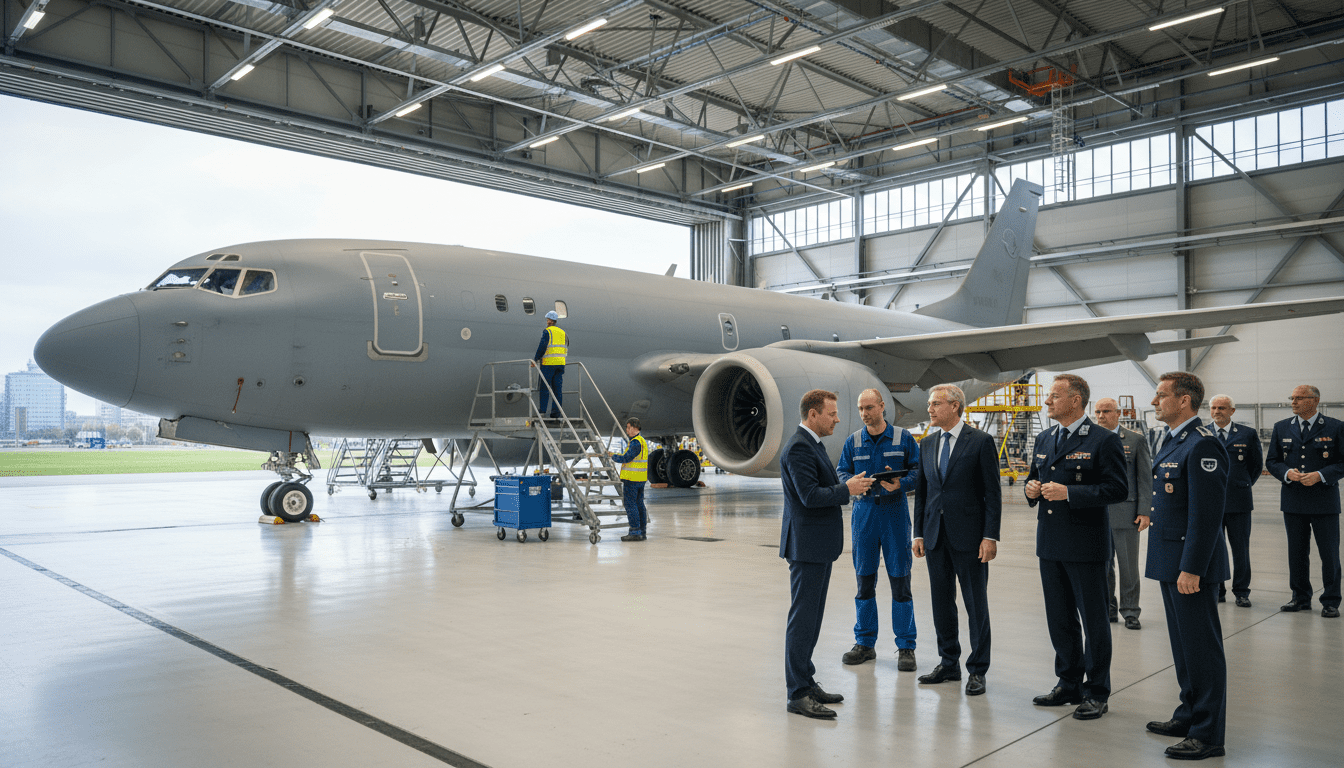
Lufthansa Technik to Maintain Poseidon Patrol Aircraft in Hamburg
Lufthansa Technik will maintain Poseidon maritime patrol aircraft in Hamburg, marking a notable expansion of the company’s defence services into maritime patrol maintenance. The announcement follows initial inspections of the P-8 Poseidon — the submarine-hunter variant — and signals an increased role for the Hamburg site in military aircraft support. Company sources say the move will augment capabilities but is expected to produce only a modest short-term effect on overall revenue.
Agreement and first inspections in Hamburg
The first checks on the Poseidon fleet have taken place at Lufthansa Technik’s Hamburg facilities, where engineers carried out initial airframe and systems inspections. The work focused on baseline maintenance needs and compatibility assessments to prepare for scheduled service and longer-term support contracts.
Officials described the inspections as a “festive” formal start to a new business line for the site, noting the symbolic significance of servicing a platform designed for anti-submarine and maritime patrol missions. The presence of Poseidon aircraft at the Hamburg site reflects a concerted effort by the company to position itself as a partner for national and allied defence maintenance.
Aircraft type and scope of work
The Poseidon is a maritime patrol and anti-submarine aircraft built on a commercial airframe adapted for military sensors and systems. Lufthansa Technik’s scope is anticipated to include scheduled maintenance checks, structural inspections, avionics troubleshooting, and support for mission systems that are unique to maritime patrol operations.
Technical teams will work alongside defence suppliers to ensure compatibility with military-grade hardware, while specialized shops in Hamburg will be prepared to handle the aircraft’s sensor suites and modified mission equipment. The transition requires tailored training, certified tooling, and coordination with defense authorities to meet security and regulatory requirements.
Limited financial impact for Lufthansa Technik
Company statements emphasize that the new military work will be strategically important but not a major immediate revenue driver. Analysts and the company alike expect the contribution to group turnover to be marginal in the near term, with potential for gradual growth as contracts and maintenance cycles mature.
Lufthansa Technik appears to view the project as a diversification move that enhances long-term portfolio resilience rather than a short-term profit lever. Management has framed the work as adding a specialized capability that strengthens the Hamburg site’s competitive position in the maintenance, repair and overhaul market.
Operational changes at Hamburg facilities
Hamburg maintenance centres will undergo operational adjustments to accommodate the Poseidon work, including the allocation of hangar space and the certification of processes for handling military systems. Staff training programs are being expanded to certify technicians on the aircraft’s mission systems and classified equipment handling.
Logistical arrangements will be adapted to meet heightened security protocols associated with defence work, and partnerships with suppliers for spare parts and mission-critical components are being formalized. The company has signaled an incremental approach, scaling capacity in response to contract volumes and operational demand.
Implications for Germany’s defence maintenance sector
The move by Lufthansa Technik adds a significant commercial maintenance player to Germany’s defence logistics and sustainment landscape, potentially easing capacity constraints for naval and air forces. It also underscores a broader trend of civil aviation maintenance providers leveraging their expertise for military support roles.
Observers note that integrating commercial MRO infrastructure into defence supply chains can improve turnaround times and increase redundancy, but it also raises questions about long-term industrial policy and the allocation of sensitive maintenance tasks. The development is likely to draw attention from military planners as well as competitors in the maintenance sector.
The step into Poseidon maintenance reflects Lufthansa Technik’s strategic emphasis on diversifying its service mix while applying its existing aerospace expertise to new, complex platforms, and it may open the door to further defence-related work at the Hamburg site in the years ahead.
