
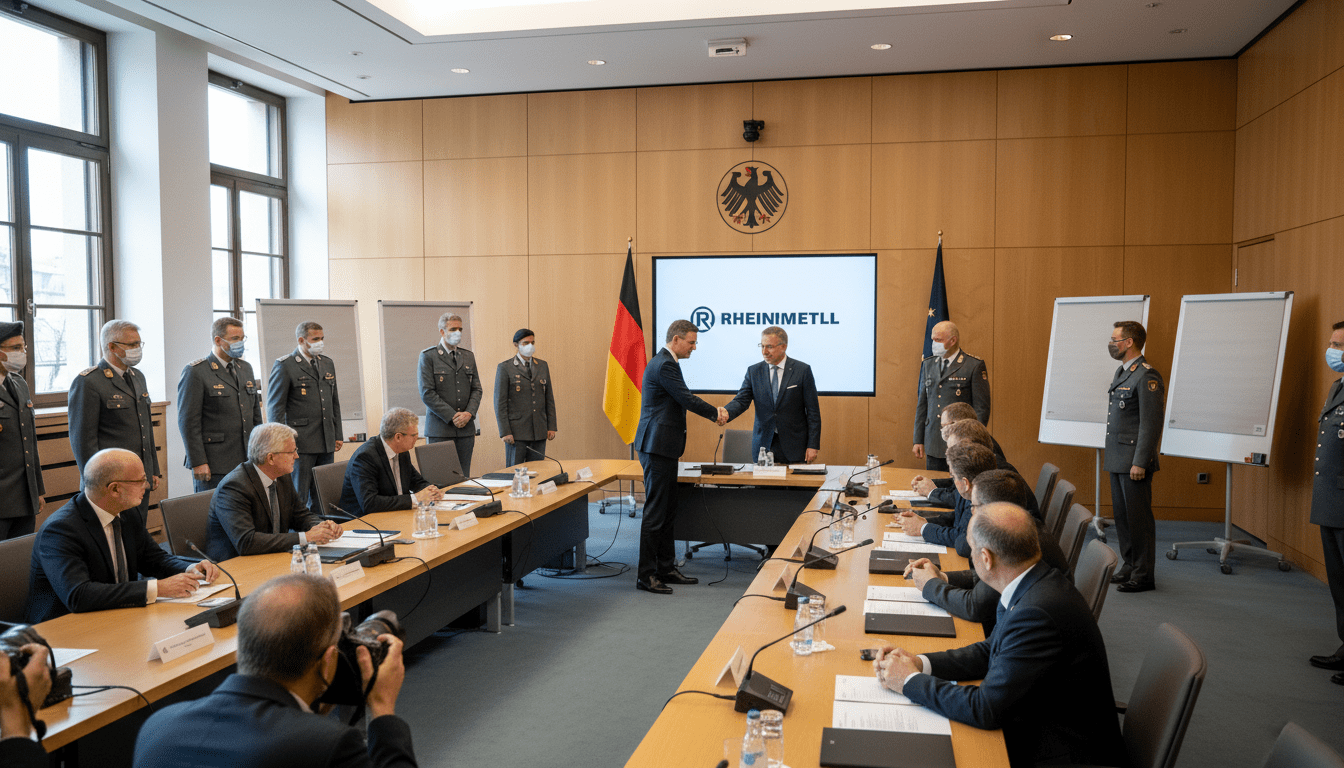
Bundeswehr Awards Rheinmetall €1.04 Billion Contract for New Infantry Systems
Bundeswehr awards Rheinmetall €1.04bn contract for Infanterist der Zukunft systems, equipping 8,600 troops with vests, night vision and tablets, 2027–2029.
The Bundeswehr Rheinmetall order announced on 27 April 2026 commits €1.04 billion to the procurement of infantry equipment under the “Infanterist der Zukunft – Erweitertes System” programme. The company said the package includes protective gear, night-vision devices and wearable tablets intended to enhance situational awareness for Heer soldiers. Deliveries are scheduled between November 2027 and December 2029 and will expand the Bundeswehr’s inventory of such systems to 12,000 units.
Contract scope and financial context
Rheinmetall stated the procurement was placed by the Federal Office for Bundeswehr Equipment, Information Technology and In-Service Support and draws on a framework agreement signed in February 2025. That 2025 framework is worth €3.1 billion in total, of which the current order represents a partial drawdown. Company officials indicated the award covers both new deliveries and modernisation work on systems already in service.
The €1.04 billion figure reflects equipment and software, but does not include weapon systems to be carried with the kit. Rheinmetall described the contract as part of a multiyear supply arrangement that is likely to generate additional follow-on orders under the existing framework.
Systems delivered and capabilities
The ordered suites comprise ballistic vests, uniforms, helmet- and weapon-mounted night-vision devices, and soldier-borne tablets designed to display friendly and enemy positions. Rheinmetall said the kits will be integrated with software that provides commanders with near-real-time tracking of their units and detected threats. The company further emphasised that communication and sensor packages are core to the system’s operational concept rather than the weapons soldiers may carry.
Modernisation work included in the contract will upgrade earlier generations of the systems to ensure interoperability and to deliver the same situational-awareness functions across the Bundeswehr’s inventory. Rheinmetall highlighted modularity as a key design feature to allow future software and sensor updates.
Delivery schedule and force impact
According to the company, 8,600 new systems will be delivered between November 2027 and December 2029, bringing the total number of fielded kits to 12,000. Rheinmetall estimated that the enlarged fleet would equip 353 “Züge”—small tactical units typically comprising more than 30 soldiers each—across the army. The phased schedule is intended to allow integration, training and iterative improvements during rollout.
The staggered deliveries also aim to synchronise with other procurement programmes and unit training plans, reducing disruption to operational readiness while transitioning troops onto the new systems.
Connection to the 2025 framework and future orders
The current award is a tranche under the €3.1 billion framework signed in February 2025, and Rheinmetall indicated that additional orders of a similar nature are probable as the framework is further tapped. Company statements suggest that the firm expects substantial demand from the Bundeswehr for at least the next decade, linked to both new acquisitions and upgrade cycles.
German government plans to accelerate military procurement—encompassing armoured vehicles, aircraft and unmanned systems—have created a broader spending environment in which suppliers expect sustained contract flow. Rheinmetall is positioned among several major contractors likely to participate in that multibillion-euro procurement wave.
Rheinmetall’s production expansion and market outlook
Rheinmetall has expanded production capacity significantly in recent years, the company said, responding to elevated demand since the outbreak of hostilities in Ukraine. Executives have publicly forecast that the current ramp-up and elevated sales environment could persist until the mid-to-late 2030s, with the CEO projecting a slowdown in the second half of the 2030s. The company has also cited strong market demand across its land systems and electronic-sensor businesses.
Rheinmetall’s reported growth in shareholder value and industrial scale-up reflect that demand, though company spokespeople stress investments in workforce, supply chains and testing facilities to sustain higher output rates and meet delivery schedules.
Operational and strategic implications for the Bundeswehr
Officials and defence analysts say equipping soldiers with integrated protection, sensors and digital displays is central to modern infantry concepts that prioritise information advantage and survivability. The Rheinmetall systems are intended to improve commanders’ situational awareness, reduce the fog of battle and speed decision-making at small-unit level. Modernisation of existing kits under the contract should help standardise training and logistics across units.
At the same time, procurement of digitalised soldier systems raises questions about long-term sustainment, software updates, cybersecurity and integration with other NATO systems—areas that the Bundeswehr and its suppliers will need to manage as deployment expands.
The Rheinmetall announcement marks a significant step in the Bundeswehr’s equipment upgrade programme and highlights the scale and duration of planned purchases as Germany reshapes its defence posture.
