
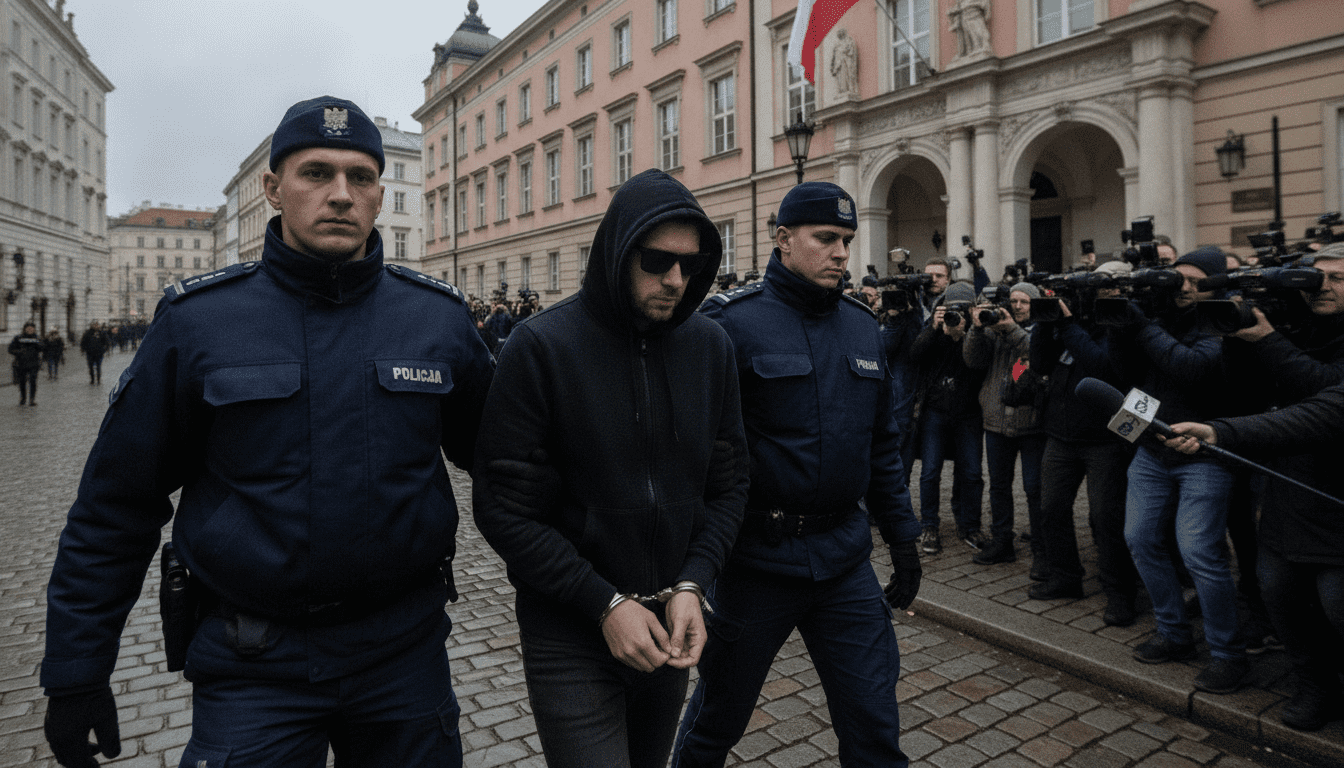
Polish police arrest suspect in killing of Russian artist Semjon Skrepezki
Polish police say they have arrested a suspect in the killing of Russian artist Semjon Skrepezki in Biała Podlaska, and investigators are probing the man’s identity, passport and possible foreign involvement.
Shooting in Biała Podlaska and immediate response
Four days after the fatal shooting of Russian performance artist and satirist Semjon Skrepezki, Polish authorities reported that a suspect has been taken into custody. The victim was gunned down on a street in the eastern town of Biała Podlaska, a crime that has drawn national attention and prompted a fast-moving investigation. Prime Minister Donald Tusk said early signs pointed to a politically motivated killing while cautioning that more evidence was needed before drawing firm conclusions.
Capture in Piastów and the role of special units
Police and anti-terror units located and arrested the suspected shooter in a hostel in Piastów, near Warsaw, according to official statements. Authorities described the operation as coordinated and said it involved the regional police and counterterrorism teams. Officials have indicated the detained man has a criminal record and law-enforcement agencies continue to gather forensic and intelligence evidence at multiple sites.
Questions about the suspect’s identity and passport
Investigators say the arrested man used a passport issued to a 36-year-old Georgian, but officials have not yet reached a definitive conclusion on his true identity. Lublin police spokesman Andrzej Fijolek said the document is being checked and that there are indications the passport may be forged. Media reports have suggested the individual could also be of Chechen origin, a lead that authorities said they are examining alongside biometric checks and database matches.
Early leads and the release of two Belarusian suspects
In the first hours after the killing, two men from Belarus were briefly detained and questioned before being released for lack of evidence linking them to the shooting. Prosecutors and police emphasized that those initial detentions had not produced grounds for charges, and that the inquiry had shifted focus to the man arrested in Piastów. Officials noted that preliminary findings suggest the violence could have been carried out by a lone assailant, but they are still investigating whether anyone aided him in planning or escape.
Political context and possible foreign involvement
Skrepezki was a vocal critic of the Kremlin and had produced satirical cartoons and performances targeting Vladimir Putin and other figures, including Chechen leader Ramzan Kadyrov. Poland’s prime minister warned that if a foreign state were behind the attack, it would amount to state terrorism, a charge with grave diplomatic and security implications. Poland’s intelligence coordinator Tomasz Siemoniak said investigators are “intensively” probing any links to foreign services, noting that recruiting criminals is a known tactic used by some intelligence agencies.
Investigation priorities and forensic work
Authorities said they are prioritizing confirmation of the suspect’s identity, verification of travel and communication records, and examination of ballistic and surveillance evidence from the scene. Forensic teams have been collecting material from the crime location in Biała Podlaska and from the hostel in Piastów to establish timelines and movements. Police spokespeople indicated they will also review social media, phone metadata and cross-border intelligence in coordination with national security services.
Domestic reaction and security concerns
The killing has heightened public debate in Poland over the risk of transnational political violence on EU and NATO territory, particularly given Poland’s position as a frontline state in the conflict over Ukraine. Political leaders and security officials have publicly framed the incident as a reminder of growing threats from hostile actors operating abroad. Local authorities in the affected regions have increased patrols and urged citizens to remain vigilant while investigations continue.
Skrepezki’s artistic work and recent activism, including a protest outside the Russian embassy in Berlin the week before his death, have been cited by officials and colleagues as possible motives for the attack. Investigators are treating the artist’s public criticisms of Kremlin-aligned figures as a factor to be weighed alongside forensic and intelligence evidence.
The police have indicated that the probe will continue until the full circumstances are clarified, including whether the arrested suspect acted alone or as part of a wider operation. The case has prompted calls from lawmakers and human-rights groups for a thorough, transparent inquiry and for coordination with European partners to determine if cross-border elements played a role.
Local prosecutors have opened formal proceedings and said they will announce further details as evidence is collected and verified. Authorities emphasized that legal steps will follow from confirmed findings, including potential charges if sufficient proof of involvement is established.
International officials and watchdogs are expected to monitor developments closely as Polish investigators seek to close gaps in the timeline and to establish a clear chain of responsibility.
