
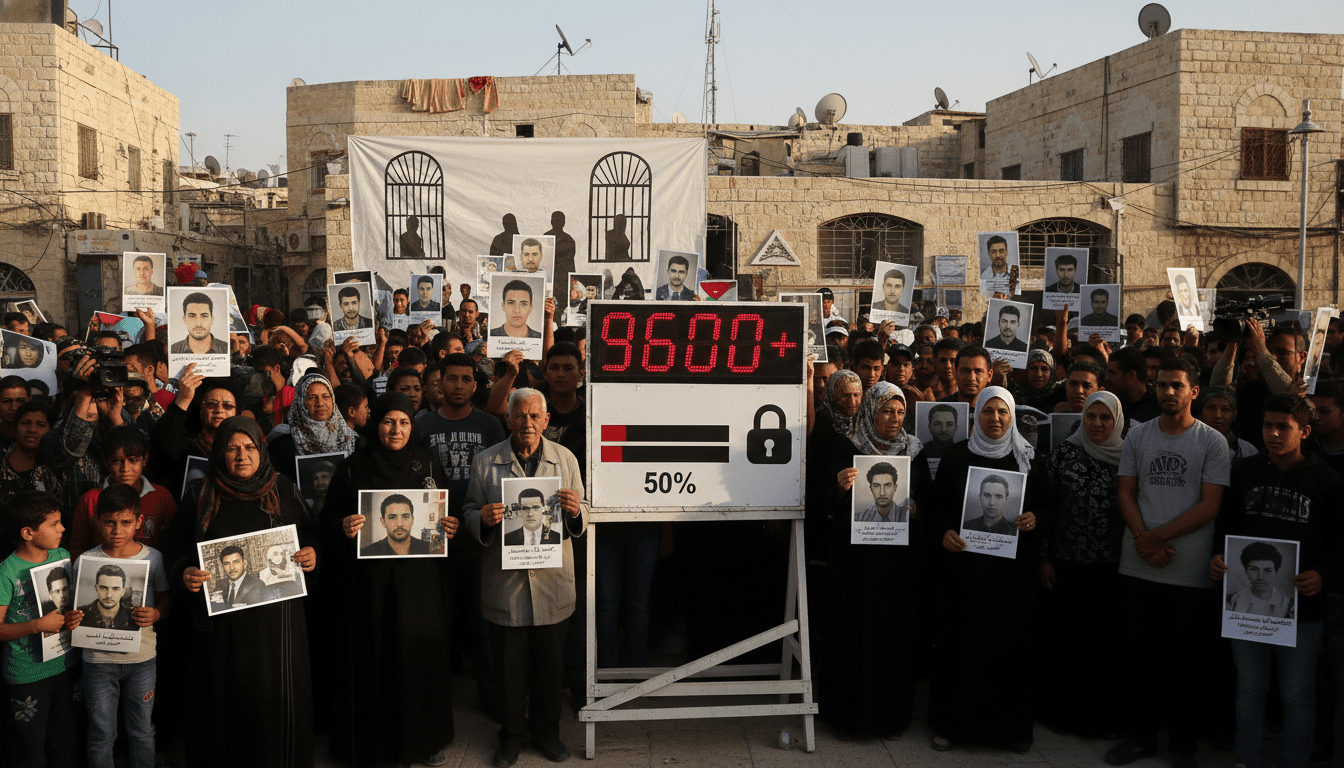
Palestinian Prisoner’s Day: Wafa Says Over 9,600 Palestinians Held, Including 350 Children
On Palestinian Prisoner’s Day, Wafa reports more than 9,600 Palestinians are currently detained in Israeli prisons, including 350 children, with roughly half held without charge or trial. Wafa also said the overall number of Palestinian detainees has risen by 83% since the outbreak of hostilities in Gaza in October 2023. The day of remembrance, established in 1974, is observed as relatives and officials call attention to the scale of detentions.
Wafa Numbers and Demographics
Wafa’s tally lists over 9,600 Palestinians in custody, a figure that the agency highlighted in its coverage of Prisoner’s Day. That total includes 350 minors and a broad mix of men and women, according to the Wafa report. The agency noted that approximately half of those detained are being held without formal charges or access to trial proceedings.
Detentions Without Charge and Legal Questions
Advocates and family members have long raised concerns about administrative detentions and prolonged confinement without charge, and the Wafa figures renew those questions. Being held without charge can complicate access to lawyers and court hearings, creating legal and humanitarian concerns for detainees’ families. International law experts often point to due process standards in assessing such cases, though specific legal outcomes vary by individual circumstance.
Sharp Increase Since October 2023
Wafa’s report states that the number of Palestinian prisoners has increased by 83% since October 2023, when hostilities in Gaza intensified. That surge reflects a dramatic change in detention figures over a relatively short period, and it has become a central element of this year’s Prisoner’s Day observances. Palestinian officials and advocacy groups have used the anniversary to emphasize the scale and pace of arrests since that time.
Origins and Observance of Prisoner’s Day
Prisoner’s Day was established by the Palestinian National Council in 1974 to mark and memorialize Palestinians held in Israeli custody, a fact noted in contemporary reporting by outlets such as Al Jazeera. Each year the day is observed with events, statements and public commemorations organized by families, civic groups and political leaders. This year’s observances have been framed by the heightened detention figures and the broader context of conflict-related mobilization.
Public Reaction and Calls for Action
Families of detainees and several public figures have used Prisoner’s Day to call for greater transparency, access to legal counsel and, in some cases, the release of prisoners. Humanitarian organizations and rights advocates frequently urge adherence to legal safeguards and clearer information about detention conditions. The Wafa figures have been cited in public statements and memorial events as participants press for responses from authorities and international actors.
International and Diplomatic Context
The marked increase in detentions has drawn attention beyond Palestinian communities, prompting discussion in diplomatic and international-relations circles about the humanitarian and legal dimensions of large-scale arrests. Responses from foreign governments and multilateral bodies vary, and international actors often call for clarity on detention practices and protection of children and other vulnerable detainees. The numbers reported by Wafa are likely to feature in upcoming diplomatic exchanges and human-rights briefings.
The observance of Palestinian Prisoner’s Day this year centers on Wafa’s reporting of more than 9,600 detainees, the inclusion of 350 children among them, and the claim that detentions have risen 83% since October 2023, framing the day as both a memorial and a focal point for legal and humanitarian concerns.
