
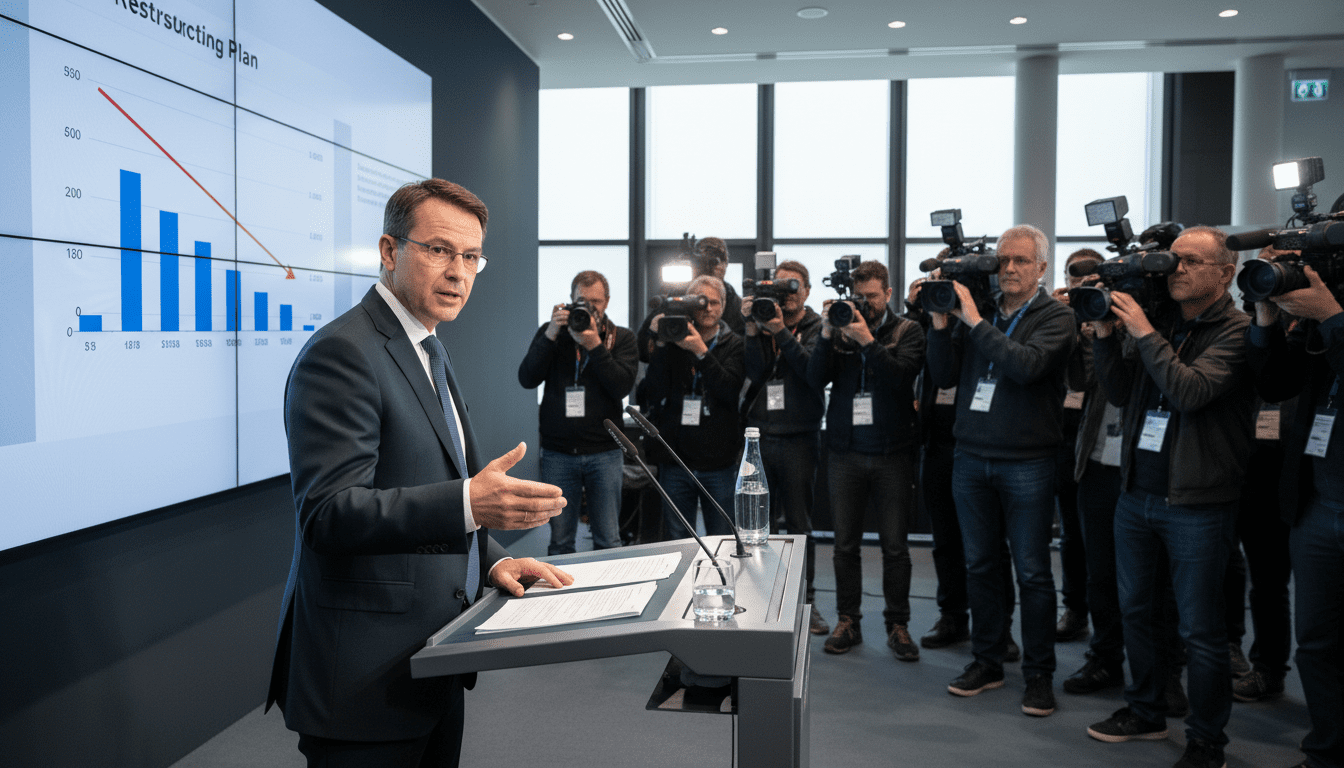
Bosch layoffs mark largest restructuring in company history, affecting nearly 28,000 workers
Bosch layoffs hit nearly 28,000 employees as the engineering group records €4.5bn in redundancy costs and faces protests at multiple German sites, raising questions on future investment.
Bosch has launched what executives describe as the largest job-reduction programme in the company’s history, affecting almost 28,000 positions across Germany and beyond. The announcement has produced sharp reactions at plants in Waiblingen, Schwäbisch Gmünd, Feuerbach and Bretten, where employees and local communities have reacted with anger and concern. Company leadership says the cuts are necessary to keep Bosch competitive in a tougher global market, while critics argue the scale and cost of the measures warrant scrutiny.
Scope and scale of the job reductions
Bosch’s announced restructuring touches nearly 28,000 roles, making it the most extensive staff reduction the group has undertaken in decades. Management has framed the cuts as part of a broader effort to lower structural costs and reposition the business amid intensifying global competition. The reductions will be implemented across multiple sites and business units, affecting production, administrative and support functions.
The programme also includes the planned closure of factories operated by the Bosch-Siemens-Hausgeräte unit, adding to the number of affected employees and magnifying local consequences. Company statements indicate the measures will be phased over the next months and years as Bosch reshapes its footprint to focus on core, profitable activities.
Immediate financial impact on Bosch
Bosch has disclosed that the upfront cost of the redundancies will be substantial, with charges totalling roughly €4.5 billion booked in 2024 and 2025. Those expenditures are intended to cover severance payments, early-retirement arrangements and site-closure costs tied to the restructuring. Executives emphasize that while these charges are one-off, they are a necessary investment to reduce longer-term operating expenses.
Analysts and stakeholders note that the short-term financial hit could be weighed against projected gains in competitiveness. However, questions remain about whether the funds spent on severance might have yielded a greater long-term return if redirected into product development or manufacturing modernization.
Scenes and responses at affected German locations
In recent months, Bosch facilities in Waiblingen, Schwäbisch Gmünd, Feuerbach and Bretten have been focal points for demonstrations and expressions of frustration. Reports from the sites describe workers anxious about their livelihoods and local economies bracing for job losses tied to plant downtimes and closures. Local unions and employee representatives have criticized the scale of the cuts and urged for stronger protections and alternative measures.
Municipal leaders in affected towns have voiced concern about the secondary effects on suppliers, service providers and municipal finances. For many communities, Bosch plants remain large employers whose contraction could lead to ripple effects across regional labor markets and public services.
Management’s justification and strategy
Stefan Hartung, chairman of Bosch’s executive board, has defended the restructuring as a strategic necessity, arguing the company must lower costs permanently to survive intensifying competition. He has stressed that innovations are developed in Bosch labs and workshops, but that the capacity to produce new products profitably in Germany has been constrained. Management frames the cuts as part of creating a leaner cost structure that can support future investments in areas where Bosch sees competitive advantage.
Executives say the company will continue to invest in research and development, but they contend some production and product lines are no longer economically viable under current conditions. The company seeks to balance immediate savings with targeted investment to support long-term technology leadership.
Debate over severance spending versus product investment
Critics argue that the billions earmarked for severance and restructuring costs raise difficult questions about alternative uses of capital. Observers ask whether a portion of the €4.5 billion might have been better deployed to accelerate development of differentiated products that could be manufactured profitably in German facilities. The tension highlights a broader dilemma for industrial firms: balancing workforce reductions against the need to sustain innovation pipelines and local manufacturing capacity.
Proponents of the cuts counter that without immediate cost relief, Bosch’s ability to fund future product development sustainably could be jeopardized. They maintain that restructuring now may be a painful but necessary step to preserve the company’s competitiveness and long-term viability.
Wider implications for German manufacturing competitiveness
The Bosch restructuring has resonated beyond the company, fueling discussion about the conditions for industrial competitiveness in Germany. Policymakers, industry groups and economists are watching closely as a test case for how established industrial firms adapt to global pressures. The episode underscores the interplay between corporate strategy, labor market flexibility and the broader policy environment that shapes manufacturing cost structures.
For regional economies tied to large employers like Bosch, the outcome will influence debates on workforce reallocation, retraining programmes and incentives to keep strategic production onshore. The measures also raise questions about whether public policy can better support investments that make domestic production more competitive.
The unfolding restructuring at Bosch represents a consequential recalibration for a company long viewed as a cornerstone of German engineering, with effects that are likely to reverberate through local communities, the firm’s global operations and national discussions about industrial strategy.
