
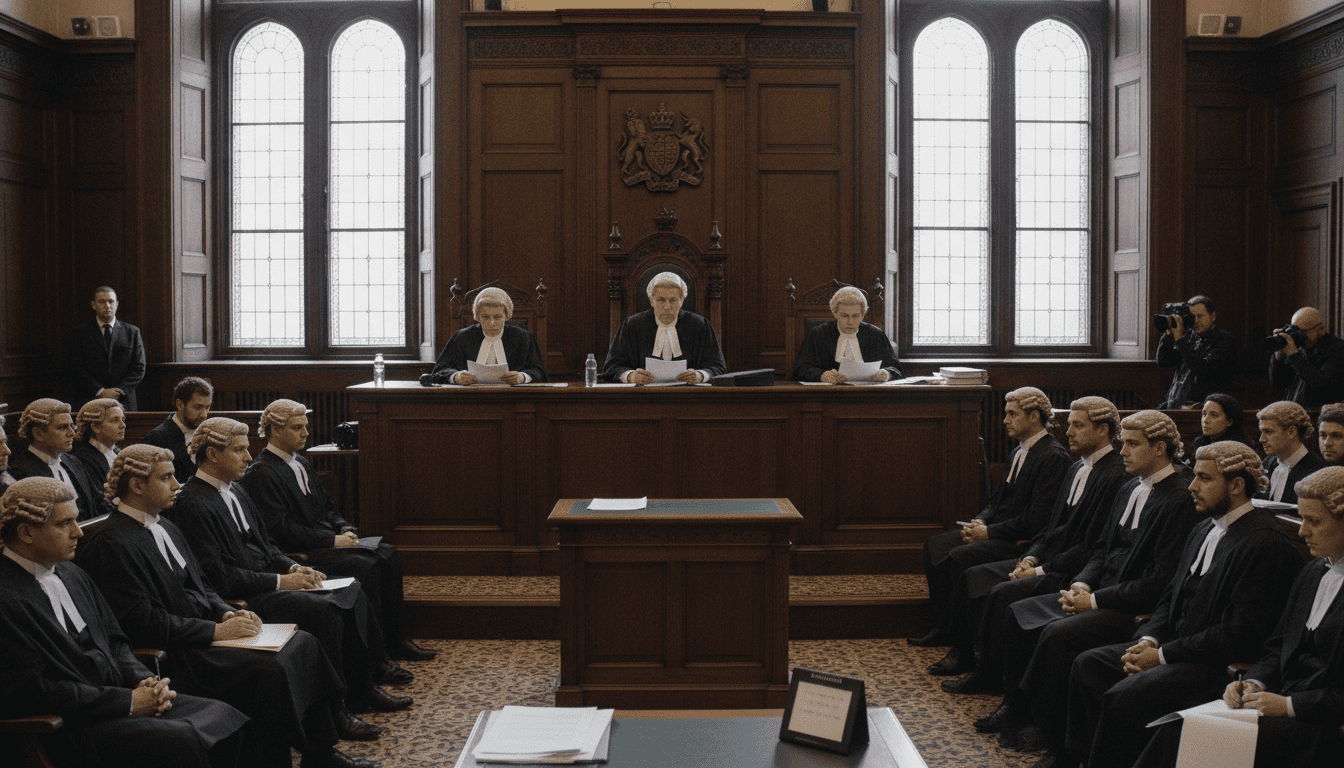
Court of Appeal Rules Palestine Action Ban Lawful
Court of Appeal overturns High Court decision and upholds government proscription of Palestine Action, keeping membership and support punishable by up to 14 years in prison.
The Court of Appeal on Monday, June 15, 2026, ruled that the UK government’s proscription of the direct action group Palestine Action was lawful, reversing a High Court finding earlier this year. The Palestine Action ban remains in force and the decision preserves the government’s power to prosecute membership or support with sentences of up to 14 years. The ruling closes the immediate legal challenge that had been brought by the group’s co-founder, while leaving open further possible legal steps by campaigners.
Court overturns February High Court ruling
In February 2026 the High Court found that then Home Secretary Yvette Cooper’s decision to proscribe Palestine Action was unlawful and discriminatory after a legal challenge by co-founder Huda Ammori. The government appealed that judgment, and the Court of Appeal concluded on Monday that the proscription complied with the law. Judges at the appellate level determined the Home Office had sufficient factual basis to list the group as a proscribed organisation.
The appeal court’s judgment restores the formal proscription order, meaning the legal status imposed by the government remains effective immediately. The government had left the proscription in effect while the appeal was heard, and the appellate decision confirms that approach.
Government defends evidence and process
Home Secretary Shabana Mahmood said officials were disappointed by the High Court outcome in February and had maintained the decision was reached following a rigorous and evidence-based process. Government lawyers argued during the appeal that the proscription was justified by the group’s tactics and the risk those tactics posed to public safety and protected infrastructure. The ministry has repeatedly said the listing was made under powers designed to prevent serious disorder and to protect people and property.
Ministers also stressed that the proscription does not criminalise lawful protest or criticism, but that explicit membership or active support for the proscribed organisation is a criminal offence under current terrorism legislation.
Legal challenge by Palestine Action co-founder
The original High Court challenge was brought by Huda Ammori, a co-founder of Palestine Action, who argued the proscription was unlawful and discriminatory. The High Court sided with Ammori in February, finding fault with the decision-making process and concluding the listing breached legal standards. That ruling led to immediate government notification that an appeal would be pursued.
Campaigners had welcomed the High Court outcome at the time as a vindication of peaceful protest rights, while the Home Office framed the appeal as necessary to settle differing legal interpretations of what constitutes a terrorist organisation.
Penalties, enforcement and what listing means
The proscription carries severe penalties: membership of or support for a listed organisation can attract sentences of up to 14 years in prison. The listing also permits police to seize assets and to prosecute individuals who facilitate the group’s activities. Since the proscription was first imposed, authorities have used the powers to make arrests and pursue prosecutions linked to actions attributed to Palestine Action.
Legal experts say the decision clarifies how courts will interpret the government’s responsibility to balance national security concerns with rights to free expression and assembly, although the pathway for any further appeal has not been decided by either side.
Arrests at vigils and claims from campaign groups
Since the proscription was introduced, thousands of people have been arrested on terrorism charges during silent vigils and demonstrations where signs or expressions of support for Palestine Action were displayed. Campaign organisation Defend Our Juries reports that around 700 people have been arrested for displaying support for the group since the High Court judged the ban unlawful, while some 3,400 people had been arrested by the time of that earlier ruling.
Those figures have fuelled intense debate about policing tactics and the threshold for charging individuals under terrorism laws, with critics arguing that peaceful supporters and bystanders have been swept into criminal investigations. Police maintain that arrests have been conducted in line with the law and that each case is assessed on its own facts.
Next steps and potential further appeals
It is not yet clear whether campaigners will seek permission to appeal the Court of Appeal’s decision to the Supreme Court, or whether the government will take any further administrative action. Lawyers for Palestine Action and its supporters are evaluating the judgment and the prospects of pursuing further legal remedies. Government sources say the proscription will be enforced while any residual legal questions are resolved.
The Court of Appeal ruling is likely to shape litigation over proscription and protest rights in the months ahead, and it may influence how police and prosecutors handle demonstrations tied to groups that have been the subject of political controversy.
The appellate judgment marks a significant legal moment for the government’s use of terrorism powers and for activists who argue those powers have been applied too broadly to peaceful protest.
