
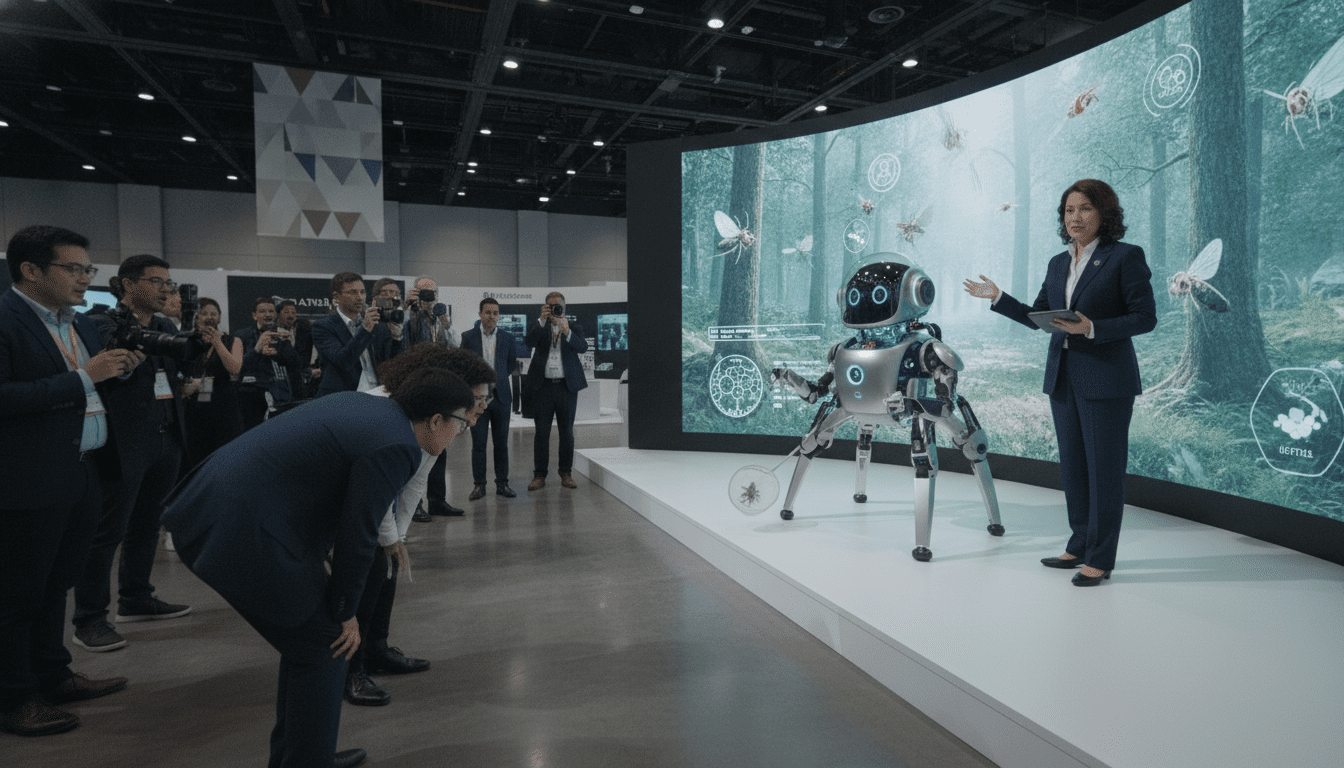
Diversity Scanner brings robotics and AI to insect identification in Berlin prototype talks
Diversity Scanner uses robotics and AI to automate insect identification, speeding biodiversity research and early pest detection; prototype talks in Berlin.
The Diversity Scanner, an automated sorting and imaging robot for insect samples, was showcased this week at the Museum für Naturkunde in Berlin as its creators prepare talks on prototype production. The device, developed by biodiversity researcher Rudolf Meier and robotics expert Christian Pylatiuk, aims to accelerate the cataloguing of insects that underpin global ecosystems. Officials said the scanner couples machine-learning image analysis with workflows for genetic sampling to produce rapid, field-ready species data.
Exhibit backdrop and scientific message
Visitors to the museum passed beneath towering dinosaur skeletons before moving to a modest display of insects that underscores the machine’s purpose. Rudolf Meier used the contrast to stress that small size does not equal low importance; insects form the majority of known animal diversity. The public setting framed a broader point: biodiversity protection requires detailed knowledge of the small, often overlooked species that sustain ecosystems.
A cross-disciplinary collaboration
Christian Pylatiuk brings a background in medical robotics from the Karlsruhe Institute of Technology to the project, where his early work included robotic systems for handling zebrafish eggs. His partnership with Meier, who leads the museum’s integrative biodiversity discovery center, merges automated imaging and AI with taxonomic expertise. The two scientists, who have worked together for about five years, said their different institutional cultures have complemented each other in developing the Diversity Scanner.
How the Diversity Scanner processes samples
The scanner automates the delicate task of separating and imaging small, tangled insect specimens from standard Malaise trap catches. Once sorted, each specimen is photographed at high resolution and compared against a trained machine-learning model to propose an identification. Selected individuals are then routed for molecular processing so image records can be linked with genetic data to improve future identifications and discover undescribed species.
Throughput, limits and cost estimates
A single sorting robot can handle roughly 600 specimens per day, and one technician can supervise four to five devices concurrently, the team said. That scaling would allow several thousand specimens to be processed daily with a modest cluster of scanners, but the overall capacity is constrained by lab infrastructure and trained personnel. The researchers estimate per-unit production costs in the region of €20,000 and are exploring commercial partnerships to build prototype series affordably.
Applications in forest protection and field trials
Beyond baseline biodiversity inventory, the team is positioning the scanner for operational uses such as early detection of pest outbreaks. Pylatiuk’s group is already involved in an EU-backed initiative to protect European forests by identifying harmful beetles at trap sites. The first field trials of intelligent traps that identify bark beetles are planned in France, Portugal and Italy, where recent infestations have caused major tree losses.
Data strategy and open access
Meier and Pylatiuk have emphasized that image datasets and methodological details will be made publicly available to support research worldwide, including in the Global South. The coupling of image libraries with genetic databases is central to their strategy for producing validated, reusable records. Open access to those datasets, they argue, will help other researchers and nations scale biodiversity monitoring without duplicating development costs.
Why accelerating insect cataloguing matters
Current estimates place about 1.1 million described animal species on record, with insects accounting for roughly 70 to 80 percent of that total, and experts believe 80 to 90 percent of insect diversity remains undescribed. The International Union for Conservation of Nature’s recent assessments underscore the scale of species at risk and the pace of loss. Meier warns that many species may disappear before they are documented, undermining efforts to manage ecosystem services such as pollination, which independent studies value in the hundreds of billions of dollars annually.
The prototype talks in Berlin mark a move from laboratory demonstration toward production and deployment, with potential buyers and partners arriving to discuss manufacturing options. The research team says the urgency is clear: expanding automated, affordable tools for insect identification is essential if conservation policy and forest health surveillance are to keep pace with accelerating environmental change.
