
Consumer watchdog warns rising energy could drive food prices higher
Ramona Pop warns that rising energy costs risk sparking another round of food price inflation; she calls for a state price observatory to trace markups. (150 characters)
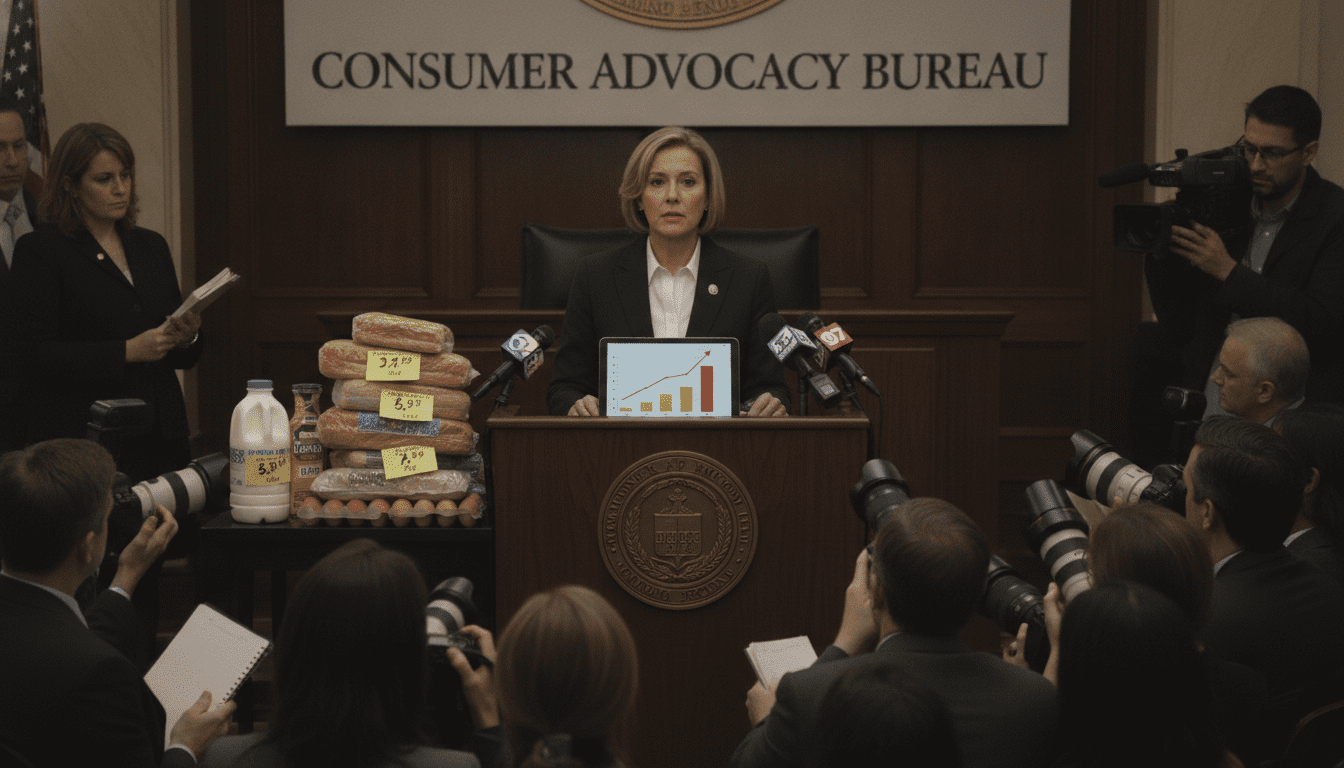
On June 15, 2026, Ramona Pop, chair of the Verbraucherzentrale Bundesverband, warned that rising energy costs could soon push food prices higher across Germany and the EU. Food prices have already climbed sharply in recent years, rising about 35% since 2020, and Pop described current price-setting as a “black box” that leaves consumers uncertain about where increases originate. Her call for greater transparency and a state-led observatory aims to map the value chain from farm to supermarket and reveal how costs and margins accumulate.
Consumer chief says price formation is opaque
Ramona Pop told reporters that consumers and many small suppliers lack clear information on how retail prices are formed. She argued that without systematic public data on production, processing and retail margins, it is difficult to hold any actor in the chain accountable for disproportionate increases.
Pop framed the demand for transparency as a practical consumer-rights measure rather than political grandstanding, saying clearer data would help households, businesses and regulators respond more quickly to cost shocks. Her office emphasized that better information could reduce uncertainty and prevent speculative price moves.
Energy costs flagged as the likely transmission channel
Economists and industry analysts point to energy as the most direct route through which broader price pressure can reach grocery bills. Higher costs for electricity, gas and diesel affect fertilizer production, harvesting, refrigeration, processing and transport — all of which are inputs to the food supply chain.
Pop warned that even if shelf prices remain stable in the short term, sustained energy cost increases will compress margins at multiple stages and eventually force suppliers or retailers to raise consumer prices. She highlighted that the lag between cost increases at the producer level and price changes at the supermarket means households may not see immediate effects, but the pressure is real.
Supermarket prices stable so far, but past experience raises concern
Retailers and market data point to relative stability in many supermarket categories compared with the peak volatility of 2022, when the gas crisis coincided with rapid food inflation. Analysts attribute current stability to inventory management, fixed-term supplier contracts and competitive pressure among large chains.
Pop said those stabilizing factors should not breed complacency, noting that the 2022 episode showed how quickly conditions can change once contracts expire and input costs are re-priced. She urged policymakers to treat current calm as an opportunity to set up monitoring tools rather than a sign that new inflationary episodes are impossible.
Proposal for a state price observatory to map the value chain
To tackle what she called the “black box” of price formation, Pop proposed establishing a state price observatory tasked with collecting and publishing systematic data on costs, margins and markups along the food supply chain. The observatory would aggregate information from farms, processors, transporters and retailers to produce regular reports on where price changes originate.
Supporters argue such an institution could illuminate concentration-related issues, reveal abnormal margin spikes and provide early warnings when cost pressures mount. Pop suggested the observatory could operate with confidentiality safeguards for commercially sensitive data while delivering summary statistics that officials and the public could use.
Retailers and producers say transparency has limits
Industry groups have pushed back against proposals that would require detailed commercial reporting, saying competitive markets and commercial contracts complicate data collection. Retail associations caution that revealing granular margin data could breach competition rules or expose businesses to strategic disadvantage.
Producers likewise point to structural constraints: agricultural markets are subject to seasonal variability, global commodity swings and international trade, all of which complicate simple attribution of price moves. Observers say any observatory would need carefully designed legal powers, clear data-sharing rules and robust safeguards to balance transparency with market integrity.
Policy options and consumer safeguards under consideration
Policymakers face a menu of potential responses if food prices begin to rise more sharply, ranging from targeted support for vulnerable households to interventions that increase market oversight. Pop and consumer advocates say the first step should be better, publicly accessible data to inform any subsequent policy choices.
Short-term consumer protections could include expanded social transfers or temporary subsidies for basic food items, while medium-term measures might focus on improving competition in retail and logistics. Pop urged that evidence from a price observatory should guide any interventions to ensure they target genuine market failures rather than transitory cost shifts.
As energy markets remain volatile, the debate over transparency and monitoring is likely to intensify in government and industry circles, with consumer groups pressing for concrete mechanisms to trace price formation and alert authorities before household budgets are squeezed.
The coming months will show whether political momentum builds for a formal observatory and whether cooperation between producers, retailers and regulators can deliver the clearer picture Ramona Pop has called for to protect consumers from renewed food price shocks.
