
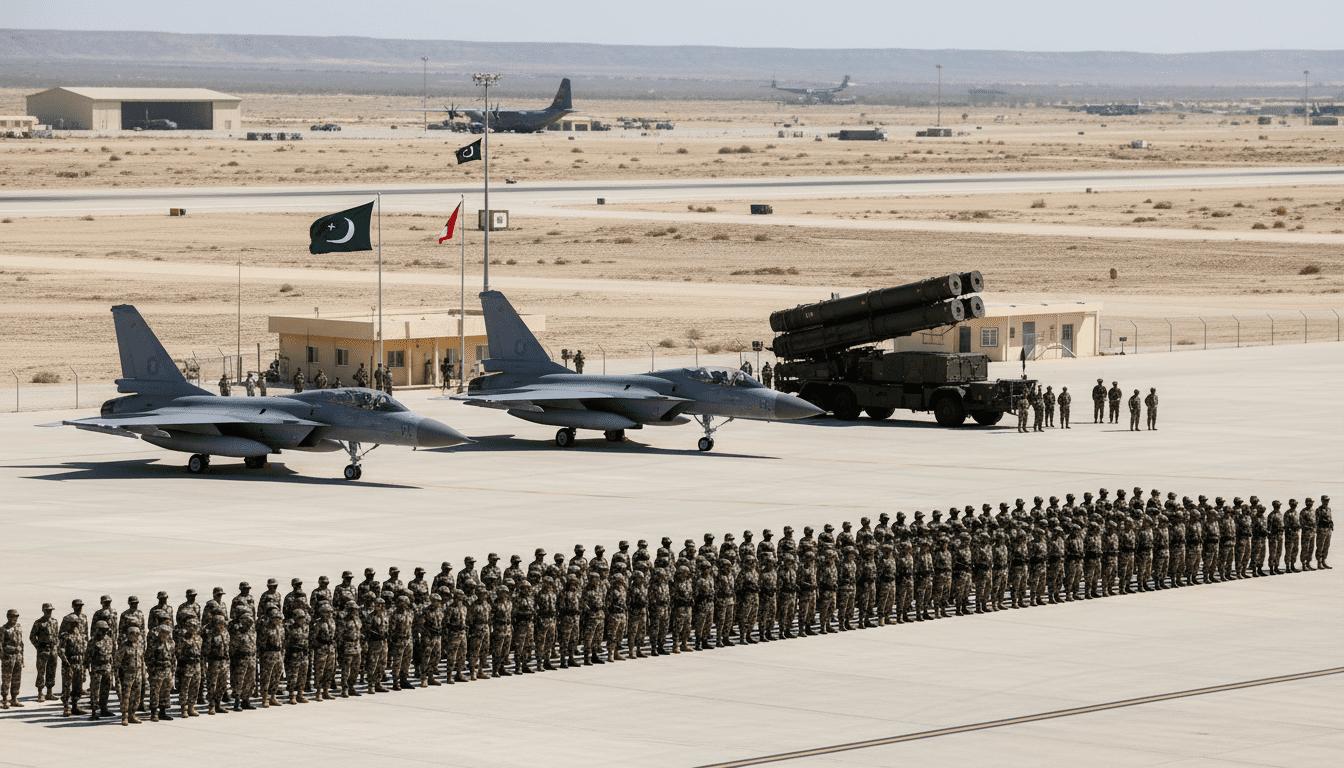
Pakistan deployment to Saudi Arabia brings 8,000 troops, JF-17 squadron and Chinese HQ-9 air defence
Pakistan deployment to Saudi Arabia per 2025 pact: Islamabad has sent 8,000 troops, a JF-17 squadron and a Chinese HQ-9 air-defence system to Riyadh per a 2025 pact.
Pakistan deployment to Saudi Arabia began in early April 2026 as Islamabad moved troops and advanced systems to Riyadh under a bilateral defence agreement signed in September 2025. The deployments include roughly 8,000 personnel, a squadron of about 16 aircraft largely composed of JF-17s and an HQ-9 Chinese long range air-defence battery, Reuters reported. Pakistani officials framed the actions as a direct response to Saudi security concerns amid the wider US and Israeli campaign against Iran. The presence of both Chinese and US made systems in Saudi Arabia highlights a complex layering of capabilities on the kingdom’s air defence architecture.
Pakistan sends 8,000 troops, JF-17 squadron and HQ-9 to Saudi Arabia
The Pakistani contingent deployed to Saudi Arabia comprises approximately 8,000 soldiers and a fighter squadron of about 16 aircraft, most of them JF-17s produced jointly with China. Reuters reported that the deployments began in early April 2026 and form part of the security pact signed between Islamabad and Riyadh in September 2025. Pakistani officials say the forces aim to bolster Saudi border security and air defence in a volatile regional environment. The agreement also contemplates further scaling up of personnel if Riyadh requests additional forces.
Chinese HQ-9 system joins US made Patriots and THAAD in Riyadh
The arrival of an HQ-9 surface to air missile system represents a notable addition of Chinese high end hardware to Saudi air defences that already include US made Patriot and THAAD batteries. The HQ-9 is a long range system that overlaps in function with the American interceptors, creating an array of layered capabilities on Saudi soil. Analysts caution that co locating systems from different suppliers raises operational and interoperability challenges as well as delicate political signals. Saudi officials have not publicly detailed integration plans for the disparate systems or rules of engagement for the foreign forces.
Deployments began in early April 2026 under 2025 security agreement
The troop and equipment movements followed a pact inked in September 2025 after high level tensions in the region increased following attacks in Doha and subsequent escalations. Islamabad and Riyadh framed the memorandum as a mutual defence arrangement that could accommodate additional Pakistani forces to protect Saudi borders. Reuters cited the agreement as leaving the door open to a larger deployment of up to 80,000 Pakistani troops if required, though Pakistani and Saudi authorities have not confirmed a figure of that scale. Officials in Islamabad have described the current mission as tailored to immediate security needs and subject to diplomatic consultations.
Maritime and border vulnerabilities shape Saudi requests
Saudi concerns focus on multiple theatres where critical lines of communication face risk, including the Bab el Mandeb and the Red Sea corridor as well as the narrow approaches to the Strait of Hormuz. Competing Iranian and US naval postures, plus repeated Houthi attacks on Red Sea shipping, have heightened Riyadh’s interest in reinforcing coastal and maritime defences. Pakistani plans reportedly include naval elements and logistics support, although independent verification of deployed warships has been limited. Military planners say protecting choke points and maintaining freedom of navigation are central to the mission’s mandate.
Financial and diplomatic ties underpin the military cooperation
The security cooperation is closely linked to broader financial and diplomatic ties between Riyadh and Islamabad that deepened during the mediation efforts earlier this year. Pakistan hosted talks that led to a temporary de‑escalation between the United States and Iran in April, a process that prompted the United Arab Emirates to withdraw a planned loan and Riyadh to provide a separate financial lifeline. Saudi support has included funding and arms deals that analysts say are intended both to stabilise Pakistan and to widen Riyadh’s regional partnerships. Reports also suggest Pakistani deliveries of materiel to other state and non state actors in the region were financed in part through Saudi arrangements, a development that has drawn scrutiny.
Potential scale up to tens of thousands of troops remains on the table
The 2025 agreement expressly left open the possibility of a much larger Pakistani presence if conditions warrant, with media reports referencing an upper ceiling in the tens of thousands. Islamabad has been cautious in public statements, seeking to reassure domestic and regional audiences while confirming a commitment to Riyadh’s security needs. US and other Gulf officials have been monitoring the deployments, given the overlap of Chinese and American systems and the delicate logistics of multi national defence operations. Any decision to significantly expand the force would carry diplomatic consequences and would likely require detailed technical and legal arrangements.
The Pakistan deployment to Saudi Arabia reflects a rapid deepening of military cooperation between the two states amid broader regional conflict dynamics. For now the mission centres on air defence augmentation and border security tasks, but the framework established in 2025 allows for broader options if Riyadh requests them. Observers say the mix of Chinese hardware, Pakistani personnel and existing US systems in Saudi Arabia will test interoperability and political balances in the coming months. Continued transparency from the governments involved and clear operational protocols will be important to manage risks as the situation evolves.
