
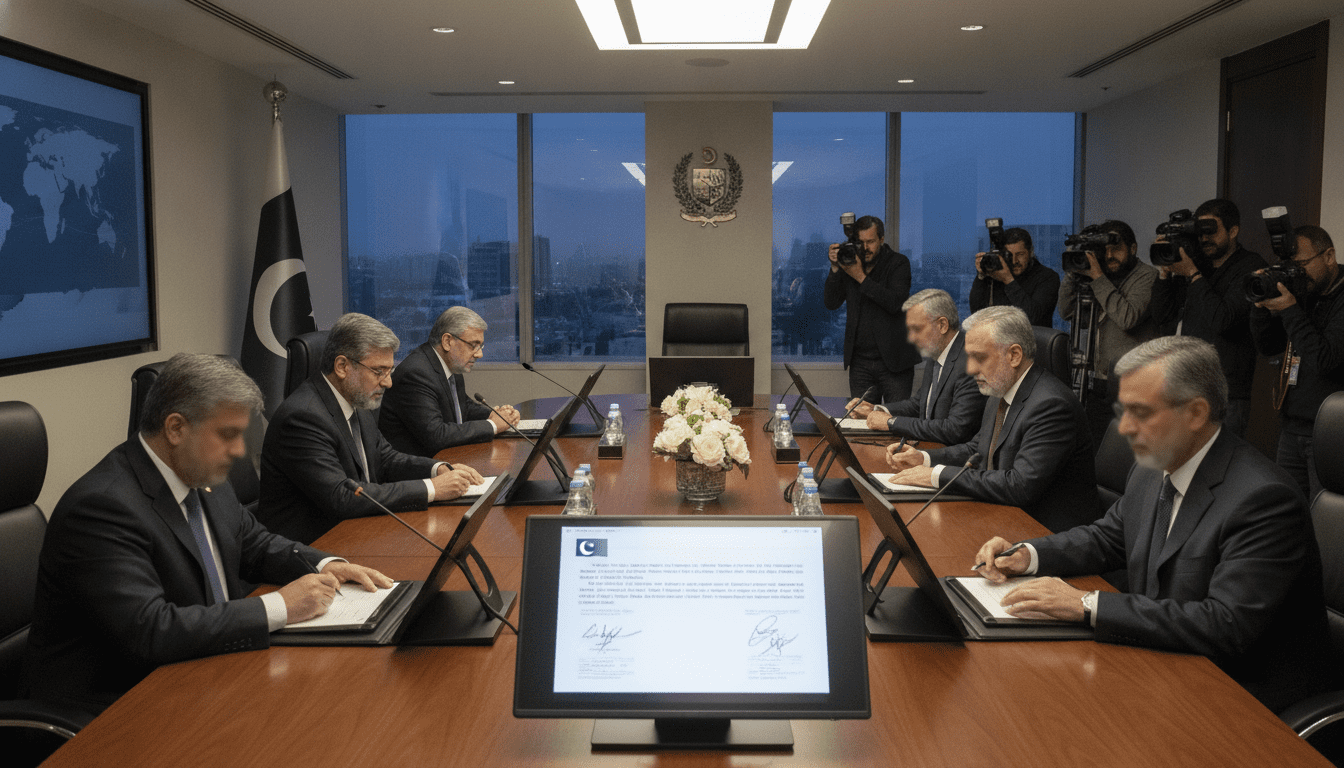
Pakistan mediator says US-Iran peace agreement could be signed by June 14, 2026
Pakistan says US-Iran peace agreement could be signed as early as June 14, 2026, after negotiators report a final text and both sides signal readiness to halt hostilities.
The United States and Iran may formalize a US-Iran peace agreement by Sunday, June 14, 2026, Pakistan’s prime minister said, after weeks of stalled diplomacy appeared to yield a mutually agreed draft. Pakistani Prime Minister Shehbaz Sharif wrote on X that Islamabad expected the deal to be electronically signed “in the next 24 hours,” and that technical talks at the expert level would follow next week. Senior U.S. and Iranian officials separately told journalists and state outlets that a text had been agreed in principle, raising hopes for an imminent end to the fighting.
Pakistan mediator sets tight timeframe
Shehbaz Sharif, acting in his role as mediator, announced an accelerated schedule on Saturday, June 13, 2026, saying Pakistan was preparing for an electronic signing of the pact.
Sharif’s statement framed Islamabad as the central facilitator and set concrete dates, telling reporters that the formal signing could occur by Sunday, June 14, and that specialists would convene for technical follow-up discussions the week after.
Negotiators say a final text is ready
Pakistani and U.S. officials indicated that negotiators had converged on a final wording, with Sharif saying on Friday, June 12, that “a final, mutually agreed text” was in place.
A senior U.S. government official, speaking to journalists by phone, expressed guarded optimism and said Washington expected the agreement to be signed in the coming days, while Iran’s foreign minister, Abbas Araghchi, described the Islamabad initiative as being “closer than ever.”
Core provisions of the proposed deal
According to the mediation summary circulating among delegations, the package would reopen the Strait of Hormuz to safe commercial navigation and end a U.S.-led naval blockade of Iranian ports.
In return, the United States would release previously frozen Iranian assets and suspend oil-related sanctions, measures that negotiators said are intended to create immediate economic relief and reduce military friction in the region.
Nuclear dispute to enter a 60‑day follow-up phase
The text reportedly stipulates that complex questions about Iran’s nuclear program would be deferred to a 60-day negotiating period after the immediate security measures take effect.
Washington has insisted on the full dismantling and destruction of Iran’s stockpiles of highly enriched uranium, while Tehran has signaled a preference for retaining material in a diluted or otherwise altered form; negotiators acknowledged the two sides still face substantial technical and political gaps.
Lebanon and Israel remain outside direct negotiations
The draft agreement appears not to resolve related regional flashpoints, notably Iran’s demand that Israel end its offensive against Hezbollah in Lebanon.
Israel has not been a direct participant in the U.S.-Iran talks, and officials say its security concerns will complicate any broader settlement that aims to stabilize Lebanon and the wider Levant.
Fighting and regional tensions have continued during talks
The mediation effort has proceeded amid continuing combat and periodic military incidents, underscoring how fragile any accord would be at signature and implementation stages.
Mediation materials and government briefings recount that the current conflict escalated on February 28, and parties have reported heavy casualties; on Saturday, June 13, 2026, U.S. forces reported shooting down Iranian drones over the Strait of Hormuz, an incident officials said occurred as the diplomatic push neared its latest deadline.
The coming days will test whether the political will behind the draft text holds under pressure from domestic constituencies and allies not party to the talks. Technical teams are due to meet after any formal signing to translate high-level commitments into implementation plans, and both capitals have signaled that verification mechanisms and further nuclear sequencing remain open and contentious.
