
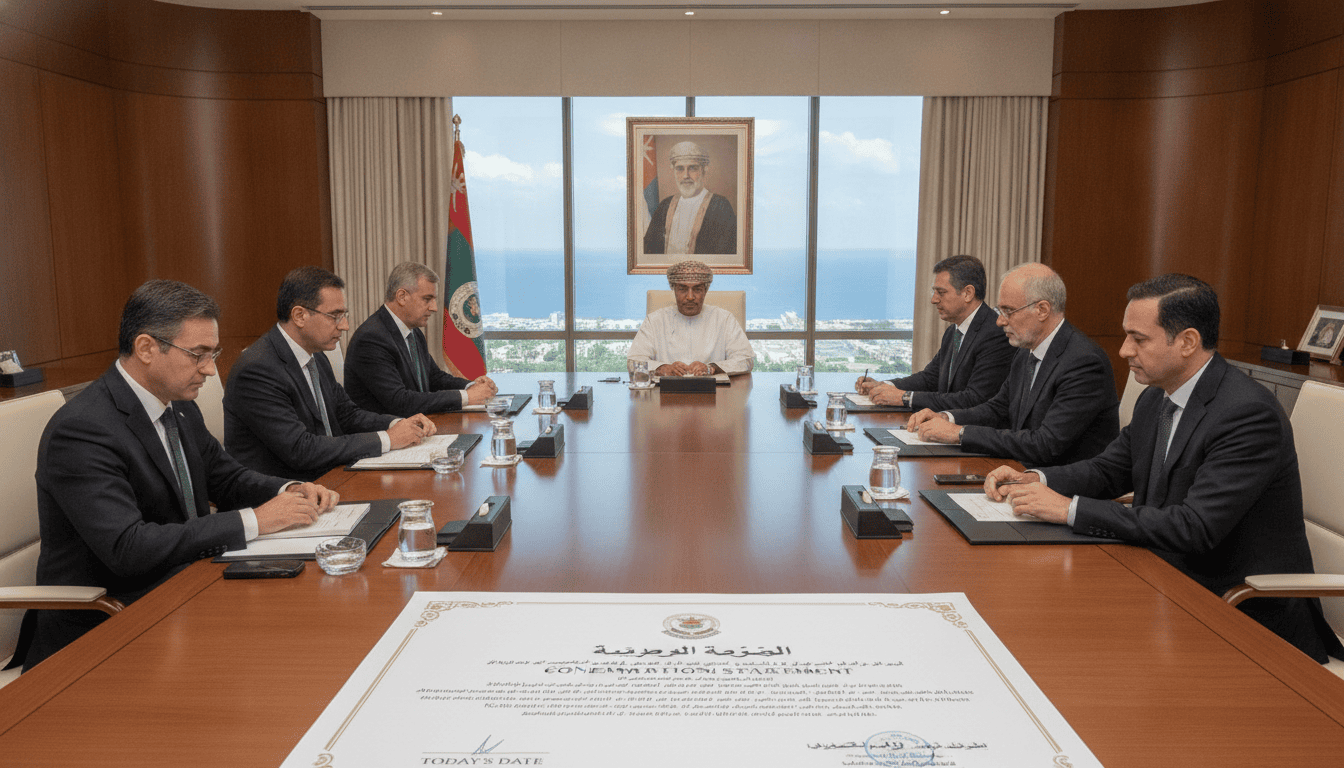
Attack on Oman Condemned After IRGC Claims It Targeted Sultanate in Gulf Barrage
Oman condemns attack after IRGC said it targeted the sultanate in a Gulf-wide barrage, state media reported, hours after Iran’s foreign minister visited Muscat.
The Sultanate of Oman publicly denounced an attack on Oman on X, calling the incident unacceptable and demanding respect for its sovereignty. State media quoted official statements condemning the strike shortly after Tehran’s top diplomat met Omani officials to discuss security in the Strait of Hormuz. Iran’s Islamic Revolutionary Guard Corps (IRGC) said it had targeted Oman as part of a broader barrage aimed at multiple countries across the Gulf, according to Iranian state outlets.
Muscat issues formal condemnation
The Oman News Agency posted the official response on X, saying the government “affirms its condemnation and denunciation of this attack.” The statement framed the incident as a clear breach of Omani territory and underlined Muscat’s demand for accountability and measures to prevent recurrence.
Omani authorities offered few operational details in the initial release but emphasized the diplomatic nature of their response, signaling that the matter would be handled through official channels. The concise public message left open questions about damage, casualties, or the immediate steps Oman would take domestically.
IRGC says Oman was one of several targets
Iranian state outlets and remarks attributed to the IRGC indicated the strike was part of a coordinated barrage directed at countries across the Gulf, with the IRGC stating at least one trajectory struck Omani territory. The claim appears to place Oman alongside other regional actors in an expanded set of targets, although independent verification of those assertions was not provided in the initial reports.
Analysts caution that such claims by the IRGC often serve both military and political purposes, projecting capability while signaling intent to regional audiences. The public attribution increases the diplomatic stakes for Muscat, which has long positioned itself as a mediator in Gulf tensions.
Diplomatic talks in Muscat preceded the incident
Hours before the reported attack on Oman, Iran’s foreign minister traveled to Muscat to meet with Omani counterparts to discuss security matters tied to the Strait of Hormuz. Omani officials have historically maintained open communication with Tehran while also engaging Gulf partners and Western countries on maritime security concerns.
The timing of the meeting and the subsequent strike has intensified scrutiny of whether the diplomatic engagement and the reported barrage are connected, and whether the incident might complicate ongoing efforts to de‑escalate regional tensions. Observers say Muscat’s role as a convener could be challenged if its territory is perceived as being drawn into broader military confrontations.
Strait of Hormuz security spotlighted again
The Strait of Hormuz, a strategic chokepoint for global oil and shipping traffic, was a central topic of the ministerial talks in Muscat and now figures prominently in the fallout from the reported attack. Any military activity perceived as threatening safety in or near the strait tends to ripple quickly through markets and diplomatic circles, prompting urgent assessments by operators and embassies.
Maritime insurers, commercial shippers and naval planners typically monitor such developments closely, and even unverified claims can lead to precautionary route changes or heightened naval patrols. The incident underscores the fragility of security arrangements around the waterway and the potential economic consequences of renewed hostilities.
Regional capitals assess implications
Governments across the Gulf and beyond are likely to weigh their responses carefully as details emerge, balancing condemnation, calls for investigation, and coordination on maritime security. Diplomatic reactions may include private démarches, public statements, or requests for clarification through international forums depending on the evidence that surfaces.
For states that depend on stable shipping lanes and predictable energy exports, the priority will be to avoid escalation while ensuring their citizens and assets are protected. The mixed character of regional alliances and rivalries means responses could vary widely by capital and by the nature of corroborating information.
Oman signals measured response while reviewing facts
Omani officials have so far favored a measured public posture, delivering formal condemnation and indicating that they will examine the facts and pursue diplomatic remedies. Muscat’s emphasis on sovereignty and denouncement suggests it will seek reassurances and possibly demand explanations from Iran through existing channels.
The pace and content of any follow-up from Oman—whether additional public statements, intelligence-sharing with partners, or requests for international mediation—will be watched as an indicator of how the incident might alter Muscat’s diplomatic calculations.
The coming days are likely to bring further clarification as Omani authorities complete their review and as external sources attempt to verify the IRGC’s claim. Until then, regional actors and international stakeholders will remain attentive to new developments that could affect security dynamics in the Gulf and the operation of the Strait of Hormuz.
