
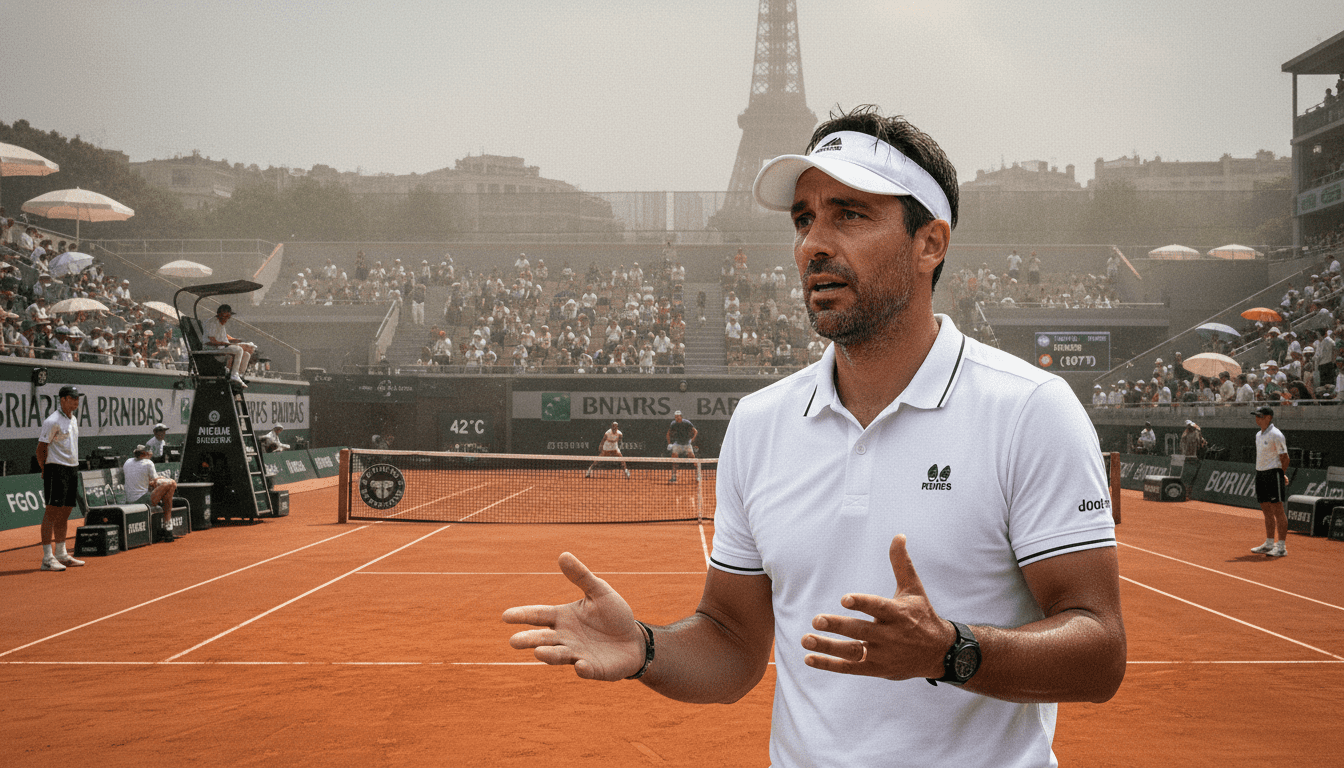
Mouratoglou Warns French Open Weather Could Upend Tournament
Patrick Mouratoglou says extreme heat and humidity at Roland Garros could reshape matches and favor night sessions, potentially producing big upsets at the French Open.
Patrick Mouratoglou, the outspoken former coach of Serena Williams, has warned that French Open weather could be the tournament’s biggest wildcard. He argued that a sudden shift to hot, humid conditions in Paris would magnify the difficulty of five-set clay matches and create opportunities for unexpected results. Mouratoglou, who runs an academy near Nice, said players arriving from Rome may struggle to adapt if conditions turn extreme, and he suggested that playing in night sessions would be a significant advantage.
Mouratoglou’s prediction and reasoning
Mouratoglou framed his forecast around a simple idea: extreme heat plus clay plus five-set matches equals a higher risk of surprises. He pointed to differences in conditions between warm, rainy Rome and a potentially hot, humid Paris as a key factor that could unsettle players. His assessment emphasized the physical and tactical demands of Roland Garros, where longer points and heavy movement make heat a potent equalizer.
He also highlighted the scheduling element, arguing that daytime matches under extreme conditions impose a heavier toll than night play. According to Mouratoglou, athletes who draw evening sessions would effectively receive a competitive gift—cooler temperatures and more favorable recovery windows that could blunt the effect of fatigue and dehydration.
How clay and climate amplify physical stress
Clay court tennis typically produces longer rallies and greater sliding, which increases the cumulative physical strain on players. When extreme heat and humidity are added, the risk of cramps, heat-related illness, and performance decline rises sharply. Medical teams and conditioning staff monitor these risks closely because matches on clay are already more endurance-focused than those on faster surfaces.
Hydration and recovery become decisive factors in multi-hour contests, and marginal differences in fitness or acclimatization can swing outcomes. Players who handle heat poorly or lack sufficient time to adjust after traveling may lose effectiveness late in matches, creating openings for opponents who manage conditions better.
Scheduling, travel and competitive implication
The transition from other clay events—commonly the Rome tournament—to Paris has long been part of the Roland Garros calendar, but abrupt weather shifts complicate preparation. Those who accustomed themselves to rain or milder temperatures in Rome could confront a jarring change if Paris heats up. Such swings can affect serve rhythm, footwork on the clay, and the strategic use of energy across five-set encounters.
Night sessions at Roland Garros have become more prominent in recent years and can lessen heat’s impact on play. Players assigned to evening courts often benefit from lower temperatures and reduced direct sunlight, which can preserve stamina and reduce thermal strain. That scheduling factor could translate into an on-court advantage, particularly for lower-seeded players who might otherwise be overmatched during punishing daytime conditions.
Mouratoglou’s public profile and reactions
Patrick Mouratoglou is a well-known, polarizing voice in tennis who frequently shares candid views on strategy, player readiness and tournament dynamics. His past role coaching Serena Williams and his stewardship of a prominent academy near Nice have made him a high-profile commentator. Observers note that his blunt statements can provoke debate, but they also draw attention to tactical and environmental variables that may be underappreciated.
While some critics argue Mouratoglou sometimes overstates scenarios to attract attention, others see value in his focus on preparation and adaptability. His weather warning underscores an operational reality that players and teams routinely address, even if it was presented in a striking manner.
Organizers, medical teams and contingency measures
Tournament organizers routinely prepare for heat through a combination of medical staffing, scheduling flexibility and player-support measures. Typical responses to extreme conditions include extended medical time, increased availability of cooling and hydration stations, and discretionary scheduling shifts to reduce daytime exposure. These protocols aim to protect player health while preserving fair competition.
However, logistical constraints such as broadcast windows and court availability limit how much schedule can be altered. Night sessions provide one practical buffer against heat, but not all matches can be moved, and sudden weather swings can still create uneven playing conditions across rounds.
What to watch as matches unfold
Spectators and analysts should monitor daytime temperatures, humidity levels and the length of early-round matches when assessing upset potential. Extended three- or five-set battles under high heat can cascade across the draw, producing fatigue that affects subsequent performance. Pay close attention to players coming straight from Rome or similar events without lengthy acclimatization periods, as well as those with known histories of heat vulnerability.
Match scheduling will also be telling: a cluster of marquee players in daytime slots facing tough opponents could increase the chance of surprise results. Conversely, top competitors who secure evening matches may gain a non-technical edge that proves decisive in tight encounters.
As the tournament progresses, the interaction between clay-court endurance demands and the weather will be a defining storyline, and Mouratoglou’s warning has focused attention on one of the most controllable variables—when players compete—amid the many uncontrollable elements at Roland Garros.
Tournament conditions and scheduling choices will shape outcomes in ways that extend beyond raw rankings, and the coming days will show whether the French Open weather indeed creates the kind of surprises Mouratoglou predicted.
