
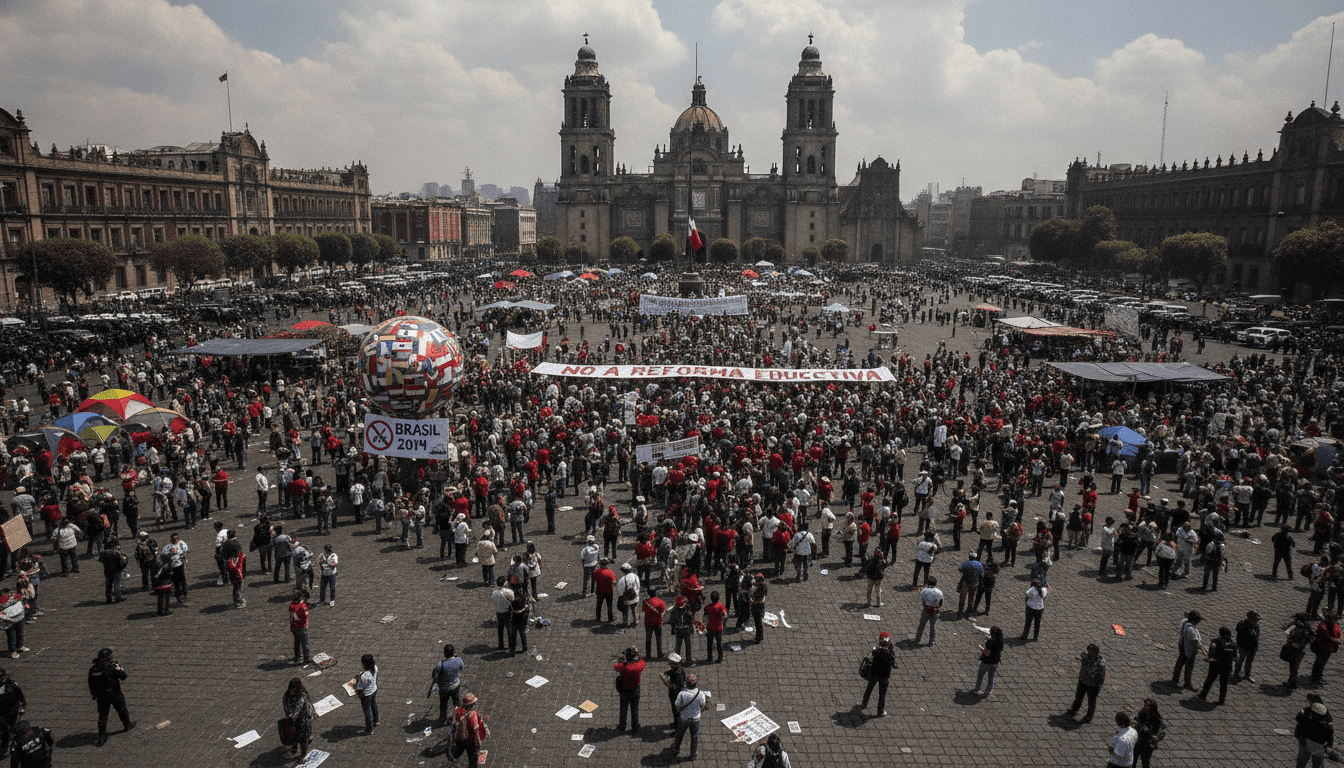
Mexico teachers protest disrupts Mexico City Zócalo ahead of World Cup opener
Mexico teachers protest blocks Mexico City’s Zócalo ahead of World Cup opener, drawing attention as FIFA president Gianni Infantino visits and security reacts.
Thousands of teachers blocked the Zócalo in Mexico City shortly before the scheduled World Cup opening match, creating a high-profile disruption in the heart of the capital. The Mexico teachers protest brought demonstrators to the central square as fans and officials prepared for international festivities. FIFA president Gianni Infantino visited the site and briefly engaged with the match ball as authorities managed crowd movement.
Mass demonstration at the capital’s central square
The teacher-organized blockade concentrated on the Zócalo, one of Mexico City’s most symbolic public spaces, and occurred within hours of the tournament’s kickoff. Organizers said the action was timed to maximize visibility while the country hosted the global football event. The gathering drew thousands and stretched security resources as officials balanced public order with the need to keep event operations running.
Union leaders frame protest as labor dispute
Union representatives described the demonstration as the latest in ongoing labor disputes affecting educators across several states. They called for resolution of unpaid benefits, clearer contracts, and greater investment in schools, arguing that their grievances had not been addressed through prior negotiations. Officials from the teachers’ federations said the timing aimed to highlight domestic concerns during a period of intense international attention.
Fans, ceremonies and transport faced disruption
The protest affected planned fan movements and access routes to public viewing areas and stadium-related events in the city center. Authorities rerouted pedestrian and vehicle flows, and some fans reported delays reaching fan zones and hospitality areas. Organizers of opening ceremonies worked with municipal agencies to adjust schedules and routes to minimize interference with match-day activities.
Infantino’s visit and the optics of sport diplomacy
FIFA president Gianni Infantino was present in the capital amid the unfolding protests and was seen interacting with the match ball, an image that circulated widely during the standoff. His presence underscored the international spotlight on Mexico as a co-host of the World Cup, and brought added scrutiny to how domestic unrest intersected with global sporting diplomacy. Observers noted the contrast between celebratory imagery and the protesters’ demands, which framed the day’s events in broader social terms.
Security, negotiation and municipal response
City authorities deployed police to maintain order, establish perimeters, and ensure safety for both demonstrators and spectators. Officials reported opening lines of communication with teachers’ representatives in an effort to negotiate a withdrawal and prevent escalation. Municipal spokespeople emphasized a dual priority: safeguarding the right to protest while protecting access to public services and the safety of visitors attending World Cup-related events.
Political and social implications for the tournament
The intervention by teachers highlighted unresolved social and economic issues that remain salient even as Mexico hosts a major international spectacle. Analysts said the protest could influence public perceptions of the government’s capacity to manage both domestic affairs and high-profile global events simultaneously. For many residents, the day illustrated how national pride in football coexists with persistent demands for improvements in public services and labor conditions.
The immediate outcome of the standoff remained in flux as negotiations continued and authorities worked to restore full access to the Zócalo. Organizers of the World Cup and city officials emphasized contingency plans to keep match-day events on course while discussions between municipal negotiators and union leaders proceeded.
