
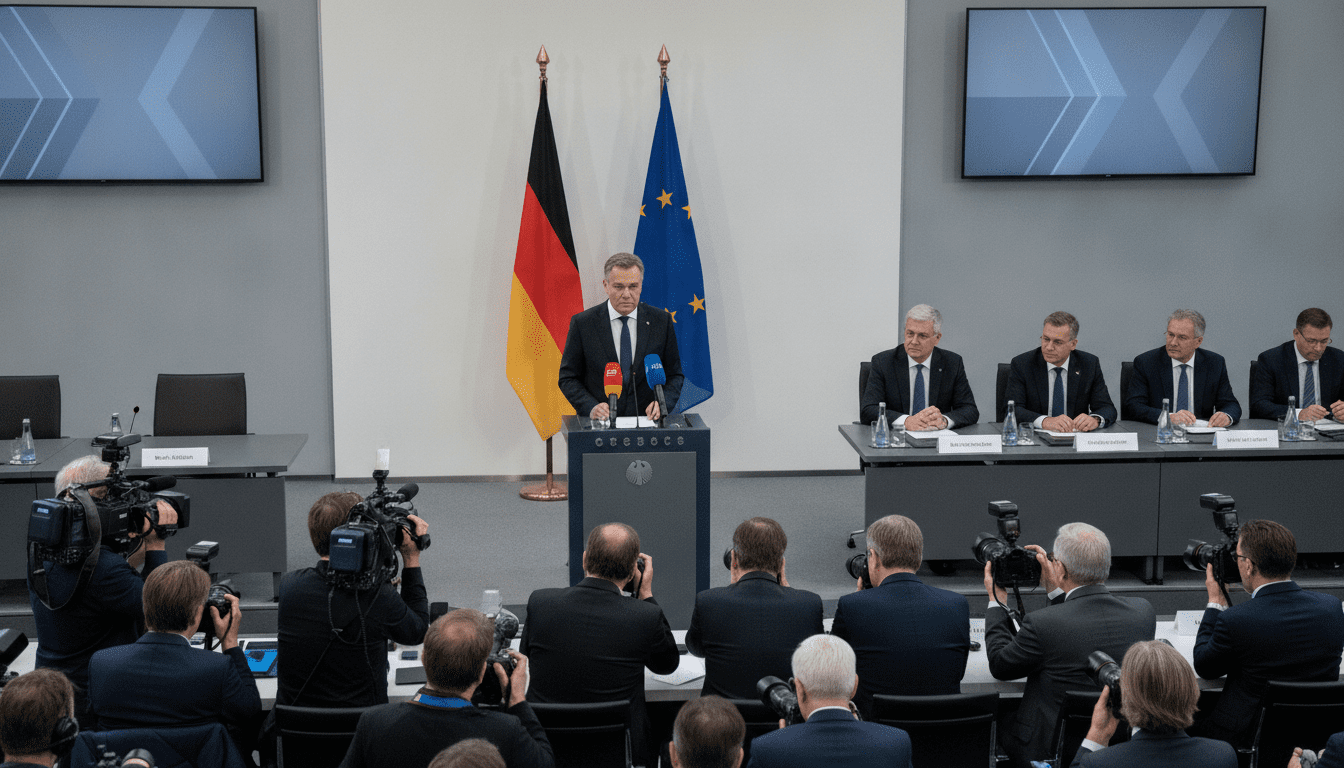
Merz Addresses Bundestag Ahead of EU Summit in Brussels
Merz tells Bundestag Germany’s priorities on June 11, 2026, ahead of the EU summit in Brussels on June 18–19, focusing on Ukraine and Middle East diplomacy.
Friedrich Merz delivered a 20-minute government declaration to the Bundestag on June 11, 2026, setting out Berlin’s priorities ahead of the EU summit in Brussels next week. The chancellor framed foreign policy as the immediate focus and signalled a close German role in European efforts on Ukraine and the volatile situation in the Middle East. A one-hour debate with MPs followed the speech, underlining the domestic stakes of the international agenda.
Chancellor’s stated objectives for the EU summit
Merz told lawmakers Germany would press for coordinated European responses at the summit on June 18–19. He emphasised diplomacy and security measures as dual priorities, indicating Berlin will back initiatives aimed at stabilising conflict zones. The chancellor also referenced the need for clearer guarantees for partner states as part of any diplomatic package.
Ukraine: diplomacy, guarantees and the E3 initiative
Merz placed the Ukraine conflict at the centre of his address, arguing that European unity is essential for any negotiated outcome. He reiterated German support for measures that would open diplomatic channels while maintaining Kyiv’s security needs. The government has signalled backing for an initiative by the E3 — Germany, France and the United Kingdom — which proposes structured talks and binding security guarantees as conditions for progress.
Possible negotiations with Russia and the contact-line proposal
Officials speaking in advance have described the E3 approach as a basis for possible direct talks between Russia and Ukraine, using the current contact line as a starting point for discussions. Merz stopped short of detailing a concrete negotiation roadmap, instead stressing the need for “practical, verifiable” steps that would protect Ukrainian sovereignty. The chancellor’s remarks left room for interpretation about how far Berlin will push for a formal mediation role.
Middle East tensions and the EU’s diplomatic role
Alongside Ukraine, Merz addressed the sharp escalation in the Middle East, urging coordinated European responses to prevent wider regional conflagration. He noted the complex web of state and non-state actors involved and called for humanitarian access and de-escalatory diplomacy. German policy, he said, will aim to balance support for partners with measures to limit spillover effects that could affect European security and energy markets.
Parliamentary response and the Left’s financial concerns
Parliamentary reactions were immediate: MPs from Die Linke submitted a non-binding resolution asking the government to oppose cuts to social and cultural spending in EU fiscal discussions. The Left’s motion urged Merz to ensure that defence spending increases do not come at the expense of domestic welfare policies. Other factions signalled a mix of support for the foreign-policy thrust and concern about budgetary trade-offs ahead of negotiations in Brussels.
Timing and procedural notes from the Bundestag session
Bundestag President Julia Klöckner opened the session on June 11 before the chancellor took the podium, and the scheduled 60-minute debate allowed cross-party scrutiny of Merz’s positions. Lawmakers used the floor to press for clarifications on both tactical and strategic questions, including details about proposed security guarantees. Parliamentary exchanges underscored the proximity of domestic politics to the EU agenda.
What Brussels may decide on June 18–19
At the EU summit on June 18–19, leaders are expected to discuss both short-term crisis management and longer-term strategic coordination on defence and diplomacy. Germany’s stated emphasis on combining negotiation channels with enforceable guarantees could shape joint language in any summit communique. Observers say the E3 initiative may be advanced as a framework for wider European engagement, though concrete outcomes will depend on member states’ willingness to reconcile security and political demands.
Material in reporting on the Bundestag session draws on dispatches and agency coverage compiled from AFP, AP, dpa, epd, KNA and Reuters, reflecting both government statements and parliamentary developments. That mix of sources provided context for Merz’s speech and the ensuing debate.
The chancellor’s declaration makes clear that Berlin intends to be a leading voice at the Brussels summit, balancing calls for renewed diplomacy with demands for credible security measures. As EU leaders convene on June 18–19, the interplay between negotiation proposals, allied guarantees, and domestic political pressures in capitals will determine whether the summit produces only political statements or begins a concrete process toward de-escalation.
