
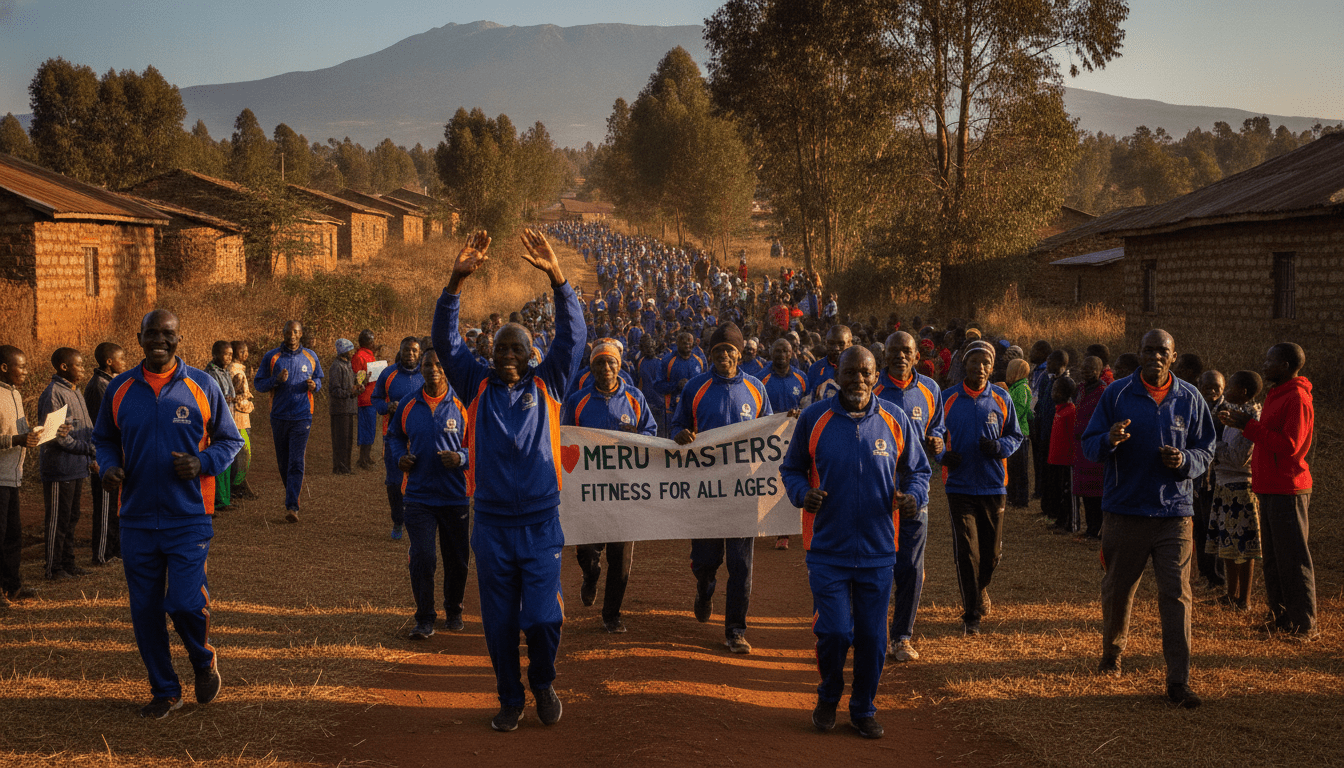
Meru senior runners defy age, training into their 80s with Kenya’s Masters Athletics chapter
Meru senior runners in Kenya are keeping competitive routines well into old age, with an 82-year-old among 80 members of the local Masters Athletics chapter who train three times weekly to preserve health and mobility.
Elderly athletes reclaim training in Meru
Every Monday, Wednesday and Saturday, a group of older athletes from Meru County gathers on red-earth roads and village fields to run, stretch and walk together. Their routines attract participants aged from their 60s into their 80s and beyond, who say regular movement has reduced chronic ailments and restored energy. The group is informal, unpaid and self-organised, yet it has become a stable fixture in the county’s sporting life.
Origins and leadership of the Meru chapter
The Meru chapter of Masters Athletics Kenya was founded in 2015 by Stephen Michubu Linguya, who says he formed the group after watching neighbours deteriorate from inactivity and alcohol-related problems. He searched for older residents who once ran and encouraged them to return to daily movement for the benefit of their families and younger community members. Under his leadership the membership grew to about 80 people who now meet for organised training sessions three times a week.
Training routines and financial hurdles
Members make their own way to training grounds that can lie between 10 and 50 kilometres from their homes, paying transport fares from personal funds or walking when money is scarce. There is no sponsorship, no institutional funding and no travel allowance, so commitment requires personal sacrifice and persistence. Sessions typically combine road runs, field drills and group warm-ups that adapt to the participants’ varying abilities.
Competition and personal transformations
Some Meru members have gone on to compete regionally and internationally; a 73-year-old member returned from the 2019 African Masters event with two silver medals. For many, the change is less about awards than improved daily life: fewer hospital visits, controlled blood pressure and reduced muscle spasms are common outcomes. Older athletes credit the training with better hydration, steadier health and renewed purpose after retirement or loss of work.
Inclusion and adaptive training for disabilities
The chapter also accommodates athletes with disabilities, including a visually impaired runner who trains with the assistance of his son and now helps teach others to act as guides. Finding reliable guides had previously been a barrier for disabled athletes, but the group’s communal approach has created a ready support network. This practical inclusion signals that structured, low-cost exercise can be accessible even in areas lacking formal infrastructure.
Local officials note public-health and cultural impacts
County officials say the group’s activity extends beyond individual fitness and into public health messaging about lifestyle diseases such as hypertension and diabetes. Meru’s executive committee member for youth, sports, gender and social development has pledged to create platforms where the masters athletes can be seen and celebrated publicly. Local leaders frame the chapter’s work as a model that challenges assumptions about aging and demonstrates discipline across generations in a county known for producing elite runners.
Daily life and community response in Mikumbune
In Mikumbune village, where an 82-year-old runner now completes five-kilometre routes three times a week, neighbours initially reacted with ridicule but have gradually accepted the routine. Participants describe their mornings as newly structured and purposeful, with the physical improvements speaking louder than outside opinion. The group trains without fanfare, yet its steady presence has begun to change local perceptions about ageing and activity.
The Meru chapter’s example underscores a broader argument that running and regular exercise need not be the preserve of the young; with modest organisation and communal support, older adults can regain mobility, reduce reliance on medical care and contribute visible examples of sustained fitness.
