
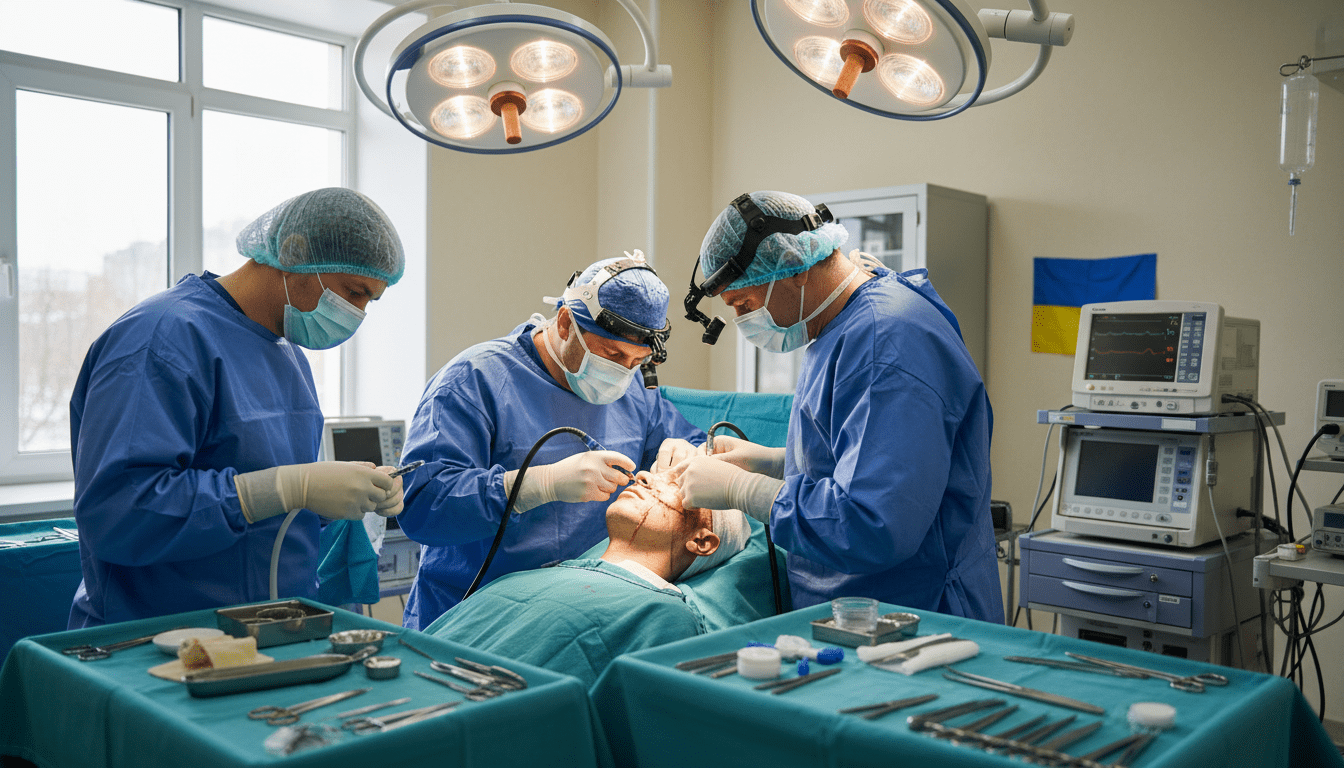
Facial Injuries in Lviv: Wounded Men Wait for Reconstructive Surgery
In a Lviv hospital, men with severe facial injuries from the conflict await reconstructive surgery, confronting permanent scars and social stigma while undergoing lengthy care.
At a hospital in Lviv, dozens of men with devastating facial trauma are lined up for operations intended to relieve pain and rebuild function. Many patients and medical staff describe these wounds as often felt to be worse than limb loss because disfigurement alters how others respond immediately. Children stare or cry, partners sometimes leave, and friends withdraw — reactions that compound physical suffering with acute social isolation.
Patients Await Reconstructive Surgery in Lviv
These patients arrive with a range of injuries that include shattered facial bones, loss of tissue, burns and complex soft-tissue damage, and they routinely wait weeks for staged reconstructive procedures. Surgeons plan multiple operations for each individual, aiming to restore breathing, chewing and facial expression as well as to close open wounds and reduce infection risk. Despite repeated interventions, clinicians acknowledge many survivors will carry visible changes for life and must adapt to a new public identity.
Scale and Nature of Facial Damage
The severity of injuries seen in the wards reflects high-energy trauma that can destroy delicate facial structures and sensory nerves, leaving long-term deficits. Medical teams report that reconstruction often requires bone grafts, microsurgery to transfer tissue, and careful sequencing to prioritize airway and feeding function before aesthetic repair. The complexity of each case means a single patient may undergo several separate surgeries over months or years, with unpredictable outcomes.
Psychosocial Impact on Patients and Families
Beyond physical repair, staff emphasize the moral and psychological toll on patients who face visible scarring and altered features every time they leave the hospital. Many describe immediate social reactions — gawking, avoidance, and fear from children — as deeply painful, and some patients say family dynamics change, with partners or relatives distancing themselves. Mental health support and community reintegration services are limited but increasingly seen as essential components of care for recovery and dignity.
Surgical Challenges and Medical Constraints
Surgeons working on these cases confront technical and logistical challenges, from limited operating theatre time to shortages of specialized equipment and donor tissue. Microsurgical expertise and prolonged postoperative monitoring are required for many reconstructions, placing strain on hospital capacity and on patients who must travel and remain close to care for extended periods. Medical teams adapt by prioritizing life- and function-saving procedures first, then planning cosmetic and rehabilitative steps as resources allow.
Rehabilitation and Long-Term Care Needs
Rehabilitation is a long process that combines physical therapy, prosthetic work and psychosocial counseling to rebuild function and confidence. Patients may require speech and swallowing therapy, custom facial prostheses, and occupational training to return to work and daily routines. The timeline varies widely: some regain sufficient function within months, while others will face lifelong limitations and the need for ongoing medical attention.
Community Response and Funding Gaps
Local hospitals, charitable organizations and volunteer networks have mobilized to support surgical campaigns and to raise funds for prosthetics and follow-up care, but gaps remain in sustained financing and specialist capacity. Donor-driven short-term interventions can provide critical surgeries, yet clinicians warn that consistent, long-term investment is necessary to cover repeated procedures and rehabilitation. Advocacy groups are pressing for more coordinated support to ensure patients receive the full continuum of care.
Many of the men awaiting operations understand that reconstruction can ease pain and restore some function but will not fully restore their previous appearance, and they cope with the prospect of permanent change. Hospital staff describe moments of quiet resilience: patients preparing for another surgery with pragmatic hope, families relearning how to show steady support, and medical teams continuing complex work under constrained conditions. The road to recovery for those with facial injuries in Lviv is measured in years and incremental gains, requiring surgical skill, sustained funding and broader community effort to address both the medical and human consequences of these wounds.
