
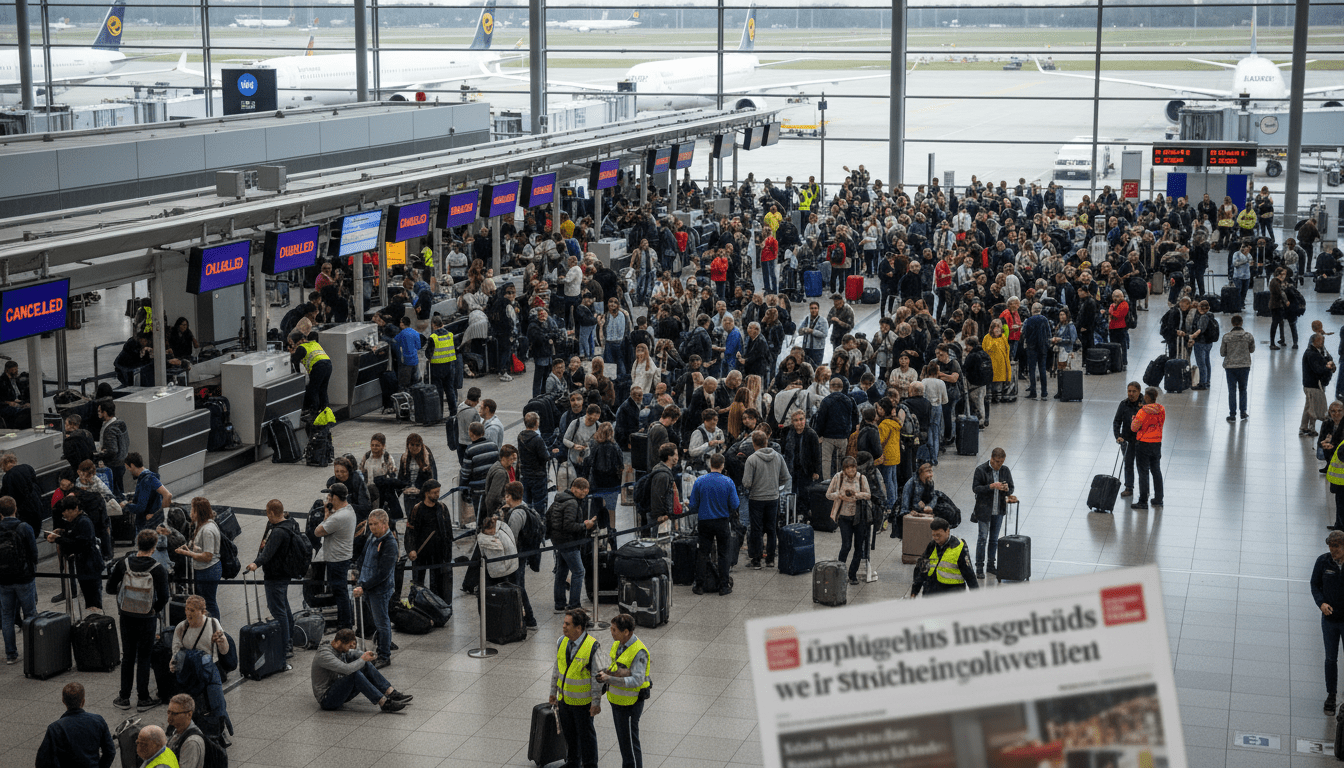
Frankfurt Airport passenger numbers fall 11% in April after six Lufthansa strike days
Lufthansa strikes at Frankfurt Airport led to an 11% drop in April passenger traffic, with Fraport reporting about 4.8 million travelers and disrupted flight schedules.
Strong April decline recorded at Frankfurt Airport
Frankfurt Airport handled roughly 4.8 million passengers in April, a decline of about 11 percent compared with the same month a year earlier, according to monthly figures released by the airport operator Fraport. The shortfall reflects the direct impact of six strike days called by Lufthansa staff in April, which forced cancellations and capacity reductions across the hub and removed a significant volume of connecting traffic. Passenger flows were also affected by calendar timing, as the Easter holidays fell partly into May this year rather than entirely in April as they had in the prior year, reducing seasonal travel demand in the month under review.
Lufthansa strikes cited as primary cause
Fraport and industry observers attribute the bulk of the passenger decline to industrial action by pilots and flight attendants at Lufthansa, which led to multiple days of grounded flights and rerouted itineraries across Europe. The strikes affected both mainline services and feeder flights, constraining the usual flow of transfer passengers through Germany’s largest airport and prompting airlines to cut schedules or rebook travelers. Company-level work stoppages also disrupted ground handling and aircraft rotations, amplifying the operational ripple effects beyond the flights directly canceled.
Flight movements fell by more than 11 percent
The number of takeoffs and landings at Frankfurt Airport dropped to 34,623 in April, down about 11.6 percent year on year, reflecting both fewer scheduled departures and a reduction in ad‑hoc services that often compensate during high-demand periods. The reduction in movements compressed runway and gate utilization and reshaped traffic peaks across the month, with some days seeing pronounced slack in operations compared with typical April volumes. Airlines operating from the hub adjusted their short-term capacity planning in response, which in turn affected passenger choice and airport throughput.
Cargo volumes reduced by loss of belly capacity
Cargo throughput at Frankfurt Airport also edged lower, with freight volumes decreasing by around 0.6 percent to roughly 168,526 tonnes in April, a decline linked largely to the loss of belly cargo capacity on passenger aircraft. Because many cargo consignments travel as additional load on passenger services, the grounding of numerous Lufthansa passenger flights removed an important source of bellyhold capacity, and cargo carriers reported constrained options for supplementary lift. The situation was compounded when pilots extended industrial action to include operations tied to Lufthansa Cargo, further tightening freight networks that rely on the Frankfurt hub.
Operational and passenger experience implications
The scale and timing of the strikes translated into operational pressure on rebooking centers, customer service desks and regional feeder networks, producing longer wait times and more complex connections for affected travelers. Airport services experienced uneven demand during the strike days, with some terminal areas unusually quiet while customer assistance points remained oversubscribed, particularly for international transfer passengers trying to salvage itineraries. The combination of cancellations and schedule volatility also prompted some passengers to seek alternative airports or modes of transport for short-haul trips, shifting traffic patterns in the region for the month.
Fraport’s data in broader market context
Fraport’s April report frames the decline within a setting of post‑pandemic recovery that has otherwise shown resilient passenger growth, highlighting how short-term labor disputes can dent volumes even as annual trends remain constructive. Compared with neighboring months and previous quarters, April stands out for its pronounced month‑on‑month volatility driven by strikes and calendar effects rather than a permanent shift in demand, industry analysts say. For hub operators and carriers, the episode underscores the sensitivity of centralized transfer models to labor disruption and the commercial importance of maintaining predictable schedules during peak travel windows.
The outlook for May and the summer months will depend on the resolution of labor disputes, airline capacity restoration and the distribution of holiday travel across the calendar, with catch‑up travel likely to partially offset the April deficit if schedules normalize and consumer confidence holds.
