
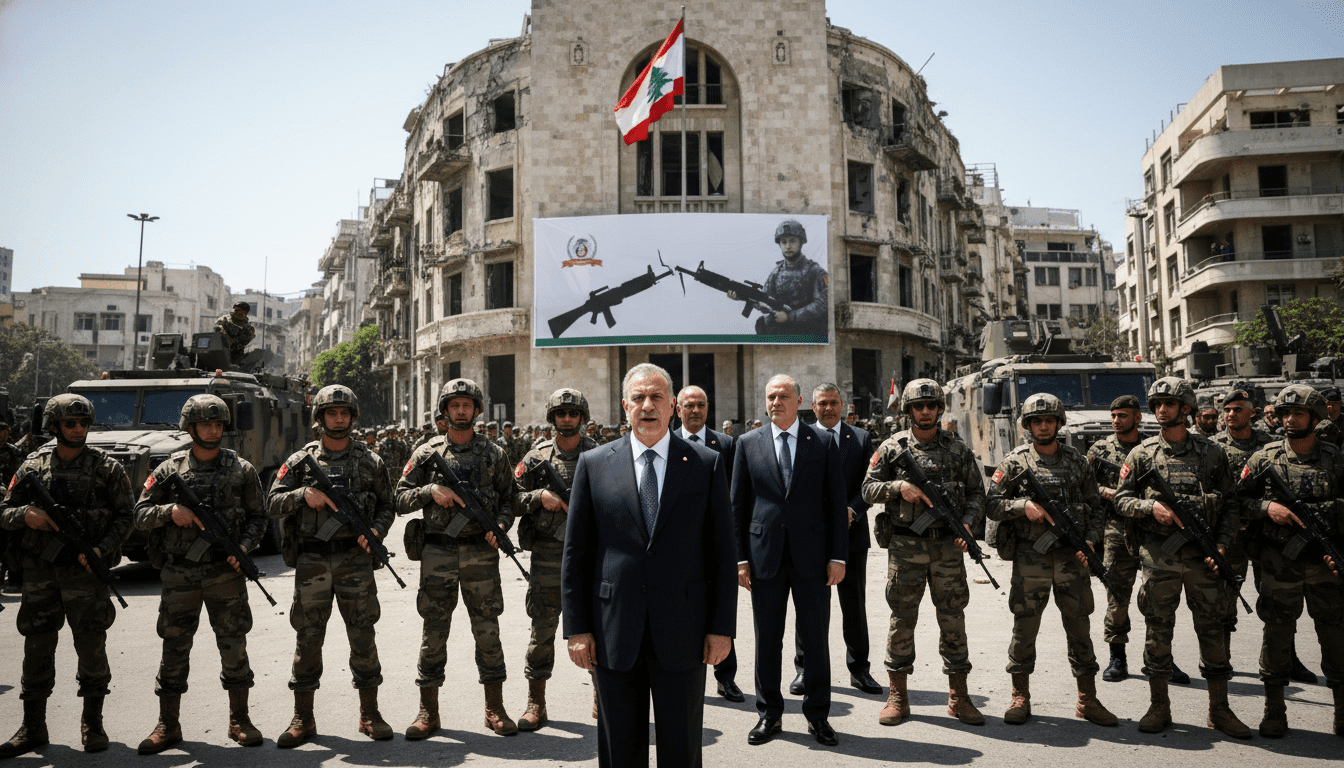
Lebanon to Take Full Control of Beirut Governorate, Limit Arms to State Forces
Lebanon’s government will assume full control over the Beirut Governorate and restrict weapons to state forces, Prime Minister Nawaf Salam announced on April 17, 2026.
Lebanon’s cabinet has moved to assert sovereign control over the Beirut Governorate, the area encompassing the capital city, and to limit arms to recognized security forces in an effort to protect citizens and property. Prime Minister Nawaf Salam posted the decision on X and told Beirut parliamentary representatives that the measure is irrevocable and will be strictly enforced. The announcement signals a renewed government push to consolidate security authority within the capital after periods of localized armed presence.
Government Declares Control over Beirut Governorate
The cabinet decision, conveyed publicly by Prime Minister Salam, affirms that the state will exercise full authority across the Beirut Governorate. The move is described as aimed at safeguarding public safety, security, and the property of residents across the capital area. Officials framed the step as a restoration of the state’s exclusive responsibility for security within the governorate’s boundaries.
Salam Emphasizes Irrevocability to Parliamentary Delegation
Prime Minister Salam confirmed the measure to Beirut’s parliamentary representatives on April 17, 2026, underlining that the decision is final and will be implemented firmly. In his X post he said the order, issued on the ninth of the month, will not be reversed and that enforcement will be strict. The public statement was intended to reassure elected officials that the cabinet stands united behind the directive.
Arms to Be Restricted to Legitimate Forces Alone
A central element of the declaration is the explicit restriction of weapons to “the legitimate forces alone,” language used by the prime minister in his post. The policy targets non-state armed groups and any unauthorized carrying or deployment of weapons within the governorate. Authorities say the restriction is intended to reduce armed incidents and enhance predictability for civilians and businesses operating in Beirut.
Enforcement Steps and Security Deployment Expected
While the announcement sets the policy direction, the government has not released an exhaustive enforcement plan in the public post. Security analysts note that implementing such a directive typically requires coordinated operations by the army, internal security forces and local police, along with checkpoints, registration drives, and targeted disarmament actions. Officials indicated the cabinet will pursue measures it views as necessary to ensure compliance while maintaining order during deployment.
Parliamentary and Local Responses Remain Limited
Salam’s post noted that he had briefed Beirut’s parliamentary delegates, but it did not include detailed responses from those representatives or from other political actors. At the time of the announcement, the prime minister did not list further consultations or name specific security units tasked with carrying out the directive. Observers say follow-up statements from security institutions and political parties will be closely watched for signals about operational timing and scope.
Potential Impact on Daily Life and Property Protection
Officials framed the action as primarily protective in nature, aimed at preserving safety and property for residents, businesses and visitors across the Beirut Governorate. If implemented effectively, the measures could reduce armed incidents in commercial and residential districts and support a more stable environment for economic activity. However, enforcement operations can also generate short-term disruptions, so authorities will face the dual challenge of securing neighborhoods while limiting civil disturbance.
The government’s declaration marks a noteworthy assertion of central authority in Beirut and sets the stage for a period of heightened security focus in the governorate. Residents and stakeholders will be monitoring how the directive is translated into concrete steps, the timeline for enforcement, and how security forces coordinate to implement the decision while minimizing friction in the capital.
