
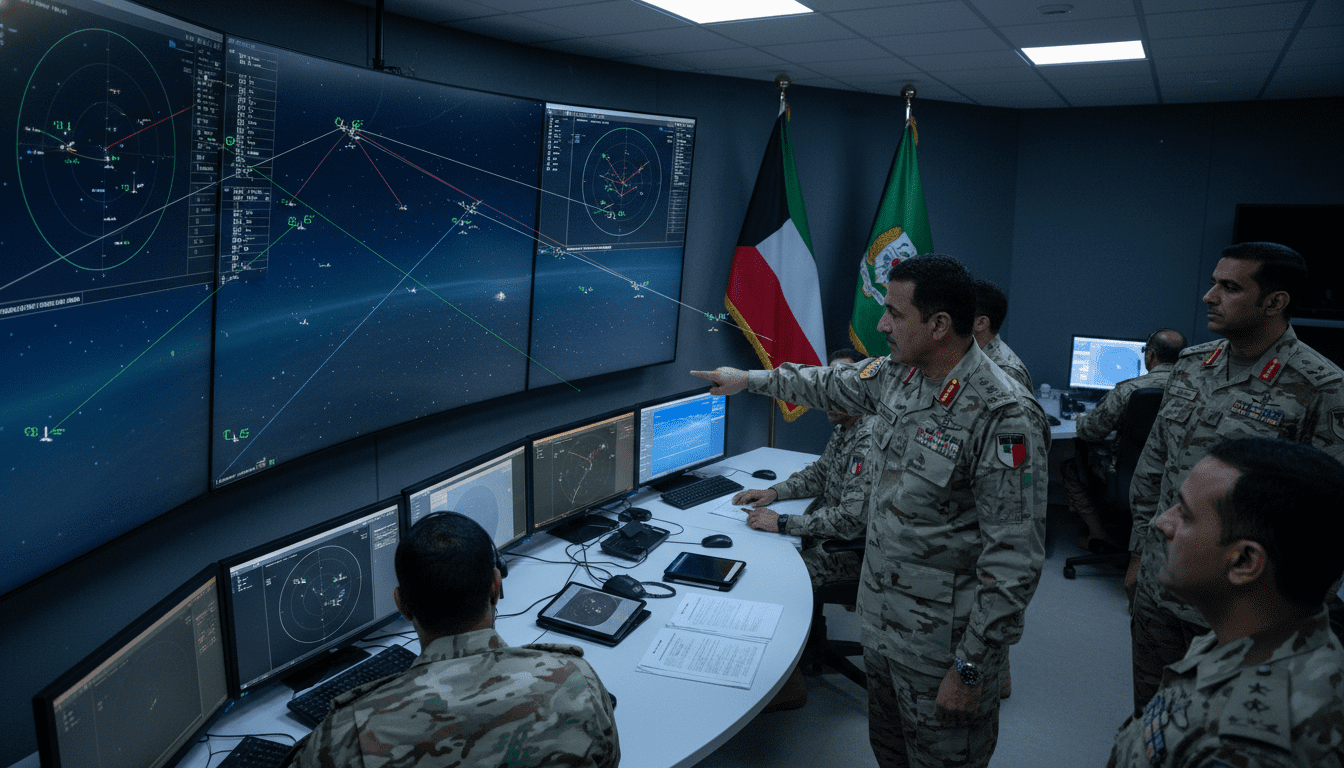
Kuwait Intercepts Missiles and Drones After What It Calls ‘Heinous Iranian Aggression’
Kuwait intercepts missiles and drones after detecting 30 hostile projectiles; the defence ministry says 13 ballistic missiles and 17 drones were engaged.
Kuwait Reports Interception of 13 Ballistic Missiles
Kuwait’s armed forces said they detected and engaged 13 hostile ballistic missiles as they entered the country’s airspace early Wednesday. Defence ministry spokesman Saud Abdulaziz al-Atwan described the strikes as part of a “heinous Iranian aggression,” attributing the launches to Iranian actors.
Military statements said the ballistic missiles were intercepted over several residential districts, and that some debris fell to the ground. Officials did not provide an immediate casualty tally and said assessments of damage were ongoing.
Armed Forces Engage 17 Hostile Drones Across Airspace
In addition to the missiles, Kuwaiti forces reported detecting and engaging 17 hostile unmanned aerial vehicles during the same window of activity. The ministry characterized the drones and missiles together as a coordinated attack against civilian and vital facilities.
The military’s air-defence response was described as rapid and layered, with engagements taking place across different parts of Kuwaiti airspace. Authorities emphasized that operations were focused on preventing strikes from reaching populated infrastructure.
Debris Fell in Residential Areas, Authorities Say
Kuwaiti officials acknowledged that debris from intercepted missiles landed in residential neighbourhoods, posing a direct risk to civilians. Emergency responders were dispatched to affected areas to search for damage and assist residents, according to the ministry statement.
Local hospitals and municipal services were placed on alert, and authorities urged the public to follow instructions from civil defence teams. At the time of the ministry briefing, details about injuries, fatalities, or the extent of property damage remained unconfirmed.
State Accuses Iran, Using Strong Language
Kuwait’s defence ministry explicitly blamed Iran for the incident, calling the strikes “heinous” and asserting they targeted civilian and critical facilities. The accusation was delivered by the ministry spokesman during the announcement of the interceptions.
No independent verification of Iranian responsibility was provided in the ministry’s initial statement, and Iranian officials had not issued a response at the time the Kuwaiti announcement was released. International actors will likely seek clarity through diplomatic channels and intelligence-sharing mechanisms.
Air-Defence Capabilities Highlighted by Interceptions
The interception of a large number of projectiles underlines Kuwait’s air-defence readiness and the capability of its armed forces to respond to inbound threats. Officials stressed that engagements prevented what the ministry described as direct strikes on populated and strategic sites.
Analysts note that successful interceptions typically reflect coordination between detection networks and interceptor systems, as well as rapid decision-making by military commanders. Kuwait did not publicize technical details of the systems used, citing operational security.
Diplomatic Fallout and Possible Regional Implications
Kuwait’s public attribution of the strikes to Iran is likely to escalate diplomatic tensions in the region and could prompt calls for international condemnation. Neighbouring states and global powers will be watching for signs of retaliation or broader escalation.
Kuwait may take the incident to regional and international fora to seek support, further information, and potential security assurances. The course of diplomatic engagement will depend on subsequent intelligence assessments and responses from the accused parties.
Kuwaiti authorities said investigations would continue to establish the full facts, assess damage, and determine whether further protective measures are needed for civilian areas. Officials also asked the public to remain calm and to heed instructions from security services as more information is gathered and shared.
