
German income tax reform expected as Finance Minister vows to present plans ‘soon’
German income tax reform could ease the burden for most taxpayers while raising top rates, Finance Minister Lars Klingbeil says; possible €17bn net cost.
Klingbeil signals income tax reform ‘soon’
Finance Minister Lars Klingbeil told reporters he will present proposals for a German income tax reform “soon”, shifting attention from other fiscal topics to a broader tax overhaul. The minister declined to outline specifics during a press appearance, but officials within the Finance Ministry have circulated preliminary concepts that have begun to shape debate. The announcement has set off negotiations with coalition partners, the opposition and state governments as leaders seek a broadly acceptable package.
Relief for the majority, higher rates at the top
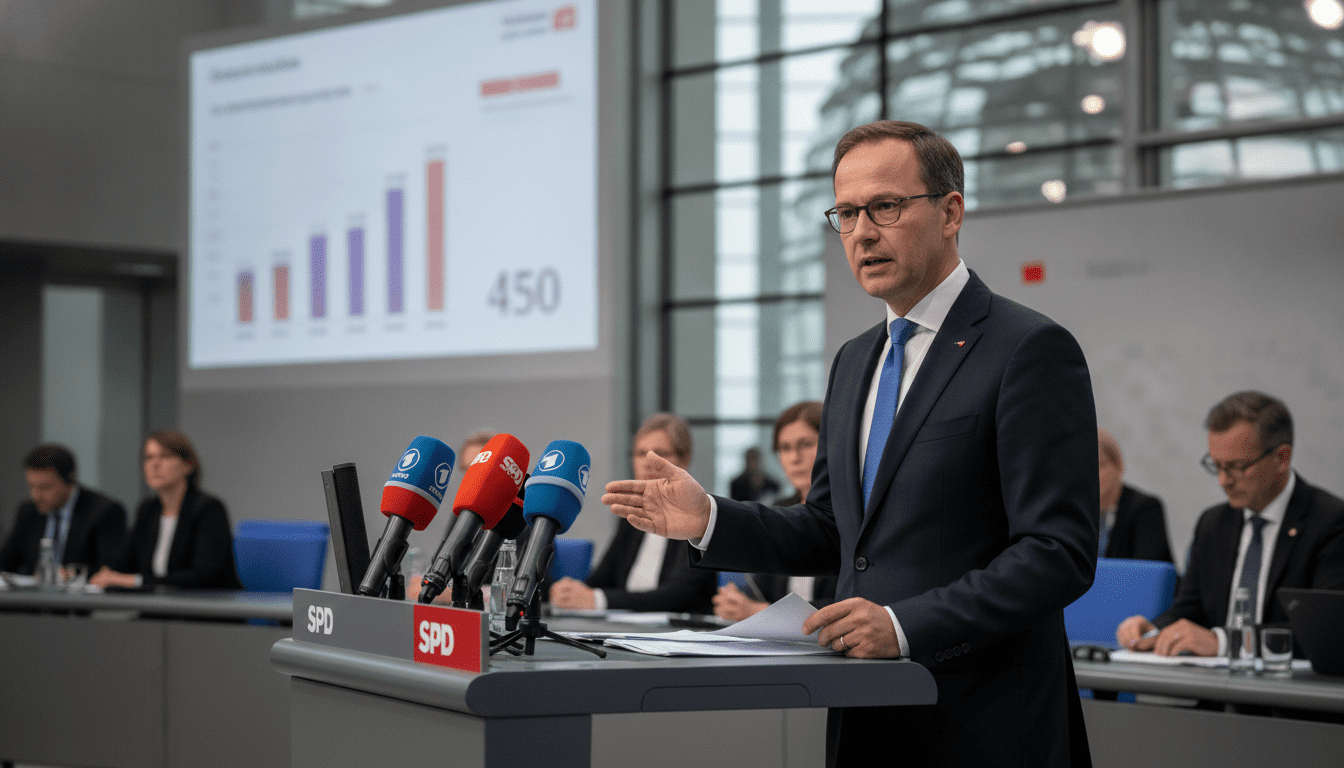
One draft prepared inside the ministry would deliver modest relief to the majority of taxpayers while tightening burdens for the highest earners. Most households could see annual tax savings of roughly €450, with relief flowing through the tax schedule up to about €70,000 in taxable income. To limit revenue loss, the proposals contemplate increasing the current top marginal rate of 42 percent to around 44.5 percent, while also raising the so‑called “rich tax” threshold rates further up the scale.
Estimated fiscal impact and budgetary constraints
Finance ministry estimates — circulated internally and described to journalists — indicate that a package of this shape would not be revenue neutral without additional measures. Preliminary calculations put the net cost of the measures at approximately €17 billion if implemented as sketched. That projected shortfall is a central complication given pressing budgetary constraints at both federal and state levels, and it helps explain Klingbeil’s insistence on a “seriously financed” reform and his push to build a cross‑party agreement.
Union proposals provide a competing template
The numbers echo a separate blueprint advanced by CDU and CSU finance spokespeople, which likewise raises thresholds and adjusts progression while integrating the solidarity surcharge into the main tariff. In the Union plan, the basic tax‑free allowance would rise by about €1,000 and the 42 percent margin would kick in at an estimated €85,000 of taxable income. The CDU/CSU approach targets relief across the middle of the distribution but differs politically in its treatment of the solidarity surcharge and details of the top rates.
Implications for partnerships and corporations
Proposals under discussion also include changes affecting partnerships and corporate taxation that could reshape how small businesses and incorporated firms are taxed. From the year after next, proposals reportedly foresee a phased reduction in the effective tax burden on retained corporate profits to around 25 percent when including trade tax. For partnerships and unincorporated businesses, where owners are taxed via the personal income tax schedule, concerns persist that higher marginal rates could increase burdens on some firms, even as other parts of the package aim to broaden relief.
Statistical snapshot of who pays the top rates
Data from the Federal Statistical Office provide context for the policy choices: in 2022, roughly 3.2 million taxpayers reached the 42 percent top marginal rate, accounting for nearly 30 percent of total earned income and about 49 percent of income tax receipts. Average annual incomes in that bracket were reported around €196,000, and the share of taxpayers subject to the top rate has steadily risen over the past decade. A much smaller cohort — about 141,000 taxpayers — fell into the highest “rich tax” bracket, yet they contributed a disproportionate share of taxable income and revenues.
Political hurdles and the search for a broad coalition
Klingbeil has signaled he wants a reform that can be carried out in partnership with both opposition parties and the Länder, reflecting the fiscal implications for state budgets and the political optics of a national tax shift. Previous tax relief initiatives by the coalition encountered resistance in the Bundesrat, and any package that widens fiscal shortfalls will face scrutiny from finance ministers in the Länder. The minister’s emphasis on finding a cross‑bench alliance underscores the challenges of reconciling middle‑class relief with the need for fiscal responsibility.
The coming weeks are likely to see intensified talks among federal ministries, party finance teams and state representatives as officials work to reconcile competing priorities and close any budgetary gap.
